
‘Food monitoring programs have detected…’: Orthopaedic surgeon shares 3 commonly consumed fruits that carry pesticide residues; expert weighs in | Food-wine News
4 min readNew DelhiMar 27, 2026 12:00 AM IST
Fruits and vegetables are a key part of a healthy diet, but concerns about pesticide residues have made many people question how safe their everyday produce really is. In a recent Instagram video, Mumbai-based orthopaedic surgeon and health educator Dr Manan Vora highlighted certain commonly consumed fruits and vegetables that are more likely to carry pesticide residues.
He clarified that this does not mean people should stop eating them, but rather take simple steps to reduce exposure. Explaining why some produce is more vulnerable than others, he said, “The first is spinach, because these leaves have a large surface area, and pesticide sprays can easily stick to the surface. Food monitoring programs have detected multiple pesticide residues in spinach, including compounds like permethrin, which is considered a neurotoxic insecticide (sic).”

DISCLAIMER: This article is based on information from the public domain and/or the experts we spoke to. Always consult your health practitioner before starting any routine.

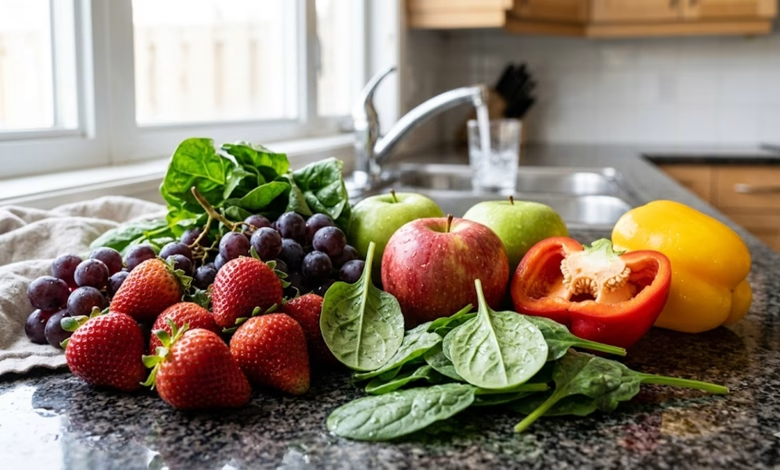
He also pointed to strawberries as another example, noting the challenges in cleaning them effectively. “The second is strawberries. Their skin is very delicate and cannot be peeled, which is why pesticide sprays can remain on the fruit’s surface.” Grapes were also highlighted due to the way they grow. “The third is grapes. Grapes grow in tight clusters where pesticide sprays can accumulate on the surface. Studies show that over 90 per cent of conventional grape samples contain multiple pesticide residues.”
Beyond these, Dr Vora drew attention to a broader category often referred to as the “Dirty Dozen,” which includes produce known to carry relatively higher pesticide loads. “It is not just these three; on the global monitoring list, strawberries, spinach, kale, apples, peaches, nectarines, pears, grapes, cherries, blueberries, and bell peppers are collectively called the ‘Dirty Dozen’.”
So, from a food safety perspective, how significant is this risk for the average consumer?
Dr Palleti Siva Karthik Reddy, MBBS, MD general medicine, FAIG, consultant physician at Elite Care Clinic, tells indianexpress.com, “From a clinical and public health standpoint, the risk exists but needs to be understood in context. Certain foods, such as spinach, strawberries, and grapes, tend to retain more pesticide residue due to their surface characteristics and cultivation methods. However, for the average consumer, the risk is not immediately alarming if dietary habits are balanced and produce is cleaned properly.”
He notes that the larger concern “arises with long-term cumulative exposure,” especially in vulnerable groups such as children, pregnant women, and individuals with compromised immunity. What is important is awareness and consistent food hygiene practices, rather than avoiding these foods altogether, as they are nutritionally essential.
Story continues below this ad
The most effective ways to clean or prepare them at home to reduce exposure
Simple kitchen practices can significantly reduce pesticide residue. Dr Reddy explains, “Washing under running water is the most effective first step and should not be skipped. For leafy vegetables like spinach, soaking them in a bowl of water and rinsing multiple times helps remove surface contaminants. Fruits like grapes and strawberries can be briefly soaked in a water solution with a small amount of salt or baking soda, then thoroughly rinsed. Peeling is useful for certain fruits but should be done selectively, as it can also remove fibre and nutrients. Cooking methods such as blanching can further reduce residues in some vegetables. The goal is to combine proper washing with minimal nutrient loss.”
On the concept of the ‘Dirty Dozen’
“It is important to avoid fear-driven dietary decisions,” stresses Dr Reddy, adding that the ‘Dirty Dozen’ is meant to raise awareness, not discourage consumption. “Fruits and vegetables remain fundamental to preventing chronic diseases, supporting gut health, and maintaining overall immunity. Instead of eliminating certain produce, consumers should focus on sourcing wisely when possible, washing thoroughly, and maintaining dietary diversity,” he mentions.
DISCLAIMER: This article is based on information from the public domain and/or the experts we spoke to. Always consult your health practitioner before starting any routine.


