
From market leader to laggard: Can Ola Electric regain its lead? | Smart Stocks News
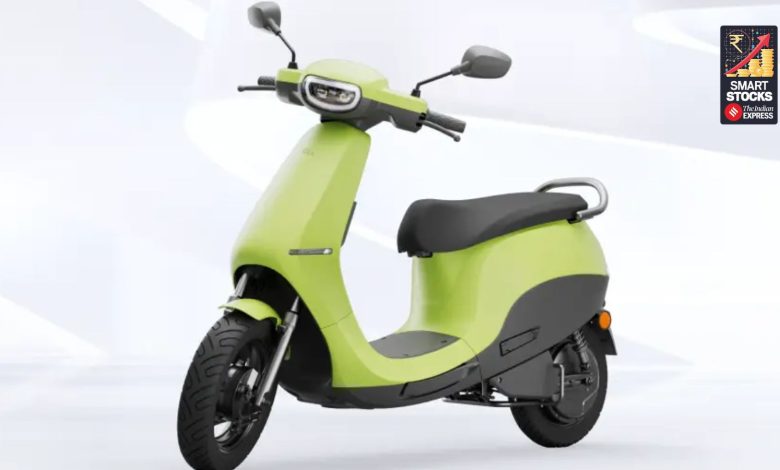
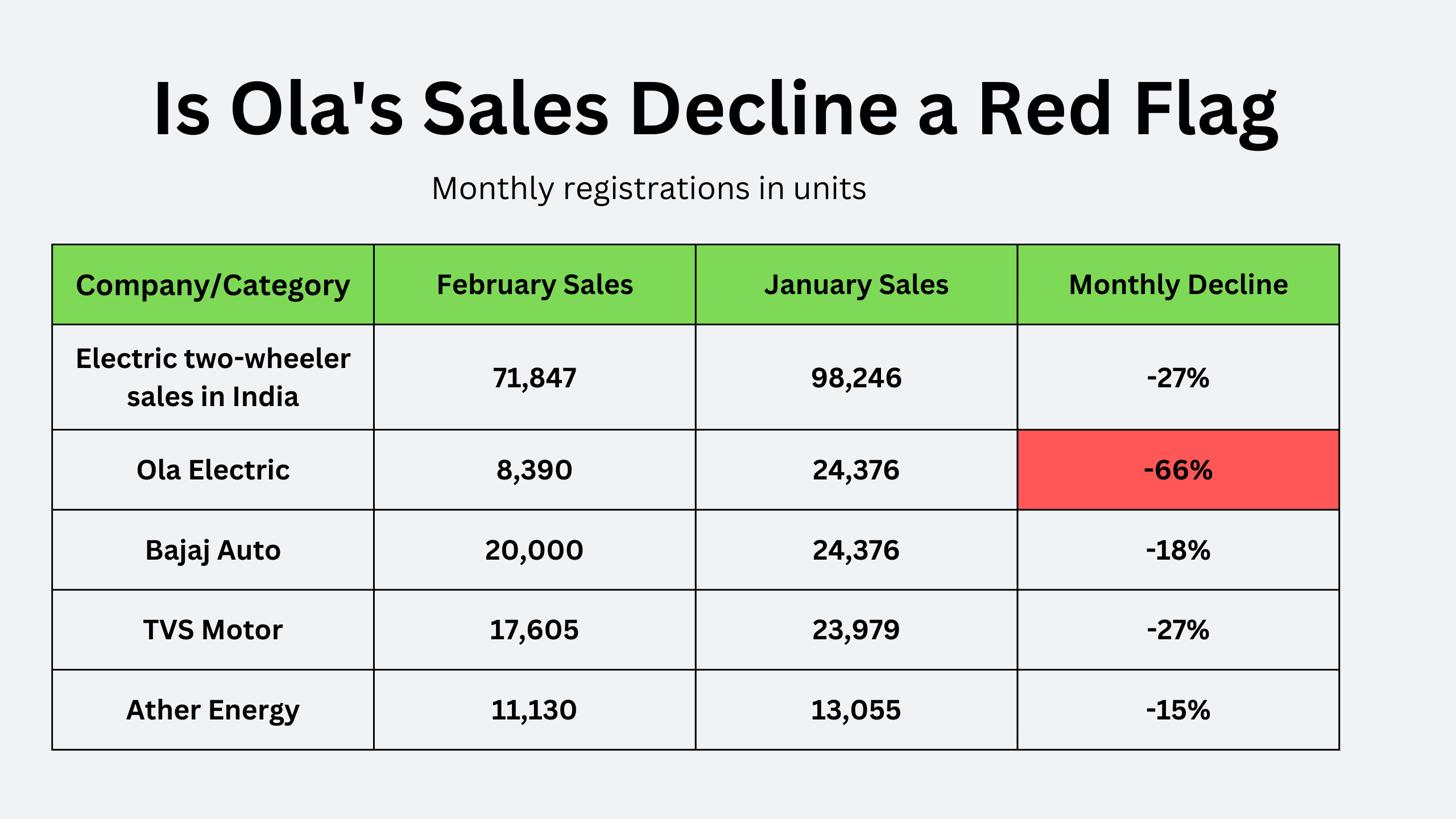
Just a year ago, Ola Electric was the undisputed king of India’s electric two-wheeler market with a massive 52% market share. Fast forward to February 2025, and things have taken a sharp turn. Ola Electric’s registrations have crashed to just 8,390 units — the lowest since August 2022. That’s a 65% drop from 24,376 units recorded in January 2024. And while Ola is still leading the pack, its rivals are catching up fast.
Now, the entire electric two-wheeler market isn’t exactly thriving. According to Vahan, total registrations slumped 27% in February to 71,847 units — the lowest since April 2024. But here’s the key point — while everyone took a hit, Ola’s fall was the steepest.

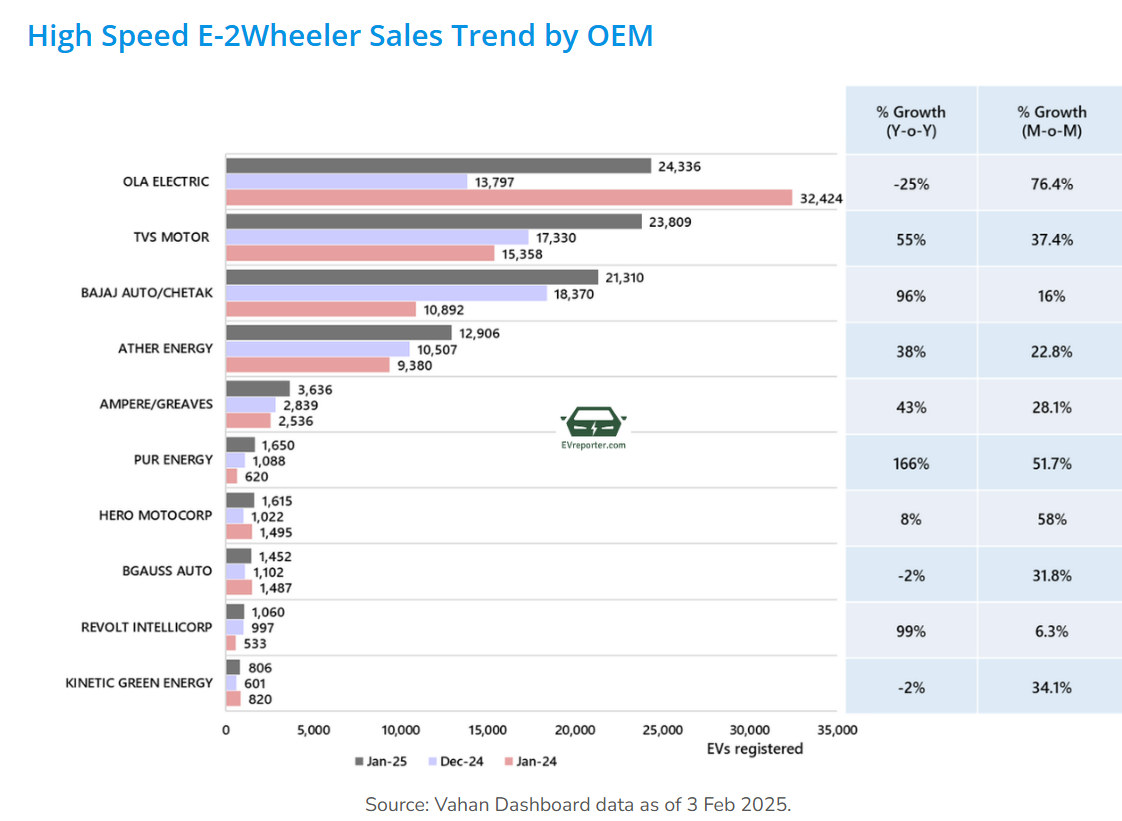
Bajaj Auto is making the most of it. It sold over 20,000 electric scooters in February, grabbing a 27.8% market share. TVS Motor wasn’t far behind, clocking 17,605 units and securing 24.5% market share. Even Ather Energy, Ola’s closest startup competitor, registered 11,130 vehicles, cornering 15.5% of the market.
For a company that built its entire IPO narrative around market leadership, this represents more than a temporary setback, it’s an existential crisis.
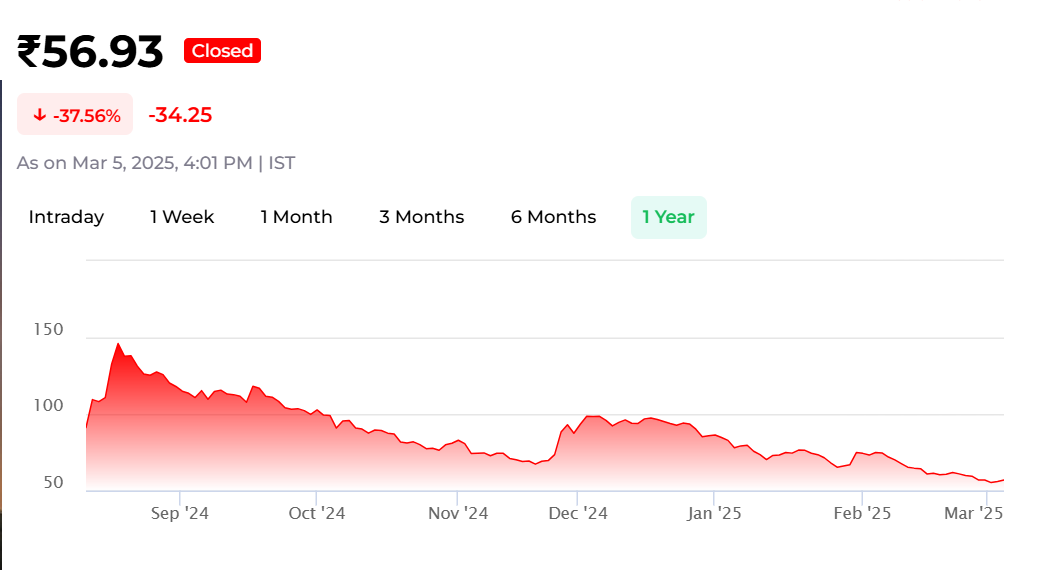
The stock has fallen to Rs 56, near its all-time low, and 64% below its peak of Rs 157.
Legacy players strike back
For Bhavish Aggarwal, CEO of Ola Cabs and founder of Ola Electric, market leadership wasn’t just a metric, it was the cornerstone of his entire business pitch. In investor presentations, media interviews, and IPO documents, Aggarwal consistently emphasised Ola’s market dominance as proof that his startup could outmaneuver traditional automotive giants.
Investors bought into this narrative enthusiastically. The IPO sailed through based on this promise of disruption and domination. When people invested in Ola Electric, they weren’t just backing another EV company; they were betting on what appeared to be the undisputed market leader that had apparently cracked the code for India’s electric transition.
Story continues below this ad
But December 2024 figures reveal the fragility of Ola’s position. India’s traditional automobile manufacturers, armed with decades of manufacturing expertise and vast distribution networks, have finally awakened. Their strategy? Nothing revolutionary, just delivering reliable products backed by stellar after-sales service.
Consumer complaints about Ola’s scooters have moved beyond social media and are now reflected in sales figures. Meanwhile, established competitors have stepped up their game with improved products and expanded networks. Analysts predict Ola’s market share will remain under pressure as incumbents continue to gain ground.
Ola’s quality issues are coming back to haunt it
When Ola Electric burst onto the scene, it promised to revolutionise India’s two-wheeler market with sleek, high-tech electric scooters. And for a while, it looked like the company was on track to dominate. But today, things are looking far from rosy.
Story continues below this ad
Ola’s scooters have been plagued with persistent quality issues since launch, leaving customers frustrated and disillusioned. Reports of motor failures, software glitches, battery issues, and inconsistent performance have been piling up, creating a storm of complaints.
Meanwhile, traditional players like Bajaj Auto and TVS took a different approach. Instead of rushing products to market, they followed a more methodical process — gradual rollouts, rigorous testing, and robust quality control. Their electric two-wheelers may not be packed with flashy features, but they work consistently and reliably, something Ola has struggled with from the start.
But the real concern?
Ola Electric hasn’t developed a single product from scratch in its nearly seven-year existence. The company’s flagship S1 series isn’t an original design, it’s built entirely on the AppScooter from Etergo, a Dutch startup Ola acquired in 2021. Since then, instead of introducing fundamentally new products, Ola has just iterated on the same platform.
Now, the government is stepping in
The company’s troubles have now escalated beyond just consumer dissatisfaction. India’s Central Consumer Protection Authority (CCPA) has slapped Ola with a show cause notice after receiving a staggering 10,000+ complaints between September 2023 and August 2024.
Story continues below this ad
The complaints aren’t limited to product defects — customers have reported delayed service, unsatisfactory repairs, and incorrect billing. The volume of grievances has raised serious concerns, with consumer affairs secretary Nidhi Khare stating, “You can’t expect individual consumers to fight their way out.” The CCPA believes these repeated complaints suggest a pattern of unprofessional conduct.
A growing reputation problem
This isn’t just a one-off issue. Ola’s service centers are overwhelmed. For a company that once seemed destined to dominate India’s EV market, Ola’s biggest challenge isn’t competition anymore — it’s fixing its own mess. And unless it gets its quality and service issues under control, its once-promising future could take a very different turn.
The competitive landscape is about to intensify further with Honda Motorcycles & Scooter India poised to enter the market with the electric Activa and QC1.
Ola’s direct-to-consumer gamble isn’t paying off
When Ola Electric launched its direct-to-consumer (D2C) model, it positioned itself as a disruptor in the Indian two-wheeler market. By selling directly to customers through online platforms and a limited number of experience centers, the company sought to cut out dealers and revolutionise scooter distribution. But what looked revolutionary on paper soon ran into a harsh market reality — dealerships aren’t just sales points; they are trust builders.
Story continues below this ad
In India, dealerships offer credibility, easy accessibility, and after-sales assurance, especially in smaller cities and rural areas. Bajaj Auto, TVS, and Hero MotoCorp understood this well, leveraging their extensive dealer networks — with thousands of touchpoints — to build long-term relationships with customers.
Ola, on the other hand, struggled with limited experience centers and logistical challenges. It eventually had to backtrack on its strategy, ramping up offline presence with thousands of new stores to compete.
Service centers: Expansion at the cost of sustainability?
The real customer pain point, however, wasn’t just scooter availability — it was after-sales service. Frequent breakdowns, long wait times, and frustrated customers airing grievances on social media highlighted Ola’s struggle to provide a reliable service network.
To address this, Ola opened over 3,000 new stores with integrated service centres in December 2024. On the surface, this seems like a bold, customer-friendly move. But the rapid expansion raises serious questions about sustainability.
Can the company financially sustain such a vast footprint?
Story continues below this ad
Does Ola have enough skilled technicians to staff these service centres?
Will these centres solve service issues, or will they just multiply inefficiencies?
Bajaj Auto and Hero MotoCorp operate 6,000 and 9,000 dealerships, respectively, to support their massive annual sales of 20 lakh and 50 lakh vehicles. In contrast, Ola Electric, which sells just 4 lakh vehicles a year, already has 4,000 stores. This suggests a capital efficiency problem — Ola’s physical footprint is disproportionately large compared to its sales volume.
And that inefficiency is reflected in its return ratios. While the median ROCE for the industry stands at 17%, Ola Electric’s ROCE is deep in the red at -32.13%. Established players like Eicher Motors and Hero MotoCorp boast ROCE figures of 31.14% and 29.09%, respectively, while even relatively smaller EV firms like Wardwizard Innovations report a healthier 17.84%. This stark contrast raises concerns about Ola’s ability to generate returns on its expanding network.
Story continues below this ad
If opening more stores automatically led to higher demand, every automaker would be expanding aggressively. But that’s not the case. Bajaj Auto’s Chetak EV is already available in nearly 3,000 dealerships, yet its sales remain similar to or lower than Ola Electric’s. More stores alone do not guarantee success.
Manufacturing realities: Capacity utilisation crisis
Manufacturing presents its own set of challenges. While Ola’s “Future Factory” made headlines as potentially the world’s largest two-wheeler facility, the reality is less impressive. With a current production capacity of 1 million scooters annually, the factory operated at just 35% capacity in 2023-24. If current sales trends continue, 2024-25 could look similar, raising questions about the economies of scale needed to justify Ola’s massive investment.
The discount trap
Ola has attempted to solve the slowing sales issue through aggressive price reductions. For the recent BOSS campaign, the company offered discounts of up to Rs 25,000 per scooter plus additional benefits worth Rs 40,000 per customer. While attention-grabbing, these promotions are compounding the company’s financial challenges.
When Ola Electric acquired Etergo in 2020, the bill of materials cost for the AppScooter was around €4,000 (approximately Rs 3,23,200 at the time). The company needed to reduce this to below €1,500 (about Rs 1,21,200) to make it viable in India. According to a Goldman Sachs report from September 2024, the bill of materials cost for electric scooters in India is around Rs 1,18,000.
Story continues below this ad
Despite cutting costs by migrating to newer production platforms, Ola’s expenses remain high. For most S1 scooters, even at regular prices, the contribution margin is negative — meaning each sale adds to losses. Lowering prices further only worsens this situation. While higher volumes could theoretically improve contribution margins, declining sales make this challenging.
This strategy of selling at a loss to maintain market share might work temporarily, but as legacy players gain momentum, such discounting could lead to unsustainable financial pressure where only companies with the deepest pockets survive.
All this pushes Ola’s break-even point further away. According to Goldman Sachs, the best-case scenario for profitability is now 2029-30 — more than five years from now. As a public company, Ola must now answer to shareholders about this extended timeline to profitability.
The leadership challenge
These operational and financial challenges point to a deeper, systemic issue at Ola Electric: leadership. Aggarwal’s management style is characterised by intense micromanagement, frequent strategic pivots, and high employee turnover.
The company’s attrition rate hovers around 47% — the highest in the industry by a significant margin. Just in the last week of December 2024, both the chief marketing officer and chief technology officer resigned with immediate effect. The group chief people officer had departed a few weeks earlier, while the company secretary and compliance officer had left in October, barely two months after the IPO.
This revolving door of senior management disrupts continuity and makes it difficult to establish the processes and operations necessary for a sustainable automotive business. Successful automotive companies typically build their management teams over years, creating layers of expertise that Ola seems unable to maintain.
Beyond EBITDA: The financial reality check
Recent financial results paint a concerning picture. Ola Electric reported a Rs 500 crore loss in Q3 FY25 along with a 20% year-on-year decline in sales. Despite these setbacks, the company maintains an optimistic outlook, highlighting its expanded dealership network and betting on its Gen3 platform to enhance margins.
Management claims the company will break even at the EBITDA level once it reaches 50,000 monthly unit sales — double its January 2025 volumes. But this milestone obscures deeper concerns about rising fixed costs and questionable capital efficiency.
Under IND AS 116 accounting adjustments, lease expenses — a major cost for a retail-heavy business — appear under depreciation and interest rather than operating costs. This masks the company’s true cost burden at the EBITDA level.
In the first half of FY25, Ola incurred Rs 60 crore in lease expenses for around 800 stores. With its expansion to 4,000 stores, this figure could balloon to Rs 450-500 crore annually. Add in depreciation on manufacturing assets, interest costs, and continued investments in battery production and R&D, and the bottom line looks far less promising than EBITDA figures suggest.
Capital efficiency: The real question
A business cannot simply spend its way to profitability — it must ensure that every rupee invested generates returns exceeding its cost of capital. For Ola Electric, this remains an open question.
The company’s aggressive expansion has resulted in significant capital expenditures, but the effectiveness of these investments remains uncertain. A high fixed-cost base introduces the risk of negative operating leverage — if revenue growth doesn’t keep pace with these costs, Ola may find itself in a perpetual cycle of cash burn requiring continuous external capital.
The price war that backfired
Aggarwal has attributed recent sales declines to intensified competition. However, Ola Electric itself sparked the price war by reducing its S1 scooters to Rs 50,000 during the festive season.
Rather than boosting volumes, this strategy backfired dramatically — sales fell both quarter-on-quarter and year-on-year. In contrast, Ather Energy, which offers some of India’s premium-priced electric scooters, achieved nearly 50% year-on-year growth.
This market response highlights a crucial insight: Indian consumers don’t always prioritise the lowest price. Factors like brand reputation, reliability, and after-sales service often play a more significant role in purchasing decisions.
The larger lesson
Ola Electric’s story offers a valuable lesson for the broader startup ecosystem. Scaling rapidly without addressing fundamental operational issues rarely leads to sustainable success. In the automotive industry especially, where product quality and after-sales service are paramount, shortcuts can prove costly.
The EV race isn’t a sprint but a marathon. In the long run, the winners won’t just be those who sell the most vehicles initially but those who can build customer trust through reliable products and excellent service. For Ola Electric, reclaiming its market leader position will require more than flashy marketing and aggressive discounting — it will demand a return to fundamentals.
As the Indian EV market matures, we’re witnessing the classic disruption storyline evolve in real-time: the initial disruptor being challenged by established players who have finally awakened to the market opportunity. Whether Ola Electric can rise to this challenge remains to be seen.
For now, the company that once symbolised India’s EV revolution finds itself fighting to remain relevant in a market it helped create.
Note: We have relied on data from http://www.Screener.in throughout this article. Only in cases where the data was not available, have we used an alternate, but widely used and accepted source of information.
Sonia Boolchandani is a financial content writer with over four years of experience. She has contributed her expertise to prominent firms, including 5Paisa, Vested Finance, and Finology.
Disclosure: The writer and her dependents do hold the stocks discussed in this article.
The website managers, its employee(s), and contributors/writers/authors of articles have or may have an outstanding buy or sell position or holding in the securities, options on securities or other related investments of issuers and/or companies discussed therein. The content of the articles and the interpretation of data are solely the personal views of the contributors/ writers/authors. Investors must make their own investment decisions based on their specific objectives, resources and only after consulting such independent advisors as may be necessary.


