
Rs 70,000 crore to Rs 1,40,000 crore revenue in 3 years: Can Maruti keep the momentum? | Smart Stocks News
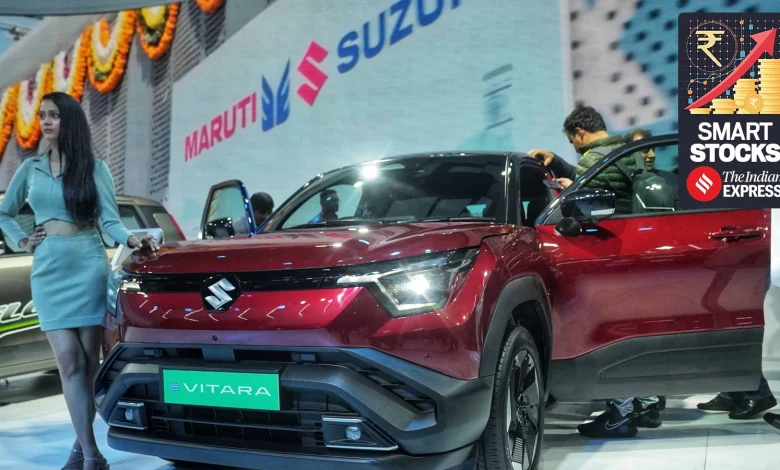
Imagine it’s 2010, and you want to buy a car. What would be the first name that comes to mind? Most likely, it would be Maruti Suzuki.
But what if I ask you the same question today? Maruti might not be the top choice anymore, but it would certainly be among the top three.
Something has changed, and we all know what it is — the euphoria around Utility Vehicles (UVs) in India.
And, let’s face it, Maruti has been late to the party.
For starters, Maruti’s market share in the domestic passenger vehicle (PV) market was around 43% in FY24. That’s still dominant, but back in 2019, it was nearly 52%.
In just five to six years, Maruti has lost 9% market share — a significant drop for a market leader.
This struggle was reflected in its stock performance. Between 2016 and 2022, Maruti Suzuki’s stock delivered only 3% returns — a period of underwhelming performance. Of course, Covid played a role, but that’s not the full picture.
Story continues below this ad
However, in the last three years (2022-2024), the stock has delivered annual returns of nearly 18%.
This rally has been backed by explosive revenue growth — from Rs 70,372 crore in FY21 to Rs 1,41,858 crore in FY24, almost a 100% increase. Even more impressive, net profit jumped nearly 200% — from Rs 4,389 crore to Rs 13,488 crore.
That is solid performance.
But the bigger question is: Does Maruti Suzuki have the capacity to deliver another stock rally and sustain its current growth trajectory?
Let’s dive in
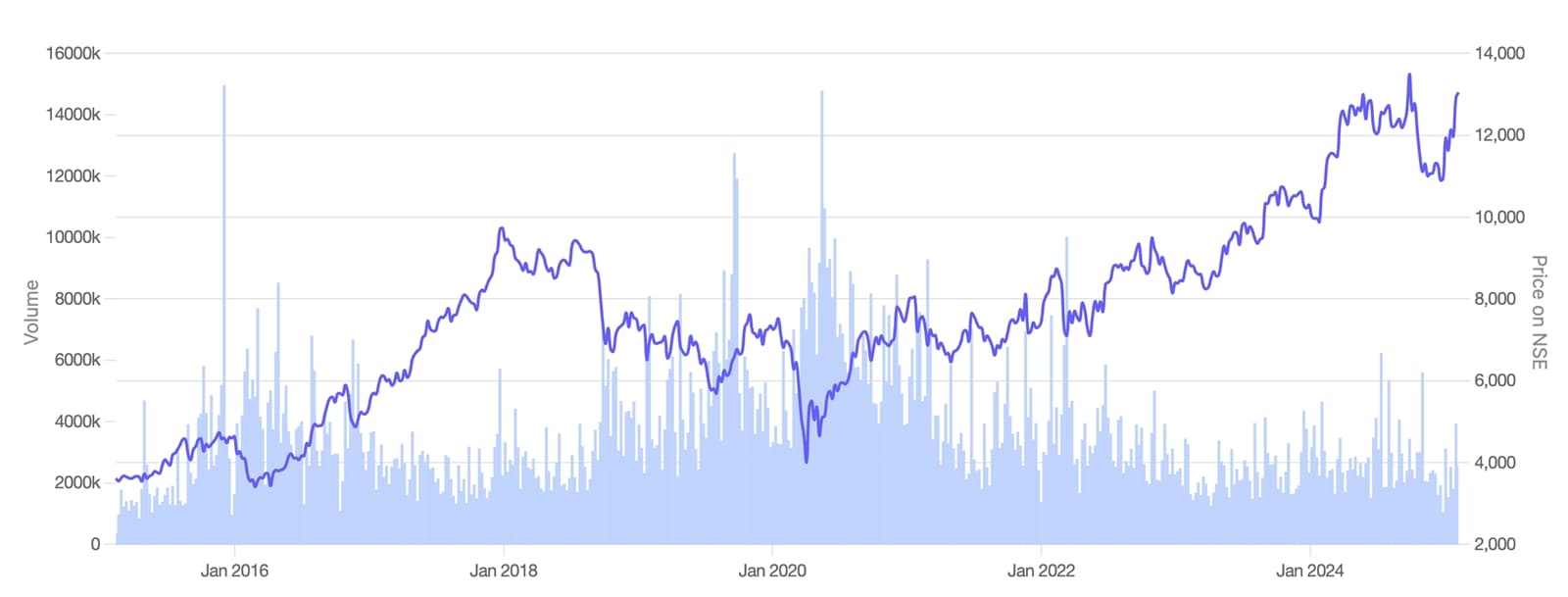 Stock price movement of Maruti Suzuki India Ltd. (Source: Screener.in)
Maruti Suzuki’s post-Covid playbook: How it engineered a stunning comeback
If you had looked at Maruti Suzuki in 2020, you might have thought the company has lost its edge. The pandemic crushed car sales, supply chain disruptions wreaked havoc, and rising competition from Hyundai, Tata, and Mahindra in the SUV segment made Maruti look like it had missed the biggest shift in India’s automobile industry.
Story continues below this ad
But then, something changed. From 2021 onwards, Maruti Suzuki completely rewired its strategy, and the results have been good so far.
So, what exactly did it do to turn things around? Let’s break it down.
The SUV pivot: How Maruti finally got the memo
For years, Maruti Suzuki dominated India’s small car market. It was the go-to brand for affordable, fuel-efficient hatchbacks, which made up a massive chunk of the Indian auto industry.
But post-2016, the industry started shifting toward bigger, more premium SUVs, and Maruti was caught lagging.
Story continues below this ad
By FY21, only ~13% of Maruti’s total sales came from SUVs, while competitors like Hyundai, Mahindra, and Tata had captured the booming segment. This shift eroded Maruti’s market share, which dropped from 52% in 2019 to 43% by FY24. The company needed to respond, and fast.
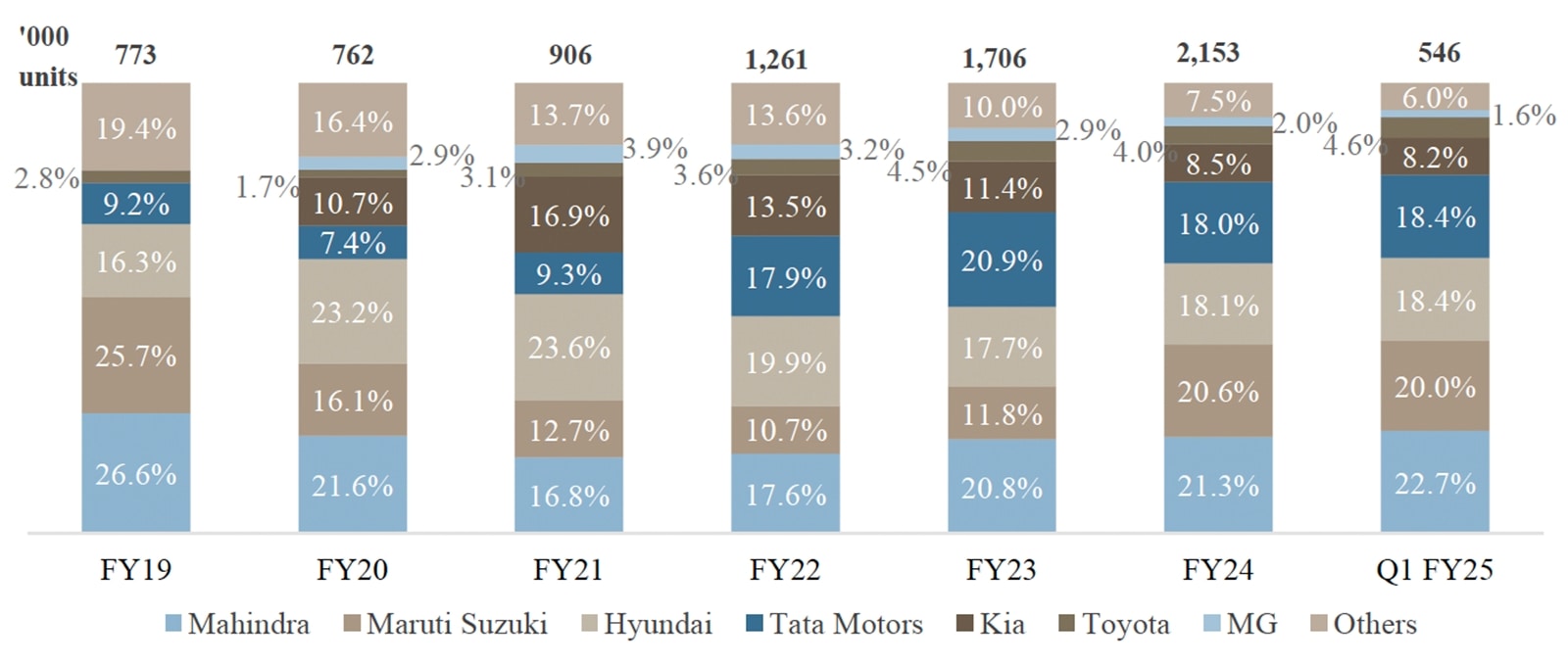 OEM-wise market share in the SUV segment. (Source: Hyundai Motor India DRHP)
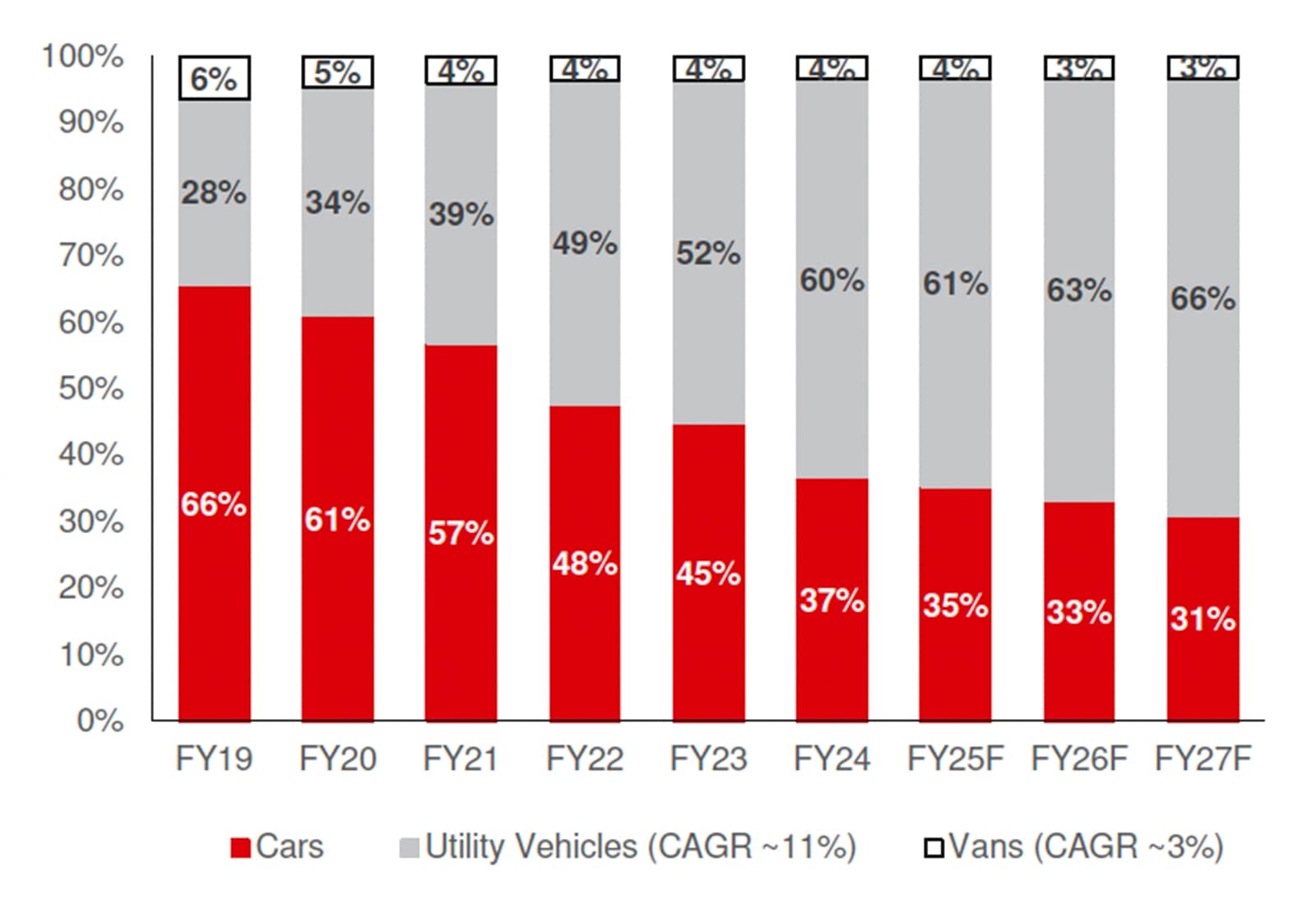
So, starting in 2022, Maruti aggressively launched new SUVs — the Grand Vitara (at number 6 in Figure 3), Jimny, and Fronx (at number 10 in Figure 3) — to take back lost ground. The impact was immediate.
 Top 25 Best-Selling Models for January 2025. (Source: Autopunditz)
By FY24, SUVs accounted for over 40% of Maruti’s total sales, and its SUV market share jumped from 13% to 21% in just two years.
This wasn’t just a numbers game — SUVs also sell at much higher prices than small cars. While a typical Maruti hatchback sells for around Rs 5.5 lakh, SUVs like the Grand Vitara sell for close to Rs 12-15 lakh, increasing the company’s average selling price (ASP) to nearly Rs 9 lakh. This shift directly boosted revenue without requiring an equivalent jump in sales volume.
Story continues below this ad
In essence, Maruti wasn’t just selling more cars — it was selling more expensive cars, improving both revenue and profitability.
Cranking up production to meet surging demand
Of course, launching new SUVs was only one part of the equation. The real challenge was producing enough cars to meet demand.
During Covid, Maruti’s factories ran at low capacity, thanks to global supply chain disruptions, semiconductor shortages, and erratic consumer demand. But once demand bounced back, Maruti didn’t hesitate — it went full throttle on ramping up production.
One of the smartest moves Maruti made was acquiring Suzuki’s Gujarat plant, increasing its manufacturing capacity without the need for a massive upfront investment. As a result, its annual production shot up to 2 million vehicles, up from 1.6 million before the pandemic.
Story continues below this ad
This ensured that as demand surged, especially for SUVs, Maruti could fulfill orders faster and avoid losing customers to rivals due to long waiting periods.
The export play: Going global for higher margins
For years, Maruti had been too focused on India. But after Covid, the company realised that expanding exports could be a key growth driver.
In FY21, Maruti exported just 96,000 units — a relatively small number for a company of its size. But by FY24, this number had surged to 283,000 units, a 170% jump.
The company set an even more ambitious target for the future: 750,000-800,000 units by FY31, essentially turning India into a global manufacturing hub for Suzuki.
Story continues below this ad
This shift wasn’t just about selling more cars, it was about higher profit margins. Exported vehicles fetch better pricing, thanks to favourable exchange rates and premium international positioning.
By focusing on exports, Maruti added a new high-margin revenue stream that reduced its reliance on the highly competitive domestic market.
Smart pricing and cost control: The secret to explosive profit growth
Even as Maruti was selling more SUVs and expanding exports, it had another challenge — rising costs. Post-Covid, raw material prices, especially steel and semiconductors, were at an all-time high. If Maruti absorbed these costs, it would squeeze margins; if it passed them on to consumers, it risked hurting demand.
So, the company took a smarter approach.
First, it raised prices gradually, ensuring customers weren’t discouraged by sudden jumps. Since SUVs were already in high demand, Maruti had strong pricing power and successfully passed on inflationary costs to buyers.
Story continues below this ad
Second, as global supply chains normalised in 2022-23, input costs dropped significantly, and Maruti’s EBITDA margins expanded from 6.5% in FY22 to 12% in FY24.
The net result? Maruti’s profit surged from Rs 4,389 crore in FY21 to Rs 13,488 crore in FY24 — a nearly 200% jump.
Now, with much of the turnaround already reflected in its stock price, the critical question is: Can Maruti sustain this momentum and continue to deliver strong growth?
Let’s break it down.
How Maruti is finally winning the SUV battle
In entry-level SUVs, Maruti remains the undisputed leader, holding 62% market share with models like Ertiga and XL6. The CNG option has been a game-changer, making Ertiga the top choice for both personal buyers and fleet operators.
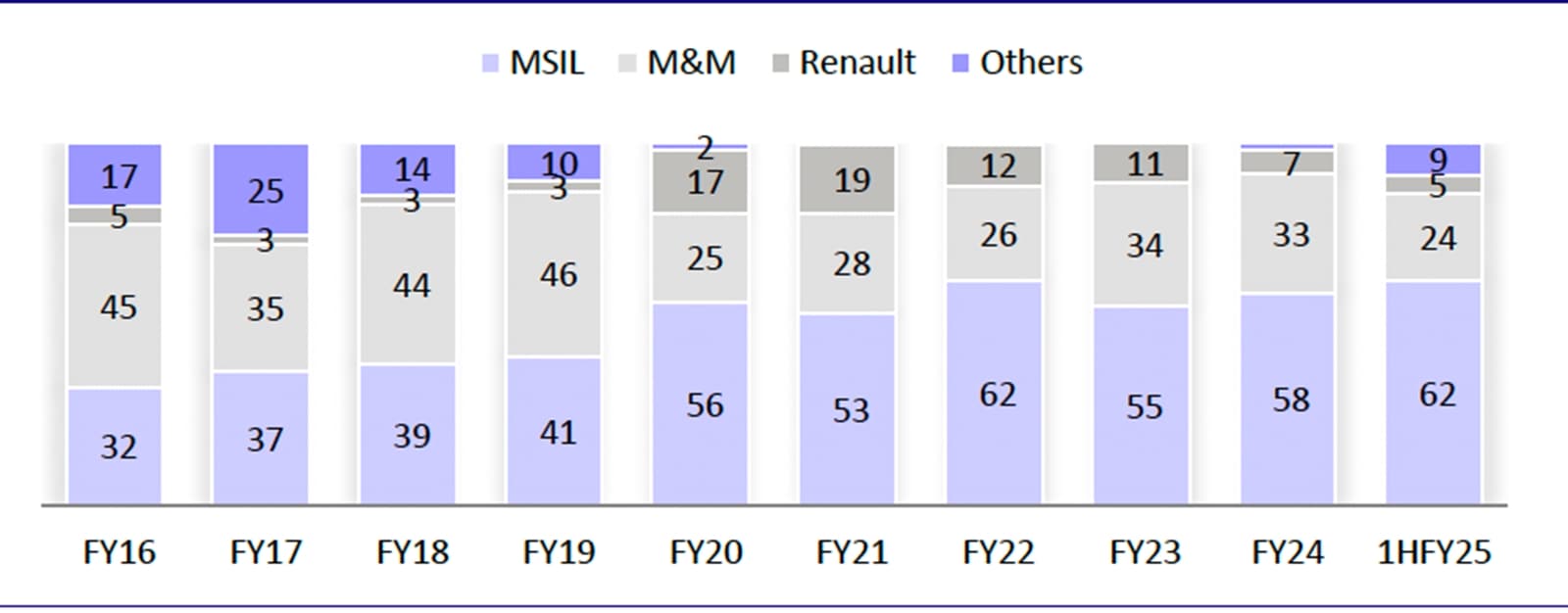 Entry-level SUV Segment. Source: Motilal Oswal
The compact SUV segment, which makes up 67% of UV sales, has been Maruti’s biggest comeback story. With Grand Vitara and Fronx, its market share jumped from 14% in FY22 to 26% in FY24.
The Grand Vitara’s hybrid option has been a key differentiator, while the Fronx has helped bridge the gap between hatchbacks and SUVs, bringing in price-sensitive buyers.
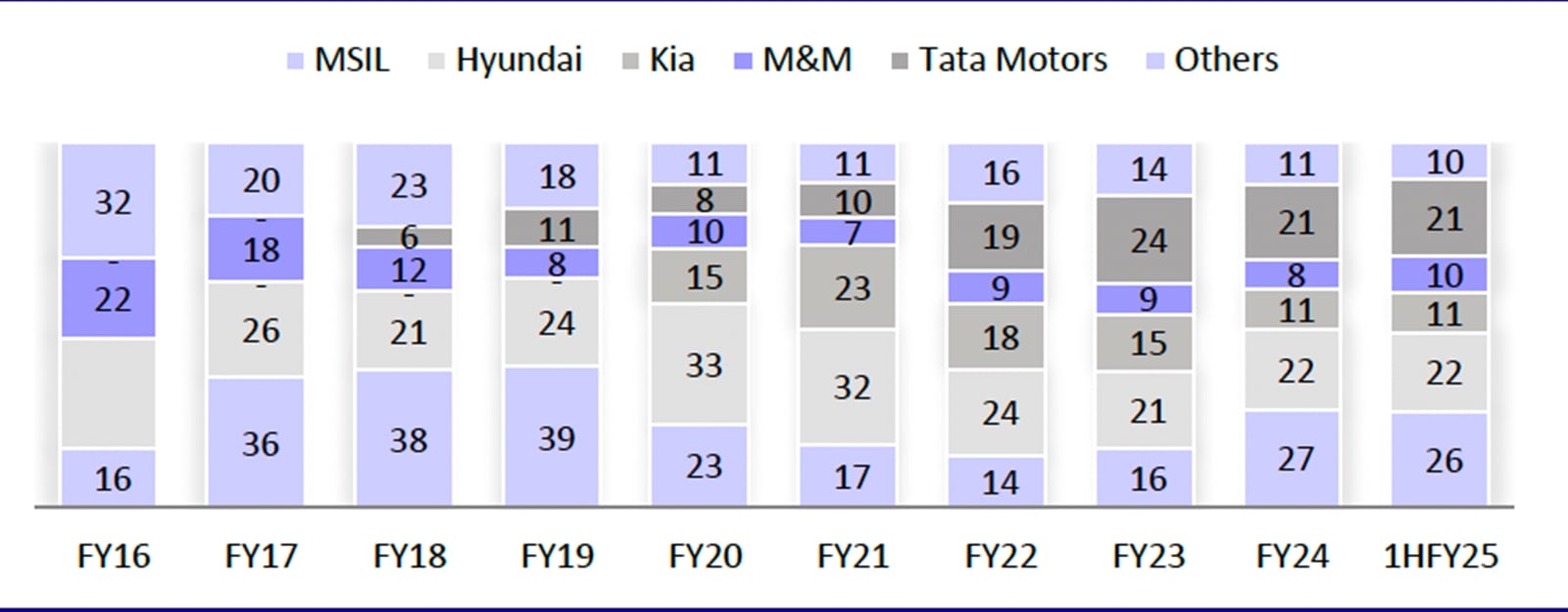 Compact SUV Segment. Source: Motilal Oswal
However, mid-size SUVs remain Maruti’s biggest gap. While Tata Harrier, Hyundai Alcazar, and Mahindra XUV700 dominate, Maruti lacks a strong in-house product. The Invicto (rebadged Toyota Hycross) offers a premium hybrid MPV alternative, but a true SUV is missing.
The biggest miss is premium SUVs (above Rs 20 lakh), where Tata, Mahindra, and MG have taken control. Maruti has no presence here, and unless it develops a high-end SUV, it risks losing out on a lucrative, high-margin market.
With six new UVs in the pipeline, Maruti is on the right track. If it can launch a compelling mid-size and premium SUV, it will be well-positioned to lead across all UV segments and continue its dominance in India’s fastest-growing auto category.
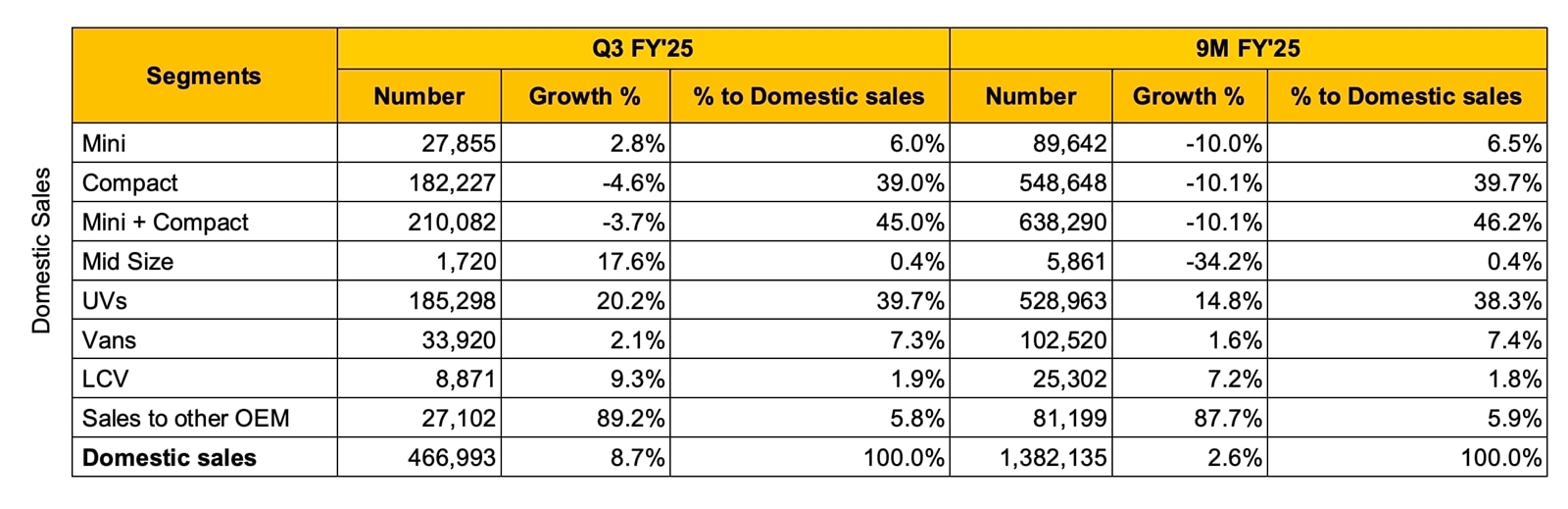 SUV’s Share in Maruti Suzuki’s Sales. Source: Investor Presentation FY25
Why is Maruti taking a measured approach to EVs?
Unlike Tata Motors, which has gone all-in on electric vehicles (EVs), Maruti has taken a more cautious approach, balancing EVs with CNG and hybrid technologies. This strategy is based on a fundamental understanding of the Indian market — while EV adoption is rising, challenges like charging infrastructure, battery costs, and resale value still limit mass adoption.
Maruti’s first full-fledged EV, the eVX, is set to launch in 2025. The company has announced six EV models by 2031, indicating that while it isn’t ignoring EVs, it doesn’t see them as an immediate game-changer either. Instead, Maruti is leveraging hybrids and CNG as bridge technologies to capture fuel-conscious buyers today, rather than waiting for EVs to gain widespread acceptance.
The numbers back this up.
Maruti already dominates the CNG vehicle segment, with 71.6% market share in CNG cars. CNG now contributes 31% of Maruti’s total sales, and the company aims to sell 600,000 CNG cars in FY25, marking a 38% year-on-year growth. In contrast, pure EV penetration in India remains below 2% of total vehicle sales, making Maruti’s hybrid-CNG strategy a logical and profitable choice for now.
Moreover, Maruti is developing affordable hybrid technology, which will be cheaper than Toyota’s full-hybrid system. This will be particularly useful in the compact and mid-size SUV segments, where hybrids can serve as an attractive alternative to fully electric vehicles.
By offering multiple fuel options — CNG, hybrids, and EVs — Maruti is hedging its bets, ensuring that it captures demand no matter which technology gains mass acceptance first.
Can Maruti sustain its margin expansion?
Maruti’s financial turnaround has been impressive, but the real question is whether its profit margins can continue expanding from here.
Over the past few years, Maruti has seen its EBITDA margins improve from 6.5% in FY22 to 11.9% in FY24, driven by several key factors. First, the shift towards SUVs has allowed it to sell higher-priced vehicles. While small cars like Alto and WagonR used to dominate its sales mix, now SUVs and hybrid models contribute significantly, lifting average selling prices (ASP).
Second, raw material costs have stabilised after the post-pandemic spike, helping Maruti improve profitability without having to pass excessive price hikes onto customers. This combination of better pricing power and cost control has driven profit growth.
However, margin expansion from here will be harder.
While Maruti is in a stronger position today, competition in the SUV space remains intense. Tata, Hyundai, and Mahindra are all aggressively competing in the same segments, which could put pressure on pricing and discounts. At the same time, rising input costs and regulatory changes around emissions and fuel standards could weigh on costs.
Going forward, analysts expect Maruti’s margins to stabilise around 12%, meaning further margin expansion is unlikely, but current profitability levels should hold.
How much upside is left? Valuation and market leadership
Maruti reported an EPS of Rs 420 in FY24, and at its current market price, it trades at 30x FY24 earnings. Historically, Maruti has commanded a P/E multiple of 30x, with the higher end reflecting periods of strong volume growth and margin expansion. At the moment, it is trading closer to its long-term average, meaning a major valuation-driven rally is unlikely unless earnings outpace expectations.
Assuming sales growth continues at its current pace (10-12% CAGR) and margins stabilise around 10%, Maruti’s EPS could grow to Rs 525-540 by FY26. If we apply different valuation multiples, the potential stock price range is:
- At 22x P/E → ₹11,500-12,000
- At 24x P/E → ₹12,500-13,000
- At 26x P/E → ₹13,500-14,000
This suggests a 15-25% upside over the next two years, assuming no major shifts in demand, cost structure, or market conditions.
Note: This is not a prediction of where the stock price could head. It’s just an if-then calculation for academic purposes.
For Maruti’s valuation to move towards the 28-30x range (Rs 14,500-Rs 15,500 levels), there would need to be clear signs of:
- Further SUV market share gains, especially in mid-size and premium categories, where it still lags.
- Faster adoption of hybrids and CNG variants, leading to a higher average selling price (ASP) and margin expansion.
- Export growth accelerating towards 750,000+ units annually, reducing dependency on domestic sales.
- Better-than-expected EV traction post-2025, particularly if the eVX sees strong demand.
On the other hand, risks to hitting higher valuation multiples include:
- Competition intensifying in the SUV and hybrid space, leading to pricing pressure.
- Rising input costs, which could cap margin expansion.
- Slower-than-expected EV adoption, delaying the benefits from Maruti’s planned EV launches.
At current levels, Maruti’s stock may no longer be in the rapid re-rating phase. The next leg of growth will likely be more earnings-driven rather than multiple expansion-driven.
For long-term investors, Maruti remains a stable, market-leading bet on India’s auto sector. However, for those looking for a rapid upside, much will depend on how well the company delivers on its SUV expansion, hybrid adoption, and exports over the next two years.
Note: We have relied on data from the annual report and industry reports for this article. For forecasting, we have used our assumptions.
Parth Parikh has over a decade of experience in finance and research, and he currently heads the growth and content vertical at Finsire. He has a keen interest in Indian and global stocks and holds an FRM Charter along with an MBA in Finance from Narsee Monjee Institute of Management Studies. Previously, he has held research positions at various companies.
Disclosure: The writer and his dependents do not hold the stocks discussed in this article.
The website managers, its employee(s), and contributors/writers/authors of articles have or may have an outstanding buy or sell position or holding in the securities, options on securities or other related investments of issuers and/or companies discussed therein. The content of the articles and the interpretation of data are solely the personal views of the contributors/ writers/authors. Investors must make their own investment decisions based on their specific objectives, resources and only after consulting such independent advisors as may be necessary.


