V2 Retail’s 1-year rally: With the stock up 330%, what’s the long-term play? | Smart Stocks News

Twelve months ago, V2 Retail was just another under-the-radar value fashion chain, trading at around Rs 450 per share. Today, the stock is hovering near Rs 1,900, a 330% gain in one year.
For most investors, this kind of return typically comes from a hot tech IPO or a turnaround story driven by one-off news. But V2’s rise has been different.
This is a company that sells affordable clothes in Tier-2 and Tier-3 cities. It operates in a sector known for thin margins and heavy discounting. Yet in FY25, it posted record revenue of Rs 1,884 crore, grew profit after tax by 159%, expanded to over 200 stores, and improved its operational metrics across the board from sales per square foot to inventory efficiency.
More importantly, this growth has not come at the cost of financial discipline. Margins have held steady, working capital has stayed lean, and store-level profitability has remained intact. The company has leaned into private labels, kept capital expenditure in check, and used internal accruals to fund expansion.
With such a steep run-up, the obvious question now is, what comes next? Has the stock already captured the full benefit of this operating performance, or is there still room for upside if execution stays strong?
Let us break down the FY25 numbers and see where V2 might be headed from here.
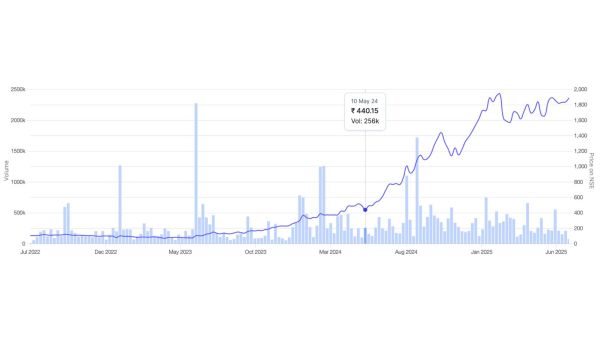 Figure 1: Share Price Movement of KFin Tech. Source: Screener.in
Understanding the business: How V2 Retail makes it work
At its core, V2 Retail is a value-focused fashion retailer that caters to India’s lower- and middle-income households, primarily in Tier-2 and Tier-3 cities.
Story continues below this ad
 Figure 2: Marketing Collateral on Store Opening. Source: Company’s Q4FY25 Report
It operates through a network of physical stores. There were 189 at the end of FY25, and the number has already crossed 200 as of June 2025. Unlike high-end or trend-driven brands, V2 focuses on value and variety.
It keeps the average selling price low (around Rs 297 in FY25 and Rs 308 in Q4FY25) while giving consumers many choices within that budget. This pricing strategy, combined with store locations in underserved markets, forms the base of its customer appeal.
But what truly drives the business is control over the supply chain. Around 85% of its sales in FY25 came from private-label products, that is, apparel and accessories designed in-house and manufactured through vendors or earlier in its units. These are not national brands sold at a discount. Instead, they are V2’s designs, priced competitively and refreshed regularly.
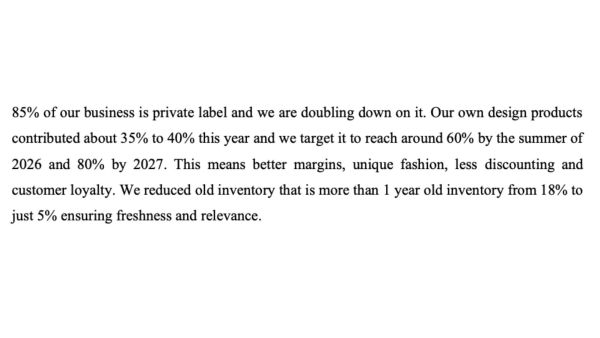 Figure 3: Management on Private-Label Brands and Inventory. Source: Company’s Q4FY25 Report
This gives V2 three important advantages:
Story continues below this ad
- Higher gross margins: Because there is no middleman or brand premium, private-label goods allow V2 to capture more of the retail markup. Even after offering lower prices to customers, the company still manages to earn gross margins of around 29%.
- Product differentiation: In-house design enables V2 to control the fashion mix at every store. As a result, the merchandise does not look generic, and it helps avoid direct comparison with other retailers. This keeps discounts in check and builds repeat customer loyalty.
- Inventory control: Because the design and procurement are centralised, the company can manage inventory turnover more efficiently. In FY25, it brought down inventory older than one year from 18% to just 5%.
On the operational side, V2 has kept its model asset-light. While the company incurs capital expenditure for setting up stores (roughly Rs 2.2 crore per store, including inventory), it does not own most of its retail real estate. Rentals are negotiated selectively, often slightly away from prime market locations, to keep costs low.
In FY25, the average rent was Rs 52 per square foot per month, lower than Rs 56 the year before.
Once a store is live, it reaches breakeven at just Rs 500 per square foot per month in sales. By FY25, the company’s system-wide average was already Rs 1,017 per square foot per month, which is double the breakeven point.
This gives it a strong buffer and ensures that most stores turn profitable from the first month itself.
Warehousing and logistics also play a key role.
Story continues below this ad
V2 runs a central warehouse in Gurgaon and is now expanding into zonal warehouses, starting with one in Kolkata. Inventory is refilled weekly through its fleet of vehicles, helping maintain stock availability across stores without overloading them.
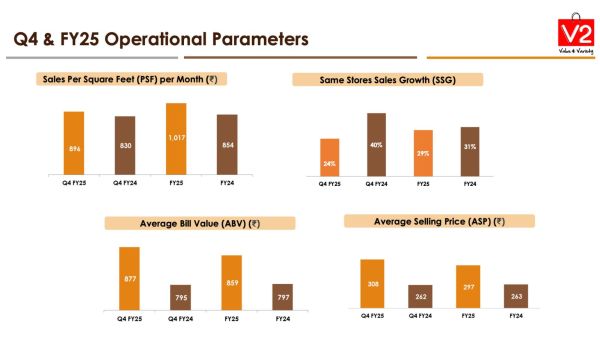 Figure 4: Key Operational Parameters. Source: Company’s Q4FY25 Report
What makes all this work together is a deep understanding of the value-conscious Indian consumer. The company has built a model that works well at scale, especially in smaller cities where aspirational demand is growing but branded retail options are still limited.
What is the moat for V2 Retail?
V2’s moat does not come from brand power or capital intensity. Instead, it lies in the tight integration between product, pricing, and execution.
A customer walking into a V2 store sees a wide range of fashion items that feel fresh, are well-fitted, and cost far less than what most national chains offer. That experience is made possible through a backend that handles design, vendor negotiation, warehousing, and merchandising with precision.
Story continues below this ad
Switching to a rival is not easy for the customer, because few alternatives match V2 on both price and choice. And for a competitor trying to copy the model, building this level of execution discipline, especially in lower-income geographies, takes years of iteration and trust-building with suppliers.
Moreover, the company has already built store-level processes that ensure profitability at scale, not just growth. Every store is measured on earnings before interest, tax, depreciation, and amortization (EBITDA), and new store performance is tracked closely. As of now, the management claims that not a single store over one year old is loss-making at the EBITDA level.
FY25 performance: Growth built on fundamentals
V2 Retail’s headline numbers in FY25 show the company’s improving execution at every level.
Revenue grew 62% year-on-year to reach Rs 1,884 crore, up from Rs 1,164 crore in FY24. That is the highest topline in the company’s history.
Story continues below this ad
But more importantly, profitability improved along with growth. EBITDA rose to Rs 258 crore, a 74% increase, and EBITDA margins expanded to 13.7%, up from 12.7% last year.
Profit after tax came in at Rs 72 crore, which is nearly three times higher than the Rs 28 crore earned in FY24.
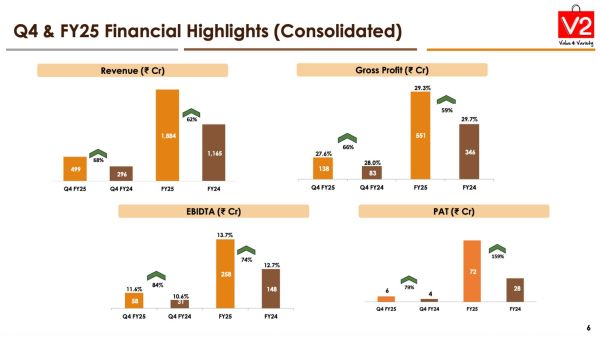 Figure 5: Key Financial Parameters. Source: Company’s Q4FY25 Report
This improvement came from both higher volumes and better operating metrics.
Same-store sales growth holds firm
One of the strongest indicators of V2’s momentum is its same-store sales growth (SSSG). After posting a 31% growth in FY24, the company delivered a further 29% SSSG in FY25. That is an impressive figure, especially on a high base.
Story continues below this ad
This means that the company is not just growing by opening new stores. Even older stores are seeing strong demand. Many new stores reached operating profitability within the first few months, according to the management. These early breakeven points are a direct result of tight cost control and improving brand recall in smaller cities.
Better sales efficiency and customer metrics
A deeper look at store-level metrics reveals a clear step-up in efficiency:
● Volume growth was 43% in FY25, showing broader demand across categories.
● Average selling price (ASP) increased to Rs 297 in FY25, from Rs 263 in FY24.
Story continues below this ad
● Average bill value (ABV) rose to Rs 859, compared to Rs 797 last year.
● Sales per square foot (per month) jumped to Rs 1,017, up from Rs 854.
These numbers suggest that V2’s customers are buying more items and spending more per visit, all while prices remain firmly in the value segment. That means growth is coming from genuine traction, not inflation-led pricing or deep discounting.
Healthy store expansion, with operational discipline
During FY25, the company opened 74 new stores and closed only 2, taking its total to 189 stores at year-end.
By May 2025, the live store count had already crossed 200. Retail space expanded to over 20 lakh square feet, covering nearly 150 cities across 20 states.
Store openings were not random. V2 focused on clusters where it already had a presence and operating leverage, such as Bihar, Uttar Pradesh, Odisha, and Jharkhand. It also began expanding into new territories like Punjab, West Bengal, and Rajasthan. Management shared that newer stores in these regions are already delivering revenue per square foot close to the company average, which is a strong signal of product-market fit.
Despite this fast rollout, the company kept its working capital cycle stable. Inventory stood at 90 days of sales, and creditors remained around 45 days. The portion of old inventory (more than 12 months) fell sharply from 18% to just 5%. This was possible because of better vendor coordination and more accurate demand forecasting.
Margins reflect ground reality
On a pre-IndAS basis, which excludes accounting adjustments related to leases, the EBITDA margin stood at 8% in FY25. This is the number that most closely reflects operating profitability, especially for companies with large rental commitments. The management has guided for 8-9% EBITDA margins on a pre-IndAS basis over the next two years.
This margin level may seem modest, but it reflects a conscious choice to maintain affordability while scaling operations. As more stores mature and fixed costs spread out, margins are expected to inch higher without compromising on growth.
Valuation and outlook: Is the stock still worth a look?
After delivering a 330% return in just one year, V2 Retail has moved from being a turnaround story to a momentum stock.
For long-time investors, the ride has already been rewarding. But for new investors evaluating it today, the key question is how much of the upside is already priced in?
As of now, the stock trades close to its all-time high, with a trailing price-to-earnings (P/E) multiple of around 80-90 times. This is significantly higher than the broader retail sector average. On a price-to-sales basis, too, the company commands a premium due to its asset-light model and strong growth trajectory.
These valuations may appear stretched, but they reflect investor belief that V2 can continue expanding store count, hold its margins, and eventually scale profits much faster than revenue.
If the company can grow earnings by even 30% annually over the next few years, the current P/E ratio will start to look more reasonable.
There are a few reasons this expectation is not entirely unfounded:
- The company has a clear store rollout plan: 100 stores every year, backed by internal accruals.
- Same-store growth has been strong, even on a high base, suggesting brand traction.
- Operational execution, including inventory, warehouse, and margin control, has shown discipline.
However, it is important to note that V2 now has less room for error. At these valuations, any signs of margin pressure, weak festive season performance, or slower new store breakeven can affect investor confidence. Execution, not just expansion, will be closely watched.
For retail investors, V2 Retail today represents a mature, fast-scaling business that is still early in its long-term journey. But the steep rally means one must now weigh the upside against potential volatility. The fundamentals are strong, but the expectations are high.
In other words, this may no longer be the undiscovered gem it once was, but it might still be a business worth tracking, especially if it can sustain growth without compromising on discipline.
Note: This article relies on data from annual and industry reports. We have used our assumptions for forecasting.
Parth Parikh has over a decade of experience in finance and research and currently heads the growth and content vertical at Finsire. He holds an FRM Charter and an MBA in Finance from Narsee Monjee Institute of Management Studies.
Disclosure: The writer and his dependents do not hold the stocks discussed in this article.
The website managers, its employee(s), and contributors/writers/authors of articles have or may have an outstanding buy or sell position or holding in the securities, options on securities or other related investments of issuers and/or companies discussed therein. The content of the articles and the interpretation of data are solely the personal views of the contributors/ writers/authors. Investors must make their own investment decisions based on their specific objectives, resources and only after consulting such independent advisors as may be necessary.