Don’t drop everything just to do AI: Tech Matters’ CEO Jim Fruchterman warns nonprofits | Technology News
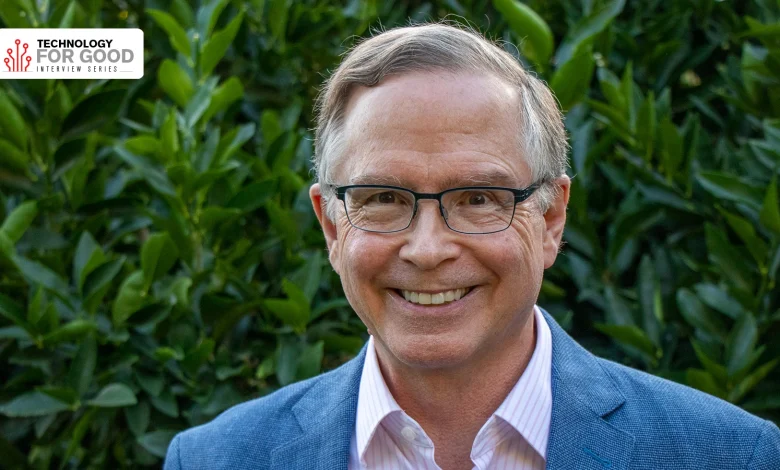
Jim Fruchterman is the CEO of Tech Matters, a US-based nonprofit building technology for social good.
A social entrepreneur and mentor to nonprofit tech companies, Fruchterman is a MacArthur fellow and the author of Technology for Good: How Nonprofit Leaders Are Using Software and Data to Solve Our Most Pressing Social Problems, from MIT Press.
A former rocket engineer, he is also a distinguished alumnus of the California Institute of Technology (Caltech).
Fruchterman spoke to indianexpress.com on the tech for good landscape, the challenges nonprofits face in adopting new technology, and how they can prepare for the changes that are being brought about by AI. Edited excerpts:
Venkatesh Kannaiah: Tell us about your Tech For Good journey.
Jim Fruchterman: I was a founder of some of Silicon Valley’s earliest machine learning/AI companies. Our breakthrough was to use very large data sets to make a machine to read any printed text.
We raised $25 million in venture capital to go after the commercial markets for Optical Character Recognition technology. The social good application of this technology was to make reading machines for visually impaired people. After my VCs vetoed the social good application of our tech, I founded Benetech, a nonprofit tech company to make reading machines for the visually impaired as a charity. It turned out to be quite successful and launched me on a 35-year career of starting new nonprofit tech enterprises.
Story continues below this ad
Benetech focuses on technology for visually and print-disabled people. It operates the Bookshare Global Digital Library. You can think of it as a kind of ‘Kindle for the visually impaired.’ It’s both the technology platform and the library, with more than a million books.
Tech Matters, another nonprofit of which I am the Founder-CEO, focuses on areas like crisis-response call centres and software for farmers. One of our tools helps people tell stories using maps and data. It lets you combine geospatial imagery — from drones or satellites — with data, photos, and stories.
I have had the chance to meet hundreds of tech for good entrepreneurs from all over the world, and this motivated me to write the book, Technology for Good: How Nonprofit Leaders Are Using Software and Data to Solve Our Most Pressing Social Problems. In my book, I share the stories of more than 60 tech for good nonprofits from all over the world and the lessons that we can learn from them.
Venkatesh Kannaiah: Tell us about some tech themes/innovations which have made the work of nonprofits more impactful?
Story continues below this ad
Jim Fruchterman: The most exciting tech advances are a combination of approaches and technology. In terms of approaches, human-centered design, the lean start-up concept, and cloud computing are highly applicable to nonprofits, both in terms of designing programmes and technology tools to support social programmes. AI technology and more advanced data tools have also made their mark in social good applications.
Let me give some examples. When I started my career, optical character recognition (OCR) didn’t work very well, and the machines cost about $50,000 each. By the time I launched Benetech, the price had dropped to around $5,000. At that point, some families and employers could finally afford them. That was the tipping point for helping visually impaired people. The industry wanted these systems as labour-saving devices to scan forms for government or insurance companies. Because that market existed, I could bring the same technology to visually impaired users.
Another example is Bookshare. It turns out that one of the most natural users of an e-book is a visually impaired person. They can’t read print, and while they could scan a book using OCR, they’d much rather download it directly to their phone and have it read aloud. Even 20-25 years ago, it was clear that e-books were going to take off. We launched Bookshare before Amazon introduced the Kindle, but we could already see commercial examples emerging.
This pattern repeats itself. Technology advances, commercial demand drives development, and then a social application becomes practical. The turning point usually comes when enough demand exists for the product or technology to be built. After that, there is what I call ‘the last social mile’, adapting that technology for people who are poor, visually impaired, human rights activists, or others.
Story continues below this ad
Venkatesh Kannaiah: Tell us about nonprofits which have used tech successfully in their operations.
Jim Fruchterman: There are so many to choose from.
There is Digital Green, an Indian nonprofit whose FarmerChat tool gives farmers advice in their mother tongue in India and Africa. They have been an early leader in making generative AI technology work for an ordinary man or woman.
There is Talking Points, an American nonprofit which improved academic results for the children of immigrants by providing an AI translation tool that enabled direct communication between parents and teachers without a common language.
MapBiomas is a Brazilian group of academics who built a powerful open source tool for analysing land use changes over time using free satellite imagery, first in the Amazon and now in more than a dozen countries.
Story continues below this ad
MomConnect is a South African programme which answers questions from expectant mothers using a combination of AI and expert human answers at immense scale.
Venkatesh Kannaiah: What are the opportunities and challenges for tech use by nonprofits in the Global South?
Jim Fruchterman: Open source software and locally captured and owned data are two great tools for effective Global South nonprofits. The main commercial GenAI products are frequently ill-informed about the lives and languages of the majority of humanity. There is a tremendous opportunity to adapt technology advances to the actual needs of local communities.
The capacity to deploy tech advances to nonprofits in the Global South is now widespread, and the ability for south-to-south innovation distribution has grown. For example, Adalat AI has been revolutionising India’s court systems over the past three years and is now expanding into Africa.
Story continues below this ad
I think the biggest challenge is distribution and scale. The ability to build technology solutions is now fairly widespread. The harder question is how to get those solutions into the hands of poor people. That turns out to be much more difficult. This is where many Indian social entrepreneurs have been especially effective; they’ve often figured out how to tackle the scale problem.
Another big challenge is funding. There’s limited philanthropic capital available for this kind of work. So if we’re thinking about solving problems for 90% of humanity, the path is usually either finding a viable business model or building a nonprofit that can somehow reach scale.
Venkatesh Kannaiah: Tell us about innovative products that have come out of your nonprofits, Benetech and Tech Matters.
Jim Fruchterman: We come out with a new product every two to three years. Bookshare is one of our best-known social enterprises: it’s the largest digital library for the visually impaired in the world. More than 30 million accessible ebooks have been downloaded globally, and Indians are amongst the largest user groups on this platform.
Story continues below this ad
Aselo is an open source platform for crisis response helplines now active in roughly 20 countries, including India. It brings texting capabilities to mental health helplines used to answer phone calls.
The idea behind Terraso is to build open source software for people directly experiencing climate change; tools that typically aren’t developed by for-profit companies.
One example is the story mapping tool I mentioned earlier. It helps communities combine data, maps, and local knowledge to tell the story of their place — why it matters, why it deserves investment, or why a product from that region might justify a premium.
The other major component is the soil identification software. The idea is to guide farmers through a few simple field exercises to identify their soil type. Once you know the soil, you understand its potential. The Government of Ethiopia uses this kind of software to help decide where to invest in agricultural development. With limited public funding, those decisions really matter.
Story continues below this ad
Then there’s Better Deal for Data, a project that’s been in development for a couple of years and officially launched last week. What started as an idea is now a practical standard that nonprofits can adopt. It commits them to protecting the data of the people they serve and using it ethically.
It is to encourage organisations to commit to storing beneficiary data responsibly and not sell it to platforms.
Venkatesh Kannaiah: Are there bad tech ideas which development organisations keep trying?
Jim Fruchterman: I love this question. Some of my favourite bad ideas are the apps that no one will download, a giant database in the sky that is rarely consulted, the latest tech fad (like blockchain), or the tiny nonprofit that insists they are so unique that they need a custom piece of software built to their specification. These fail 95% of the time, except for blockchain in social good, which failed at least 99.9% of the time.
Why do nonprofits fall for these so-called “fancy ideas”? For one thing, they usually don’t have much money or deep technology expertise. That makes them vulnerable to bad advice.
In the book, I joke about the “nonprofit time machine.” You walk into a nonprofit office, and the PCs might be 10 or 15 years old, the software is just as dated, and nothing quite works the way it should. The upside is that, even being 10 or 15 years behind, there’s huge room for improvement simply by adopting tools and practices we already know are effective.
Venkatesh Kannaiah: Are global corporations tuned to the idea of sharing tech with nonprofits in a sustainable manner?
Jim Fruchterman: Major tech companies often provide nonprofits with free or discounted access to their technology and grants. One particular approach I like is Pledge 1%, where new startups pledge 1% of their stock equity, products, employee time, and/or profits. This creates a corporate culture where social responsibility and volunteerism are baked in from the start.
Venkatesh Kannaiah: How is AI going to change things in the nonprofit sector? What should they be worried about?
Jim Fruchterman: I spend a lot of time reassuring nonprofit leaders that they don’t have to drop everything to “do AI.” Even though they are being pushed to do so.
Most nonprofits are similar to small businesses: they don’t have data or software people to use the latest technology. They have to wait for products that work for them and should not violate the trust communities put into the nonprofits that serve them.
The AI tool actually has to help solve a real problem that a nonprofit has. Since all AI products make mistakes, I just note that the time saved from using AI tools should be considerably more than the time wasted in fixing AI’s errors.
One thing to be worried about is that many of the AI products voraciously devour whatever data they can get their hands on. Nonprofits need to ensure they are not feeding the confidential data of the people they serve into such products: that is unethical, and in many countries, against the law.