Nasa approves iPhones for Spaceflight after years of tech restrictions | Technology News
3 min readNew DelhiFeb 7, 2026 03:47 PM IST
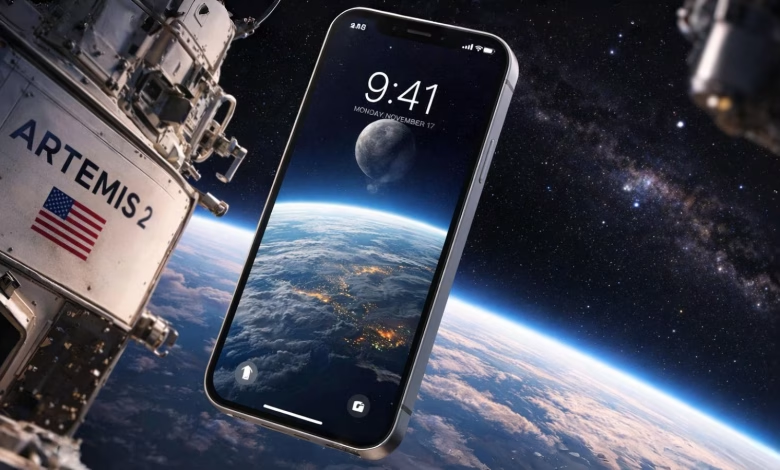
The National Aeronautics and Space Administration (Nasa) has quietly made a change that feels small on paper but significant in spirit. For upcoming missions, astronauts heading into orbit and even toward the Moon will be allowed to carry modern smartphones, including iPhones.
The update was confirmed on Wednesday night by Nasa Administrator Jared Isaacman, who said astronauts flying on Crew-12 and the Artemis II mission will be permitted to take smartphones with them. It marks a clear shift from Nasa’s traditionally cautious stance on personal technology in space.

Apple announced that it will be the first instance of the iPhone being approved for extended use in space. Previously, Nasa astronauts were restricted from using personal smartphones on board, although some approved cameras were permitted. This change will allow astronauts to capture and share experiences with their families and the public. The specific iPhone models qualified for this use are not yet specified.
According to Isaacman, the decision is not just about convenience. It is also about giving astronauts simple, powerful tools they use in everyday life.
In a post shared on X, Isaacman said astronauts would soon fly with the latest smartphones so they can capture important moments for their families and share photos and videos with people back on Earth. While astronauts have always taken striking images from space, smartphones make it easier to quickly record short videos or document unexpected events.
Challenging old rules at Nasa
Isaacman stressed that allowing smartphones into space is also about questioning long-standing processes within the agency. He said Nasa has begun re-evaluating outdated rules and finding faster ways to approve modern hardware for flight.
Qualifying any device for space travel is complex. Components must be tested for radiation exposure, extreme temperatures, vacuum conditions, vibration, and even the materials used inside the device. These checks exist for safety reasons, but they can slow progress when applied too rigidly.
Story continues below this ad
Isaacman wants teams to revisit these requirements and determine whether all of them are still necessary in their current form.
Modern tech replaces outdated gear
Before this change, some of the technology approved for upcoming missions felt noticeably behind the times. For Artemis II, the newest official camera planned was a Nikon DSLR released in 2016, along with older GoPro models.
With smartphones now approved, astronauts will have access to compact cameras that outperform older space-approved equipment. This could result in more personal, immersive views of humanity’s return to the Moon.
This is not the first time phones have gone to space. iPhone 4 models flew aboard the final space shuttle mission in 2011, though their use was limited. More recently, astronauts on the International Space Station (ISS) have relied mostly on tablets to communicate with family.
Story continues below this ad
Private missions, including Isaacman’s Polaris flight and Axiom missions, have already allowed smartphones. Now, Nasa is officially catching up, and the Moon may soon be getting its first iPhone photos.
© IE Online Media Services Pvt Ltd