Archana Puran Singh’s son talks about battling depression after injury ended football career in England: ‘I was desperate to succeed’ | Bollywood News
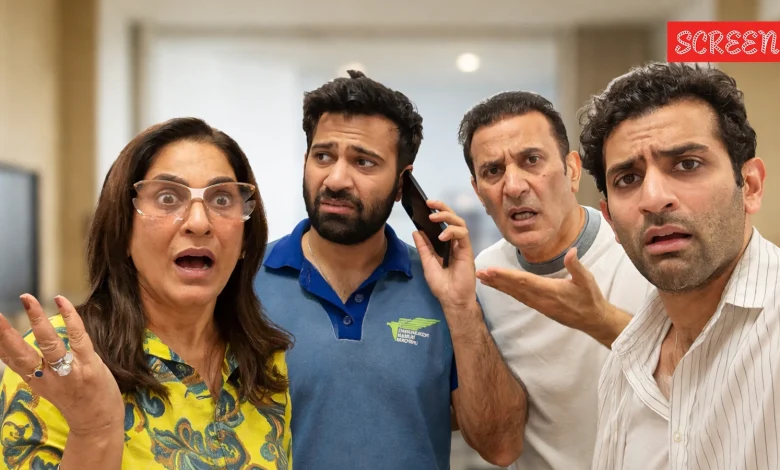
Archana Puran Singh and Parmeet Singh’s son Aaryamann Sethi has opened up about the time he was forced to quit his promising football career after suffering a leg injury. During Archana’s recent vlog, Aaryamann spoke extensively about the same and also revealed how he dealt with depression and faced racism in London, which shattered his dreams. He was playing with England’s Queens Park Rangers and was looking at a likely career in the English Premier League.
Speaking about the tough phase in his life when he was just 14 years old, he said, “The tough part was leaving home, and I only decided that I want to leave home and play football in England and you guys made it happen. I left home when I was 14 years old. I stayed there for three weeks and just as I settled in, I broke my leg. Then it became very difficult for me. Then I came back to India and I was in hospital and I got crutches and had surgery done.”

Aaryamann didn’t give up and tried his luck at football once again the following year. “I went there again next year and it was 10th standard, so I had to also study hard. I was not playing properly because I was still recovering from my surgery. To see everyone around me grow faster and stronger in the age when people are supposed to do that, I was going backwards. I was not able to catch up,” he admitted.
Aaryamann on facing racism
When Archana asked him how he felt when his football career ended before it truly began, he said, “It was not a moment. It was a slow realisation, my dream kept breaking. That was tough to deal with. And because of that stress I had eczema on my skin all over. I used to cry a lot, and I would cry even on the pitch because people would look at me and think how did he come here, but I used to play very well before the injury.”
Talking about facing racism, he added, “I also experienced racism, but I didn’t care about it because you guys made me confident in myself. Once a guy told me, ‘you came on a donkey to train?’ I told him, ‘Yeah, the donkey has a Mercedes sign. What are you going to do about it?’”
‘Had bouts of depression, panic attacks, stayed in room all day’
Aaryamann spoke about falling into depression after he had to quit football. “With that dream going away, I got into depression. I still deal with depression. I had panic attacks, anxiety attacks, my hands shake, I have had bouts of depression so much that I would not even come out of my room, and I would stay there all day. London was tough on me,” he said.
Story continues below this ad
Sharing how his family supported him during the difficult phase, Aaryamann said, “Reassurance doesn’t help in depression, only spending time with that person does, and you all spend time with me. Mom has been the most supportive.”
‘Became desperate to succeed’
Archana shared that she too was deeply affected seeing her son suffer and recalled Zeenat Aman’s words to her. “Zeenat used to say kids are a pain in the heart when they are away from you, and they are a pain in the a** when they are near you,” she said.
Aaryamann revealed that he developed a fear of failure during that phase. He said, “I got this fear of not succeeding from both of my parents. Every year, when I didn’t settle, I started feeling worse. I got desperate after a point and was like kuch bhi chalega, kuch bhi kaam kar lunga. That’s when I realised that I want to do music and I will be happy if I continue doing that. I don’t have depression anymore, which is great. My anxiety is 50–20% of what it used to be. I don’t get panic attacks, I don’t get stressed out.”
Story continues below this ad
Speaking to Indian Express, existential psychotherapist at That Culture Thing suggested how parents can help children if they are facing anxiety and withdrawal, and how to spot the signs: “It’s important to observe without jumping to conclusions. Notice changes in sleep, eating, energy, or mood. If they stop doing things they once enjoyed or seem emotionally flat, it’s a sign they may be struggling. The key is to stay available and make them feel safe enough to share what’s really going on.”