The Global Fight to Protect Culinary Roots
The same outrage or scepticism that Indians feel when they read about Turmeric Latte and Chai Latte or Chai Tea and Naan Bread is what I reckon the Italians, the French, or the Mexicans would feel if they looked at shelves of Indian Gruyere and Parmesan and now even Indian Champagne and Tequila in supermarkets and liquor stores.
I am all for innovation and any move that spreads varied tastes and enhanced flavours and cuisines across the world. But what qualifies a bubbly beverage to be called Champagne, or a certain cheese to be called Gruyere or Parmigiano Reggiano? There are geographical qualifications—these products must originate from specific regions, such as grapes from the Champagne region. In the case of Tequila, it can be produced outside Jalisco, but only within specific municipalities in four other Mexican states: Guanajuato, Michoacán, Nayarit, and Tamaulipas. If the alcohol is not made from Blue Weber agave, or is produced outside these specific regions or outside Mexico, it cannot be classified as tequila. Instead, it is called an “agave spirit” or “mezcal”.

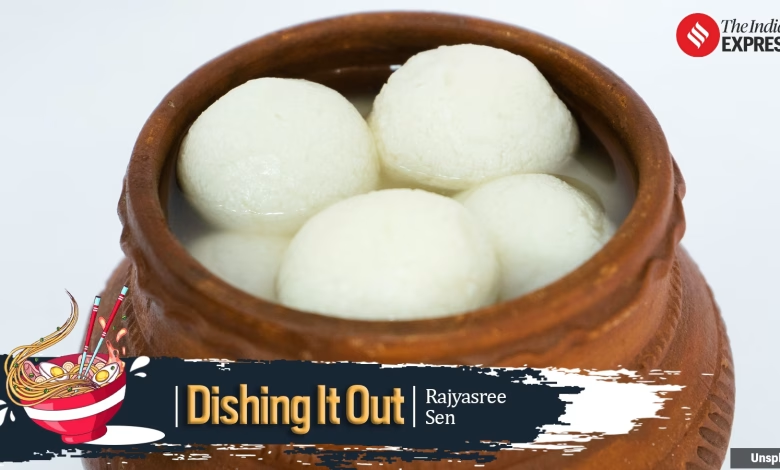
This brings us to Geographical Indication (GI) tags, which caught my attention when Odisha applied for a GI certificate for rosogolla. GI status identifies a product as originating from a specific location and guarantees its authenticity and distinctiveness. Odisha claims that the rosogolla was created within its borders as an offering—the khiramohana—to Lord Jagannath. Bengal begs to differ. In 2019, the ‘Odisha Rasagola’ was given a GI tag, but Bengal could rest easy, as the softer, spongy white rasgulla of the state had already received a separate GI tag in 2017.
Now, the rasgulla isn’t the only delicacy to have received a GI tag. In fact, the recent years have seen a slew of such recognitions. In 2022 and 2023, the Mithila Makhana (Bihar), Tandur Red Gram (Telangana), Raktsey Karpo Apricot (Ladakh), Alibag White Onion (Maharashtra), and Mancurad Mango (Goa) all received GI tags.
Some of the other well-known GI-tagged Indian foods include Darjeeling Tea (West Bengal), Kashmir Saffron (Jammu & Kashmir), Naga King Chilli (Nagaland), Bikaneri Bhujia (Rajasthan), Tirupati Laddu (Andhra Pradesh), Dharwad Peda (Karnataka), Goan Bebinca (Goa), Alphonso Mango (Maharashtra), Basmati Rice (Northern regions), the delicious Manipuri Black Rice (Manipur), the almost Halloumi-like Kaladi Cheese (Jammu), and Odisha’s Magji Laddoo.
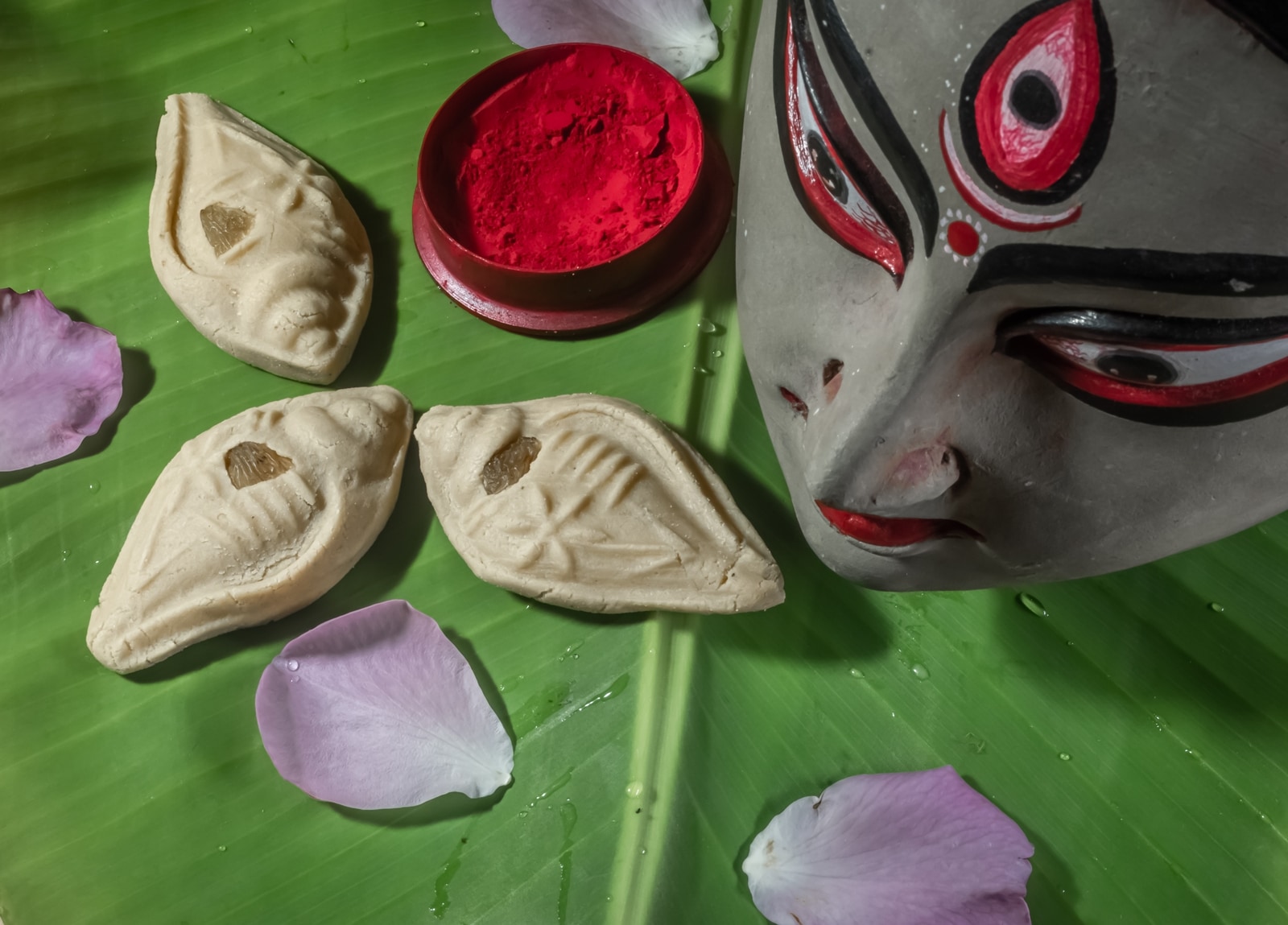 It is the gur or liquid jaggery that lends the sandesh its biscuit colour and caramelly sweetness. (Photo: Wikimedia Commons)
Last year saw a few other Indian sweets receive the GI tag. And it’s no surprise that four of the five are from West Bengal–with its perfect combination of chhena (homemade soft paneer) and jaggery.
First on the list is Nolen Gur-er Sandesh, made with fresh chhena and cooked over a low flame with liquid date palm jaggery (nolen gur) harvested from date palms around Bardhaman, West Bengal. It is the gur or liquid jaggery that lends the sandesh its biscuit colour and caramelly sweetness.
Story continues below this ad
The other sweet to make the cut was the Murshidabad Chhanabora, again from West Bengal. Fresh chhena is shaped into small roundels, lightly fried, and soaked in sugar syrup. With a slightly chewy centre and a caramelised outer layer, this sweet is often flavoured with cardamom or rose water, as a reminder of Mughal influences in Bengal’s culinary history.
The Bishnupur Motichoor Laddoo, from the temple town of Bishnupur in Bankura district, also known for its beautiful terracotta horses, is made with tiny motichoor pearls made from piyal (Indian almond tree) seed flour instead of gram flour. These tiny little pearls are deep-fried in ghee, then flavoured with freshly ground cardamom, and finally rolled by hand into soft laddoos. These laddoos can be traced back to the Malla dynasty, which ruled Bengal for over a 1,000 years.
The Kamarpukur Sada Bonde originates in the village of Kamarpukur. I have never seen them or tasted them, but they do sound delicious. These pale, airy, deep-fried sweet batter balls are made from a lightly flavoured wheat-flour batter. They are deep-fried till crisp on the outside and soft within, and then lightly soaked in sugar syrup. These are slightly larger than the boondi pearls and are eaten as individual sweets.
The only non-Bengal winner of the GI crown in this set is Kavindapadi Nattu Sakkarai from Tamil Nadu, a traditional jaggery made from fresh sugarcane juice, slow-boiled over a wood fire. This jaggery is known for its mineral content, such as iron, magnesium, potassium, and calcium. It is marked by its deep golden colour and caramel aroma and has been prepared by local farmers in Kavindapadi for generations.
Story continues below this ad
The lesson in all of this is that heritage and local know-how are what qualify an ingredient to be called by a certain name. You can’t just take Nolen Gur from Bengal and claim that it is Kavindapadi Nattu Sakkarai just because it is liquid jaggery. Just because it tastes like Parmesan and smells like Parmesan doesn’t make it Parmesan.
When Shakespeare wrote “What’s in a name? A rose by any other name is still a rose,” he didn’t know about GI tags and the importance of identifying delicacies correctly. Next time someone hands you a brown rasgulla and says it’s an Odisha Rasgulla, don’t feel bad about asking about its exact antecedents.
Next week, I’ll write on one of my favourite cuisines and all the delicacies — some of which are staples for Chinese food lovers in India — that are prepared for Chinese New Year.