Nothing CEO Carl Pei on the flagship store in India, foldables, and the phone of the future in the AI era | Technology News
Carl Pei appeared calm but his mind was racing with thoughts about how customers would react to the Nothing flagship store, which had just opened in India. “I look forward to seeing what happens tomorrow whether people show up or not, and how they react to the store,” Pei said a day before the first Nothing store opened its doors to the country’s biggest tech hub on Saturday.
Situated in Bengaluru’s upscale Indiranagar neighbourhood, Nothing’s first company-owned store in India is a bet by the British tech company that having an outlet will help accelerate sales growth in the world’s most populous country and its biggest market.

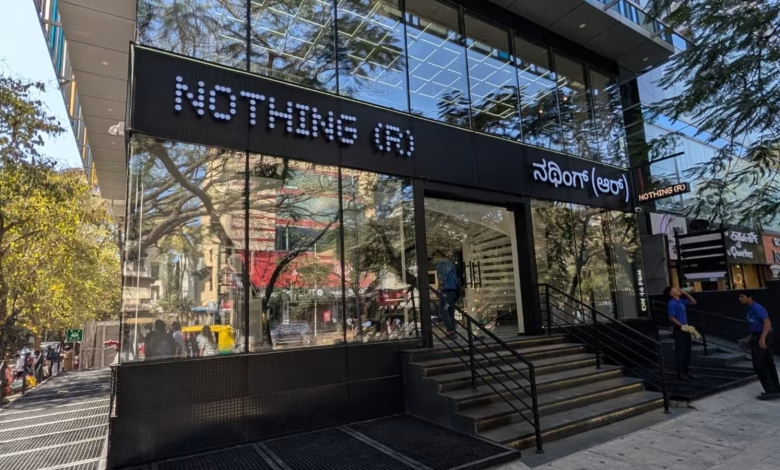
 Nothing’s flagship store in India’s tech capital, Bengaluru, has a retro-futuristic look, much like its products. (Image credit: Anuj Bhatia/Indian Express)
“A lot of our users are here in India, and Bengaluru is where most of them are. So it’s only natural that we started here,” Nothing CEO Carl Pei told indianexpress.com in an interview, explaining why the company chose Bengaluru as the location for its flagship store. It is only the second Nothing store in the world, after the company’s first brick-and-mortar outlet in London’s Soho district, which opened in 2022.
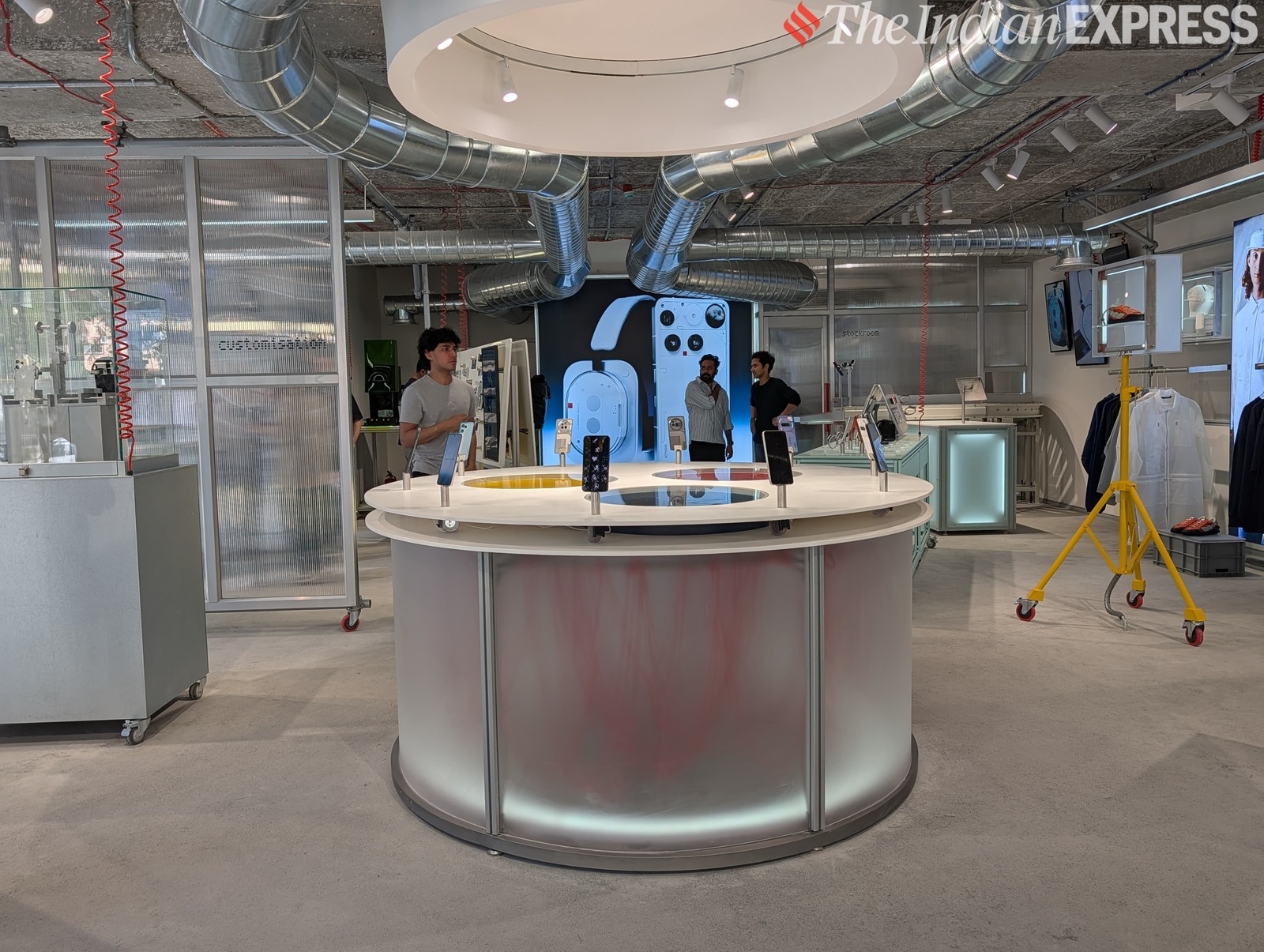
Spanning two floors, the store has a distinct look compared to typical tech retail outlets. It feels raw and earthy, unlike Apple Stores, which are more polished and manicured. Pei said that everyone copied Apple Stores, and the experience has since become boring.
“When we developed our new store concept, we brainstormed what the store needed to be. We landed on the idea that maybe sales aren’t the most important thing, but whether people are engaging with the space. I think that is more important than just the pure P&L financials of the store,” Pei said.
Pei said the store is designed as a physical representation of the Nothing brand. The lower floor draws inspiration from the company’s R&D process and factory setup. The store, in fact, features a conveyor belt where purchased products are delivered to customers, mimicking the final stage of manufacturing. He believes this will create a unique and memorable retail experience, rather than just another conventional tech store.
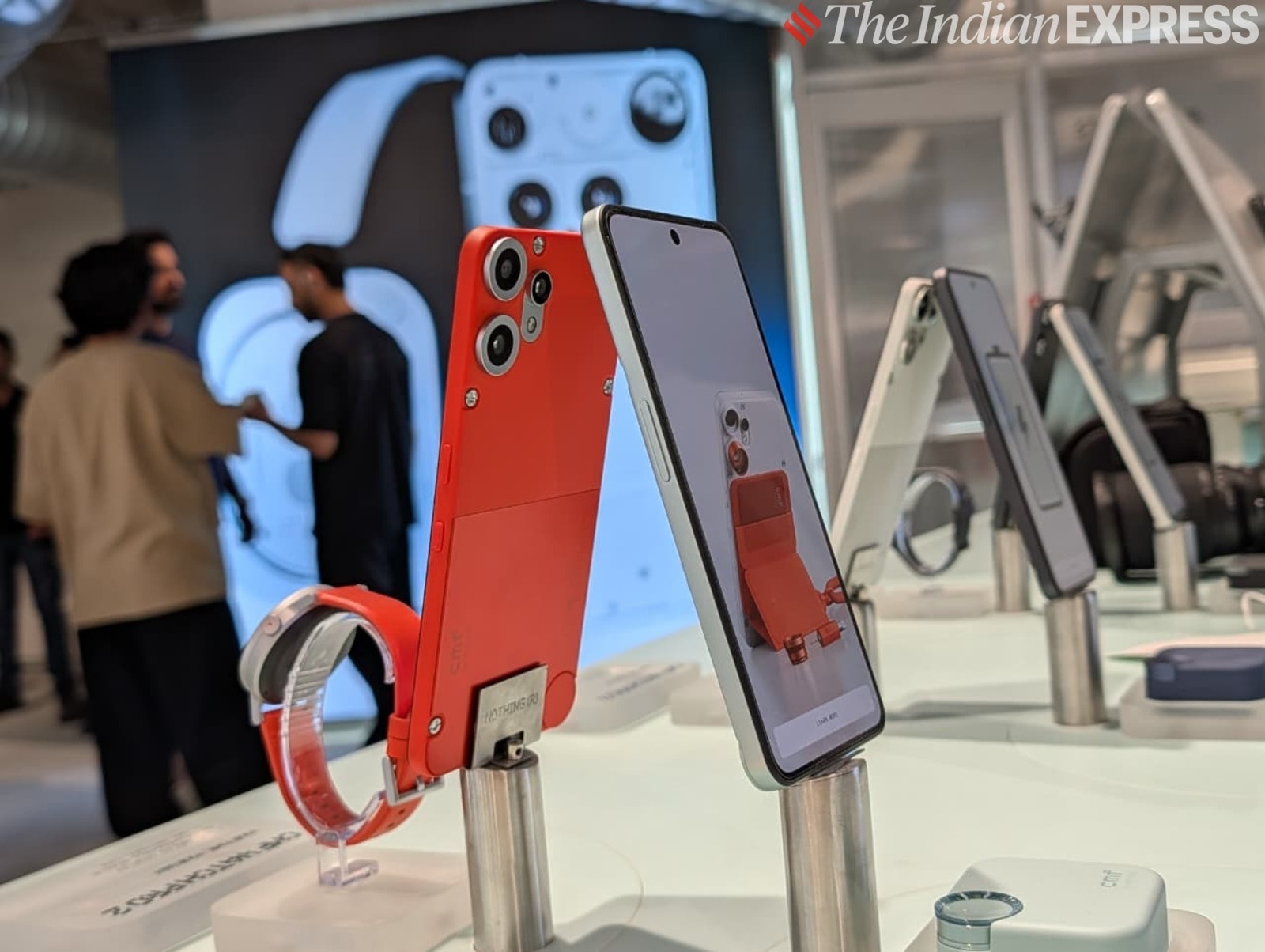 Consumers will able to buy Nothing’s entire product portfolio at its store in India, including CMF devices. (Image credit: Anuj Bhatia/Indian Express)
Eyeing a key growth market
The opening of its first store in India’s southern tech hub of Bengaluru shows how Nothing, the tech company led by OnePlus co-founder Carl Pei, is eager to ramp up its push in a key growth market. Dressed in a black T-shirt and blue denim jeans, as Pei moves around the space, it gives a sense of how bullish Nothing is on India and why the company is expanding its sales and manufacturing in the country.
Story continues below this ad
Pei calls India Nothing’s biggest market, and adding a store proves that the company is beelining, like its rivals, to be part of the booming growth story the world’s fifth-largest economy is going through. India’s smartphone market, however, has in recent years been dominated by Samsung and Chinese brands such as Vivo, with the premium segment controlled by Apple. Nothing was the fastest-growing OEM in Q4 2025, posting 32 per cent year-on-year volume in India, according to global technology market research firm Counterpoint Research.
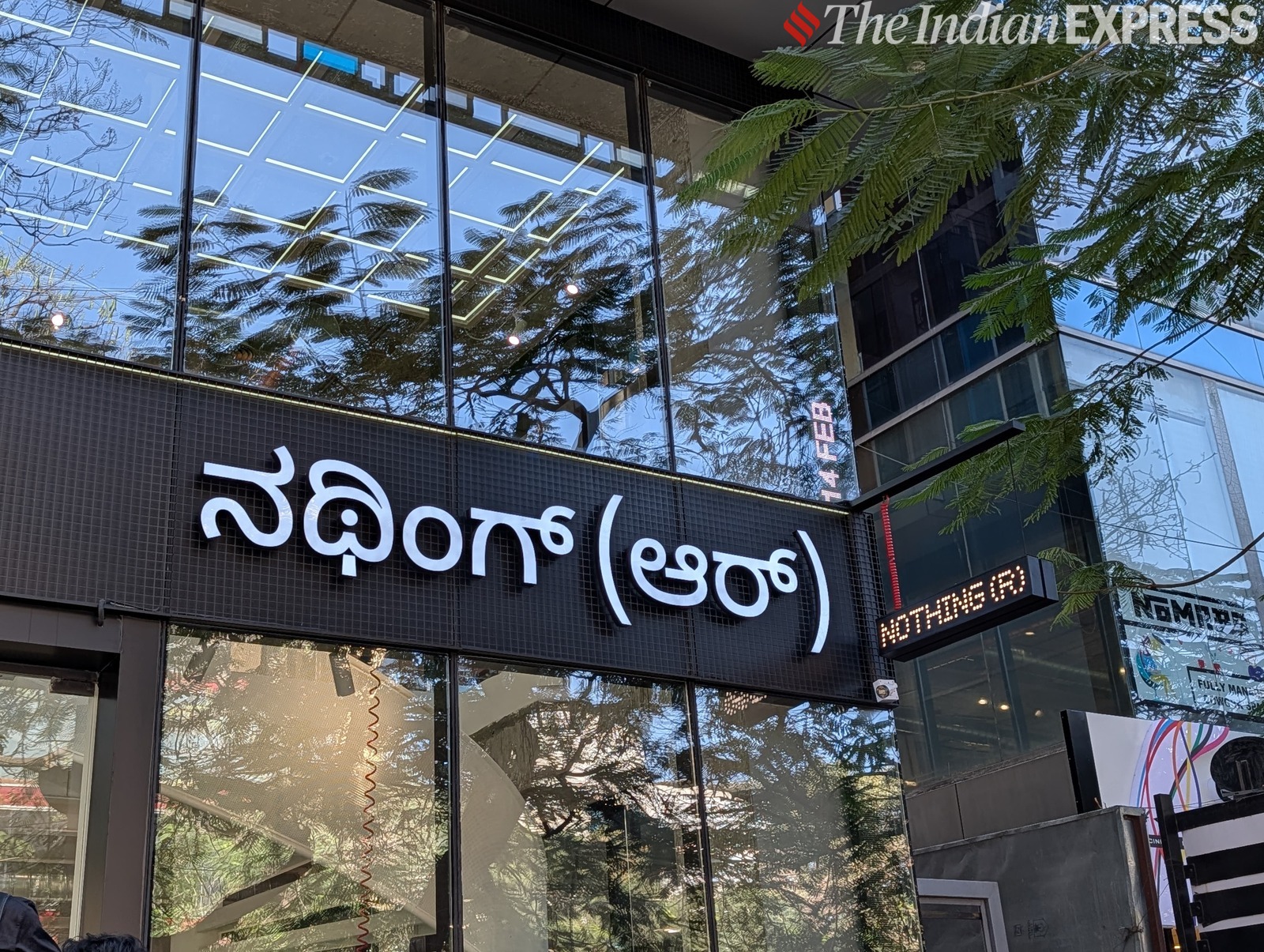 Nothing’s Bengaluru store spans 5032 square feet and across two floors in the upmarket Indiranagar. (Image credit: Anuj Bhatia/Indian Express)
Pei spent the last decade building OnePlus, which turned out to be a success. Now, as the co-founder and CEO of Nothing, he is trying to find new ways to compete with the likes of Apple and Samsung, but with a differentiated approach. Nothing phones don’t look conventional; they feature translucent designs inspired by 90s tech, offer a fresh take on Android, and at times introduce quirky ways to use your phone, as seen with its current flagship, the Phone 3.
Nothing has expanded beyond smartphones in recent years with a range of companion accessories, but its mid-range phones remain bestsellers in India. The company is also focusing on its sub-brand CMF, which it spun off and positioned for entry-level smartphones, earbuds, and wearables, turning it into a standalone subsidiary based in India.
Brands are not built overnight, and Pei is taking a measured, one-step-at-a-time approach to expanding in India. Nothing’s India strategy, with both a retail and manufacturing push, mirrors how Apple once viewed India and began executing a carefully laid-out plan for the market.
Story continues below this ad
“We have a couple of stores in the works right now around the world (New York and Tokyo), and India is one of the locations we are working on. It just so happened that this one was completed first. We are still negotiating the lease for some of the other locations,” he said.
 Nothing, which is valued over $1.3 billion and the startup is going all on India. (Image credit: Anuj Bhatia/Indian Express)
As India goes through a premiumisation of the market, company-owned physical stores offer brands a direct way to engage with consumers—both from a sales and a marketing perspective.
“I think offline is already contributing a good portion of our revenue in India,” Pei said. “But in the long term, all businesses will normalize, meaning that whatever offers the best user experience will ultimately win. I believe the long-term strategy for any brand here is a mix of online and offline. Some consumers like the selection and convenience of online shopping. Others want to touch and feel the device and enjoy instant unboxing instead of waiting for deliveries. We just have to follow the structure of the market and deliver accordingly.”
Insiders say Nothing’s first store in India should be seen as an important branding strategy and that it won’t have an immediate impact on sales in the country. Others, however, point out that it’s a good time for Nothing to take the plunge and bet on India’s growing smartphone market, which hasn’t plateaued yet and still has the potential to expand.
Story continues below this ad
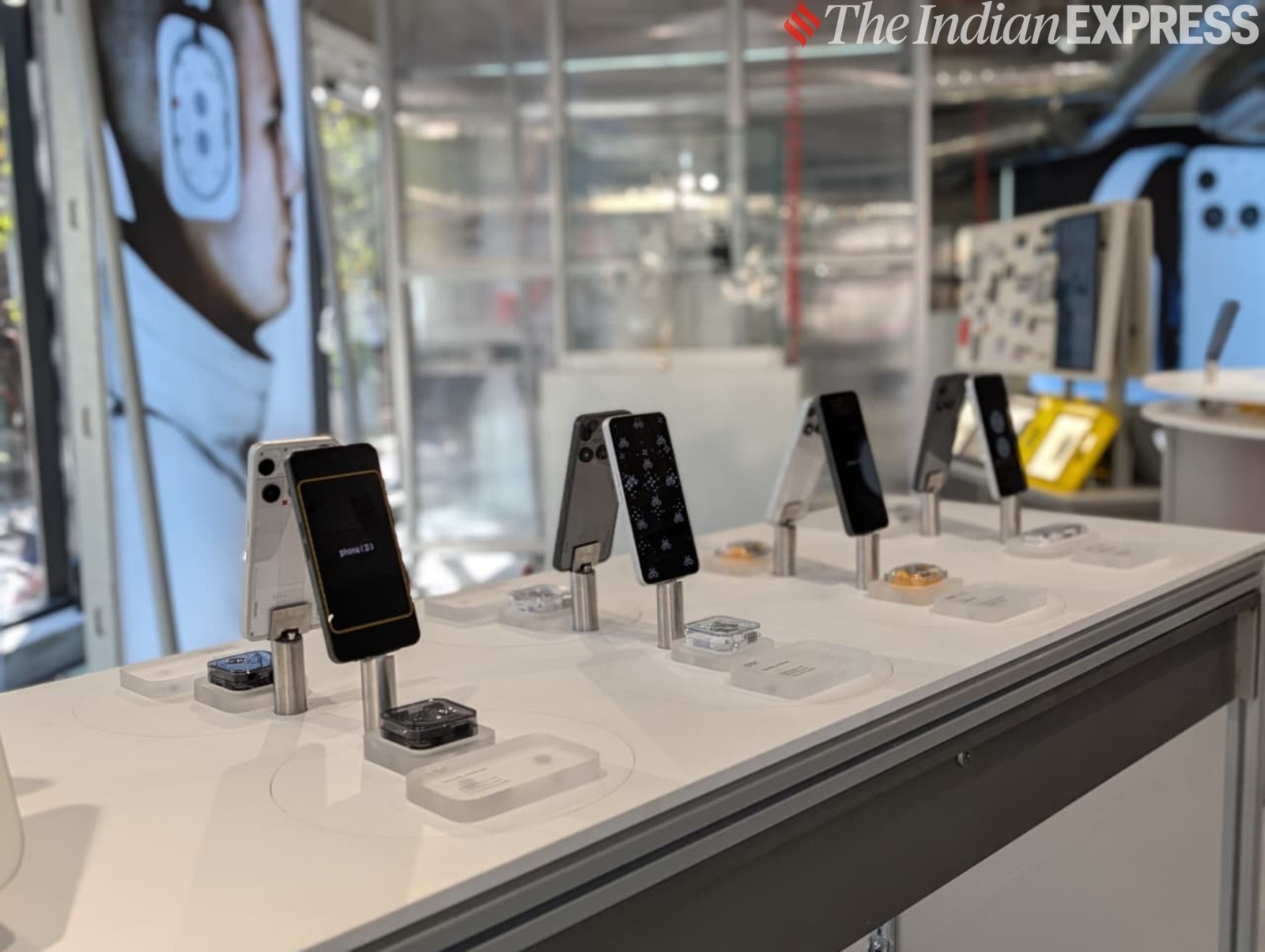 Nothing has no plans to launch a flagship smartphone this year. (Image credit: Anuj Bhatia/Indian Express)
No flagship launch this year
Nothing’s big smartphone release this year is the Phone 4a, which will be part of its mid-range series, a segment that has traditionally performed well in India. Pei, however, said the company won’t launch a new flagship this year.
“I think flagships should represent the best or most forward-thinking ideas a company has. It shouldn’t just be about using the latest processor and calling it a flagship,” Pei said. “We should only release a flagship when we have something different to say.”
Pei agrees that flagships do drive sales and are more than just a branding pull. “I don’t think you can build a brand with a flagship if nobody buys it, then it just becomes like a concept car. In that case, you might as well just create a render or a concept image. Why go through the trouble of making the actual product?” Pei observed.
While Nothing has no plans to release a flagship phone this year, Pei also doesn’t see the need to add a foldable device to the lineup.
Story continues below this ad
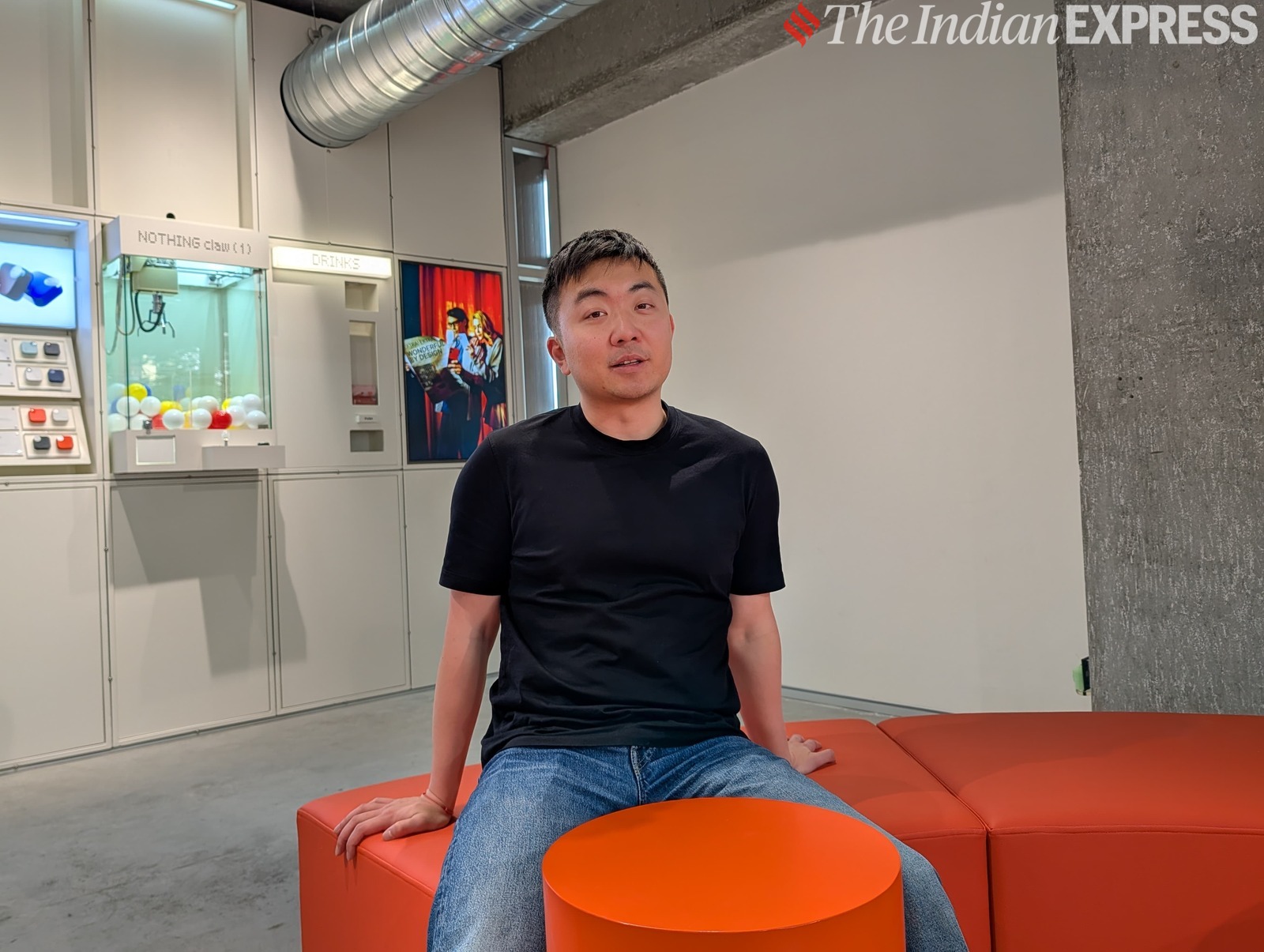 Carl Pei, co-founder and CEO of Nothing at the company’s flagship store in Bengaluru, India. (Image credit: Anuj Bhatia/Indian Express)
“If we take a step back and look at the foldables market, it was about 17 million units last year out of a total of 1 to 1.1 billion smartphone shipments,” Pei said, adding that the foldable segment is a very small part of the overall smartphone market.
For Pei, the company is focused on the next-generation consumer, which, according to him, has an average age of 26 globally, and around 24 in India. “If you look at the users who buy foldables, the average age is around 45, who are typically business professionals. It’s a very different target consumer from our brand. Personally, I just can’t live with a crease,” he said.
‘By 2028, we might see a breakthrough’
Many agree that Nothing has built its brand with hipsters in mind, sprinkling retro design elements into its products, targeting aspirational budget-conscious consumers. Though the Phone 3, its flagship device, was an attempt to go premium, it hasn’t been a complete success. However, Nothing needs to grow quickly and expand its footprint and product line, a pressure that is always present for any young brand.
“I think it’s great that a lot of companies are trying to innovate in this space, but I believe you need to be in the sweet spot of having a certain level of scale, like we currently do. That gives you the resources on the engineering side, the supply chain side, and the go-to-market side to deliver something high-quality to a large number of people,” he said.
Story continues below this ad
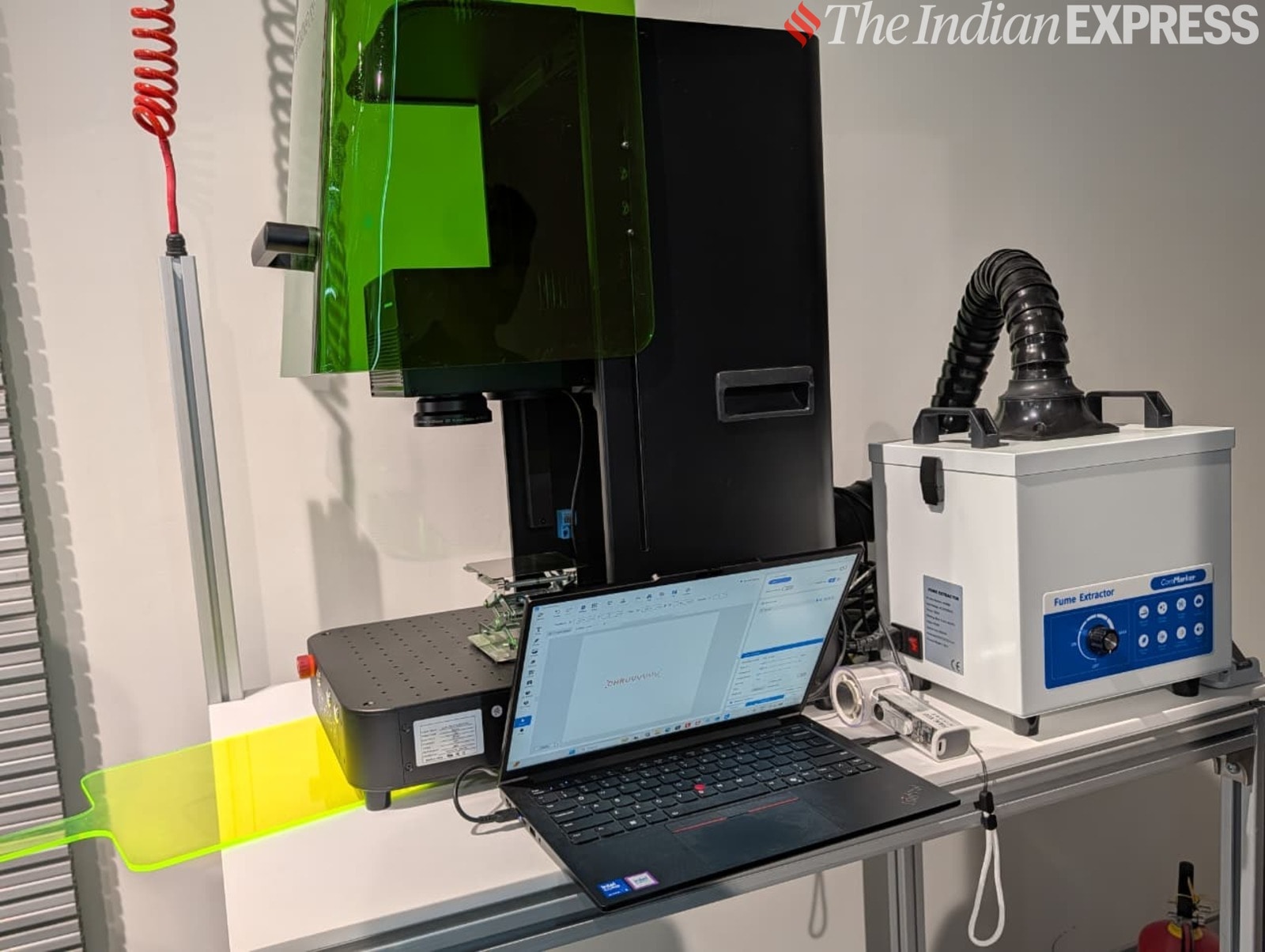 Consunmers can get free engraving service at the Nothing store. (Image credit: Anuj Bhatia/Indian Express)
“You need the nimbleness of a smaller company, where giants can’t move as quickly. I think the current window of time is perfect. AI is accelerating rapidly in consumer tech, and we are one of the best-positioned companies to be part of that fast-moving space,” said Pei.
As Pei looks into the future, he expects to see breakthrough in user experience in consumer tech. “I think by 2028 we might see a breakthrough. It could be a moment similar to when the world shifted from feature phones to smartphones. When the first AI-native operating system starts to emerge, it might reshuffle the cards of the current iOS and Android ecosystem that we see today,” he said.
“I think that’s incremental,” Pei said, when asked about the difference between an AI-native operating system and how AI is currently being added to smartphones. “It’s about taking a standard, icon-based home screen and app-based model and layering intelligence on top of it maybe through a side button or on-screen search and features like that. Whereas I think there needs to be a fundamental rethinking of the operating system.”