
Oldest hominin fossils in East Asia found to be nearly 1.8 million years old | Technology News
3 min readNew DelhiFeb 19, 2026 08:16 PM IST
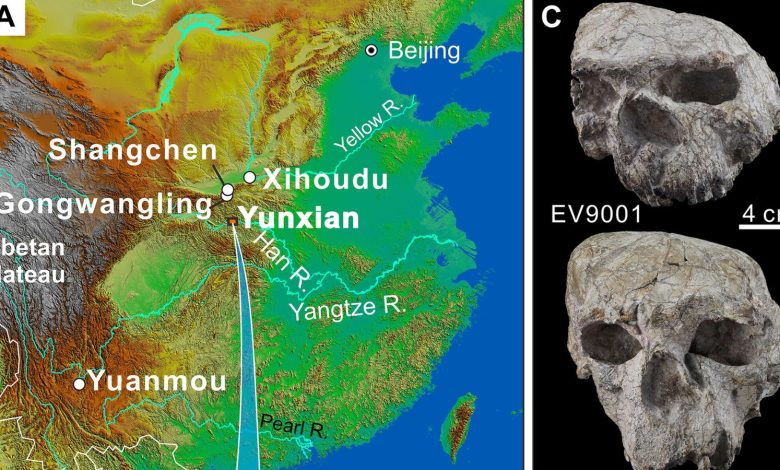
Archaeologists have uncovered what may be the oldest-known evidence of ancient human relatives in East Asia. Three skulls of Homo Erectus found in central China have now been dated to be about 1.77 million years old.
The findings were published this week in the journal Science Advances.

The fossils, known as the Yunxian skulls, were discovered in Hubei province between 1989 and 2022. For years, researchers debated their true age. Earlier estimates suggested they were about one million years old.
Date that changes the timeline
Christopher Bae, an anthropologist at the University of Hawaii at Manoa and co-author of the study, described his reaction to the results as an “absolute surprise”.
The team used a technique called cosmogenic nuclide burial dating. In simple terms, it measures how long certain minerals have been buried underground by examining chemical elements altered by cosmic rays.
The new date makes the Yunxian skulls the oldest confirmed hominin fossils in East Asia.
It also raises new questions about when Homo Erectus first appeared. Scientists have long believed the species emerged in Africa around two million years ago before spreading outward. Till recently, the oldest human fossils in Asia were believed to have been found at Dmanisi in present-day Georgia, dated between 1.78 and 1.85 million years old.
Story continues below this ad
Now, the Chinese fossils appear to be almost as old.
Fast movers
If the dating is accurate, it suggests that Homo Erectus spread across Asia far quicker than once thought.
Yet the Yunxian skulls differ from those found at Dmanisi. Researchers noted that the Chinese skulls appear to have larger brains than the Georgian fossils, even though they are similar in age. This hints at greater diversity among early human relatives than previously understood.
Karen Baab, a professor of anatomy at Midwestern University who was not involved in the study, said the fossils show clear variation in early human groups living outside Africa.
Story continues below this ad
Also Read: Some ancient humans had more ‘primitive’ faces, a skull from Ethiopia shows
Not everyone is convinced, however. Chris Stringer, a paleoanthropologist at the Natural History Museum in London, called the finding “remarkable” but cautioned that such an early date would not easily match the rest of the fossil record. He and his colleagues previously suggested the Yunxian fossils may belong to a group that later gave rise to the Denisovans, an ancient human population thought to have emerged around 1.2 million years ago.
New questions about human evolution
The research also raises a larger question about the evolution of our own species, Homo Sapiens.
The new findings could potentially alter the way scientists think about early human migration, but only if they are verified.
Until then, the finding regarding the Yunxian skulls is a reminder that the history of human evolution is yet to be fully mapped.
© IE Online Media Services Pvt Ltd