Why everybody loves a good chaos? From Priyadarshan and LJP’s movies to Pennum Porattum, unpacking the ‘ridiculous’ charm of chaotic comedy | Malayalam News
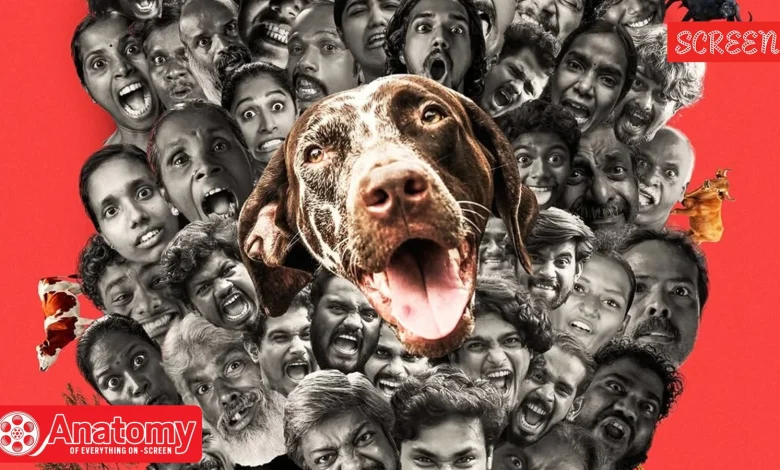
“Life is a tragedy when seen in close-up, but a comedy in long-shot,” goes a well-known quote often attributed to Charlie Chaplin. There’s a Malayalam saying that captures the same spirit and reflects a similar idea: “Aaraante ammakku bhraanthu pidichal kaanan nalla chelaa,” which can be roughly translated as, “It’s all amusing and entertaining as long as the tragedy is someone else’s.” Actor Rajesh Madhavan’s directorial debut, Pennum Porattum (Girl and the Fools Parade), which hit the screens recently, embodies this adage. But what makes the movie even more impactful is its use of absurdism and chaotic comedy to address significant topics, giving it far more weight than a mere dramatic treatment could.
In a way, it can be said that Pennum Porattum attests to American historian Henry Adams’ words: “Chaos was the law of nature; order was the dream of man.” The absurd comedy argues that no matter how hard people try to maintain order and walk in a straight line like ants, they revert to chaos at the first opportunity, and that their penchant for it is inherent. It could even be argued that this is why chaotic comedy movies and scenes, when executed correctly, easily entice people as they offer an escape from the mundaneness and boredom caused by stability, control, and cosiness forced upon them by order.

Although this isn’t the first time Malayalam cinema has attempted absurd comedy that thrives on chaos, Pennum Porattum is indeed a landmark movie in the subgenre, given that its absurdist tone is consistent from start to finish, even as it discusses significant sociopolitical issues such as sexism, much like Porattu Nadakam — the satirical folk drama performed mainly by the marginalised Panan community. It’s also because Malayalam film audiences have long been accustomed to chaotic comedies that they might end up liking Pennum Porattum more than others.
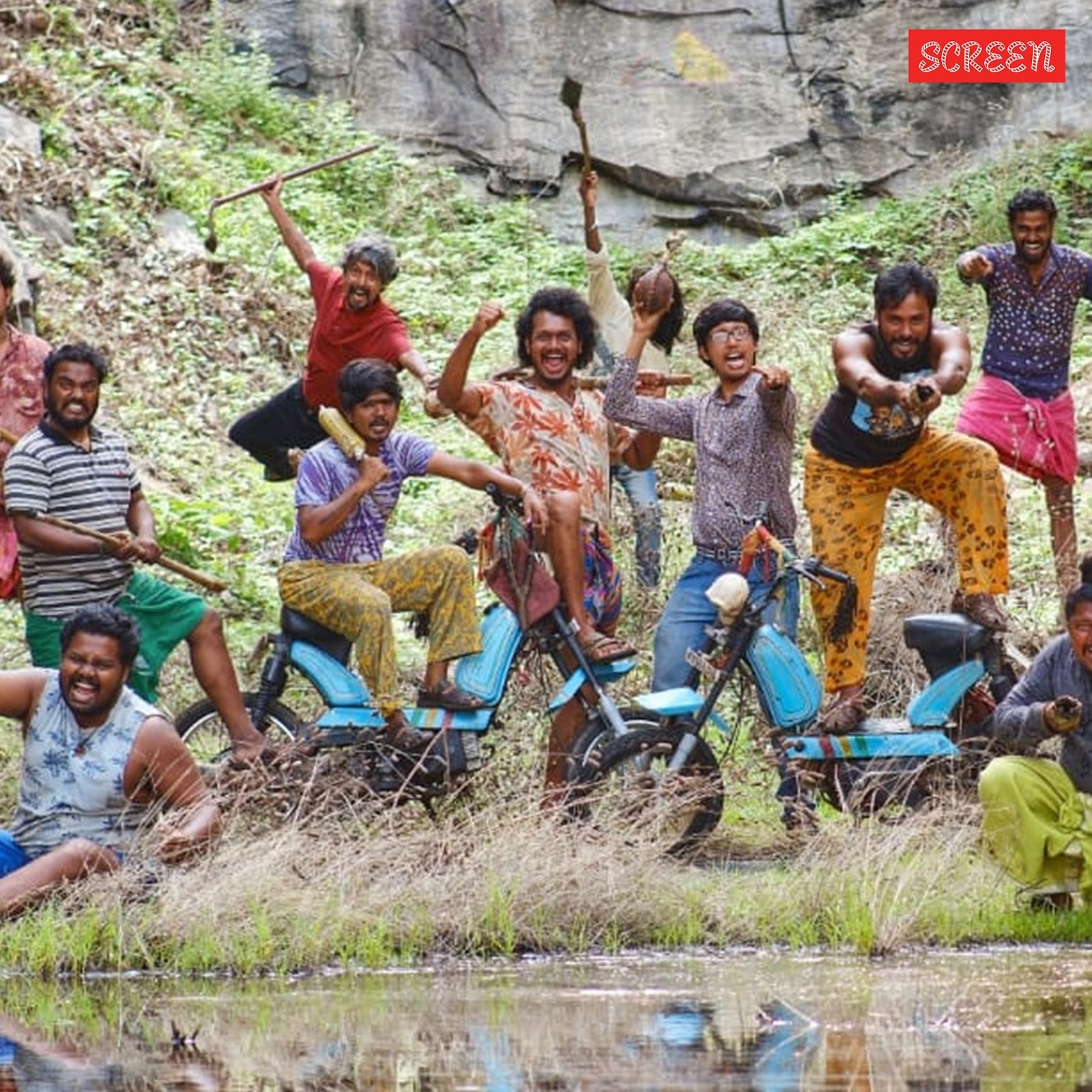 A still from Rajesh Madhavan’s Pennum Porattum.
The Priyadarshan effect
One of the finest portrayals of chaotic comedy was in director Priyadarshan’s iconic Vettam (2004). Although much of its humour was slapstick, the director constantly exaggerated the scenes to the next level by cramming multiple characters into every frame and pushing them to the limit in physical comedy, extracting hilarity from the tumult. Vettam also served as a testament to Priyadarshan’s mastery of blocking, resulting in each moment having a splendid rhythm, despite the utter chaos, without it appearing all over the place. Be it the key distribution scene and the conversations unfolding alongside, Kurup (Cochin Haneefa) chasing a rose-wielding Mani (Kalabhavan Mani), Paasha’s (Jagathy Sreekumar) attempts to kill Fernandez (Janardhanan), or the quarrel between Fernandez, Mathachan (Innocent), and Tom Uncle (Nedumudi Venu) over Kummanamcheriyile ammoomma, each scene in Vettam was brilliantly choreographed to ensure that both the chaos and comedy landed well, with one amplifying the other.
Although the iconic godown fight scene towards the climax was a replica of a similar scene Priyadarshan pulled off in Hungama (2003), it made more sense in Vettam, since the latter’s tone and essence were essentially the same from start to finish. Hence, this sequence resembled the crescendo of a farce, with almost all the key characters entering the scene and order going for a toss, leading to humour arising from both the ludicrousness of the situation and the in-tune actions of those in the frame.
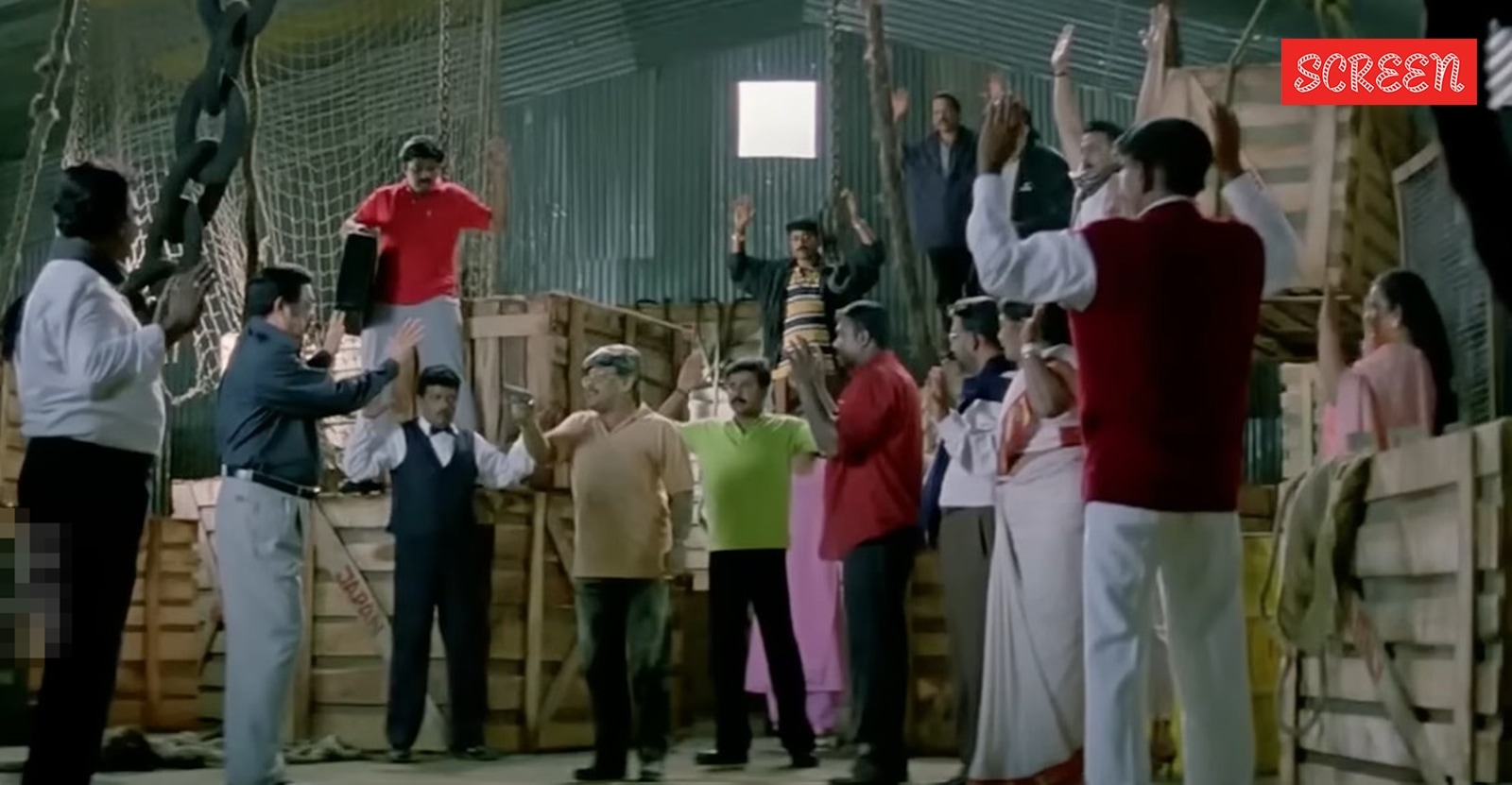 One of the finest portrayals of chaotic comedy was in director Priyadarshan’s iconic Vettam. (Screenshot: YouTube/MatineeNow)
Chaos in the early era
While many moments in old Malayalam movies, specifically from the 1960s, 70s, and much of the 80s, appear ridiculous now, given the sheer amount of theatrics, they weren’t necessarily intended that way. Even then, filmmakers intentionally incorporated more absurdity into the scenes — predominantly using comedic actors like Adoor Bhasi, Bahadoor, and later Jagathy Sreekumar — to tickle the audience’s funny bones. Take, for instance, the stunt scenes in actioners like Cochin Express (1967), Kannur Deluxe (1969), Panchavadi (1973), or Maravil Thirivu Sookshikkuka (1972). While Prem Nazir’s action moves were those of a hero, Adoor Bhasi’s were consciously crafted to appear illogical and irrational. Directors often splattered chaos into those movies to elicit more laughs, thus giving the audience a supposedly wholesome experience.
Story continues below this ad
In the early days, most films followed a pattern; no matter what stories or themes they dealt with, they all shared common elements, with comedy being the most important. Many early-era professionals have said that filmmakers often left certain portions in their scripts blank for the comedic actors to fill with humour. The aim was probably that the audiences who paid a certain amount for the tickets got to experience as many emotions as possible while watching a(ny) movie. Hence, even horror films of that era had comedic tracks slipped in at regular intervals.
But things changed with Priyadarshan’s arrival in the ’80s. He ushered in a new wave of comedy that prioritised situational humour, with a special focus on physical comedy. He completely overlooked clowning, the go-to style of the previous era, and instead embraced chaos and absurdism as alternatives. It was as if he were more inspired by the phrase, “All the world’s a stage, and all the men and women merely players,” from William Shakespeare’s pastoral comedy As You Like It. By unleashing the actors fully and encouraging them to use the entire frame, Priyadarshan made comedy livelier. Instead of slipping humour into regular stories, he created out-and-out comedic narratives that also contained other elements such as drama.
His obsession with chaotic comedy was evident even in his directorial debut, Poochakkoru Mookkuthi, whose climax had an early version of Vettam’s godown fight. While almost all the main characters were involved in the hilarious climax fight, an unchoreographed comedy of errors, we also saw Kuttan alias Cherian Nair (Kuthiravattam Pappu) absurdly running around among them, imitating a bird-cum-aeroplane. In Odaruthammava Aalariyam, Priyadarshan further experimented with chaotic comedy and raised the level by setting an entire scene in an ice-cream parlour where people just threw various flavours of ice-cream at each other. Aram + Aram = Kinnaram’s climactic fight also contained the same spirit but had a different shade of chaos.
The Priyadarshan-Mohanlal era
Thanks to a naturally agile and daring actor like Mohanlal as his best friend and frequent collaborator, Priyadarshan could easily envision and create such chaotic scenes featuring the male lead in his movies, with Boeing Boeing, Mazha Peyyunnu Maddalam Kottunnu, Hello My Dear Wrong Number, Vellanakalude Nadu, Chithram and Vandanam being the best examples. The director’s cleverness lay in his ability to sense when to use chaos with a crowd and minimal characters.
Story continues below this ad
The chaotic comedy that Priyadarshan popularised influenced other directors as well, though few made similar attempts at absurdism. Much like old filmmakers, directors like Sathyan Anthikad and Siddique-Lal also employed comedy of errors. From the fight scene between Gopalakrishna Panikkar (Mohanlal) and Damodar Ji’s (Thilakan) goons in Sanmanassullavarkku Samadhanam, and the Pavanayi (Captain Raju) scenes in Nadodikkattu, to the central trio’s attempt to disguise as kidnappers in Ramji Rao Speaking, the Garvasees Aashan (Janardhanan) scenes in Mannar Mathai Speaking, and the sequences featuring Kuruvilla (Innocent) and Ugran (Harisree Ashokan) in Chronic Bachelor, humorous mayhem always found its way into Malayalam movies.
 Indrajith Sukumaran in Lijo Jose Pellissery’s Amen. (Screenshot: YouTube/apimalayalam)
The Lijo Jose Pellissery effect
Modern-day filmmakers, on the other hand, have been utilising it far more extensively to create full-length movies. One notable filmmaker who has extensively used absurdism and chaos is Lijo Jose Pellissery. In his third directorial, Amen, Lijo introduced both the audience and the industry to the creative freedom that absurdism offered when executed with conviction. These weren’t simply one-off or isolated moments; the whole narrative and aesthetics were crafted based on a similar tone, and it all landed well. The theettam (shit) sequence at the start, the conversations between Paily (Chemban Vinod Jose) and his mother Therutha (Kulappulli Leela), Shoshanna (Swathi Reddy) hitting her brother when he trash-talks her boyfriend Solomon (Fahadh Faasil), and the “Karuthiku Thithai” and “Vattolli” songs, the director splashed chaos and absurdism anywhere and everywhere, but all had a weird naturality.
His most notable use of chaos was in Double Barrel, where he defied the conventions of gangster-oriented crime actioners by employing absurdism. In fact, the chaos was just as integral to the movie as its central characters, and with a visual language that questioned order, he managed to strike gold there, although not all found the movie amusing. In his magnum opus Ee Ma Yau, Lijo used this technique to create drama as well. By unleashing chaos at a funeral, he explored the different shades of human nature and how compassion and empathy go to waste once the chains of morality loosen. In Jallikattu, on the other hand, he investigated individual and mob psychology by placing an animal on the loose at the centre of the story. The chaos there erupted when people embarked on a chase to catch it, providing them the opportunity to unleash their ferality.
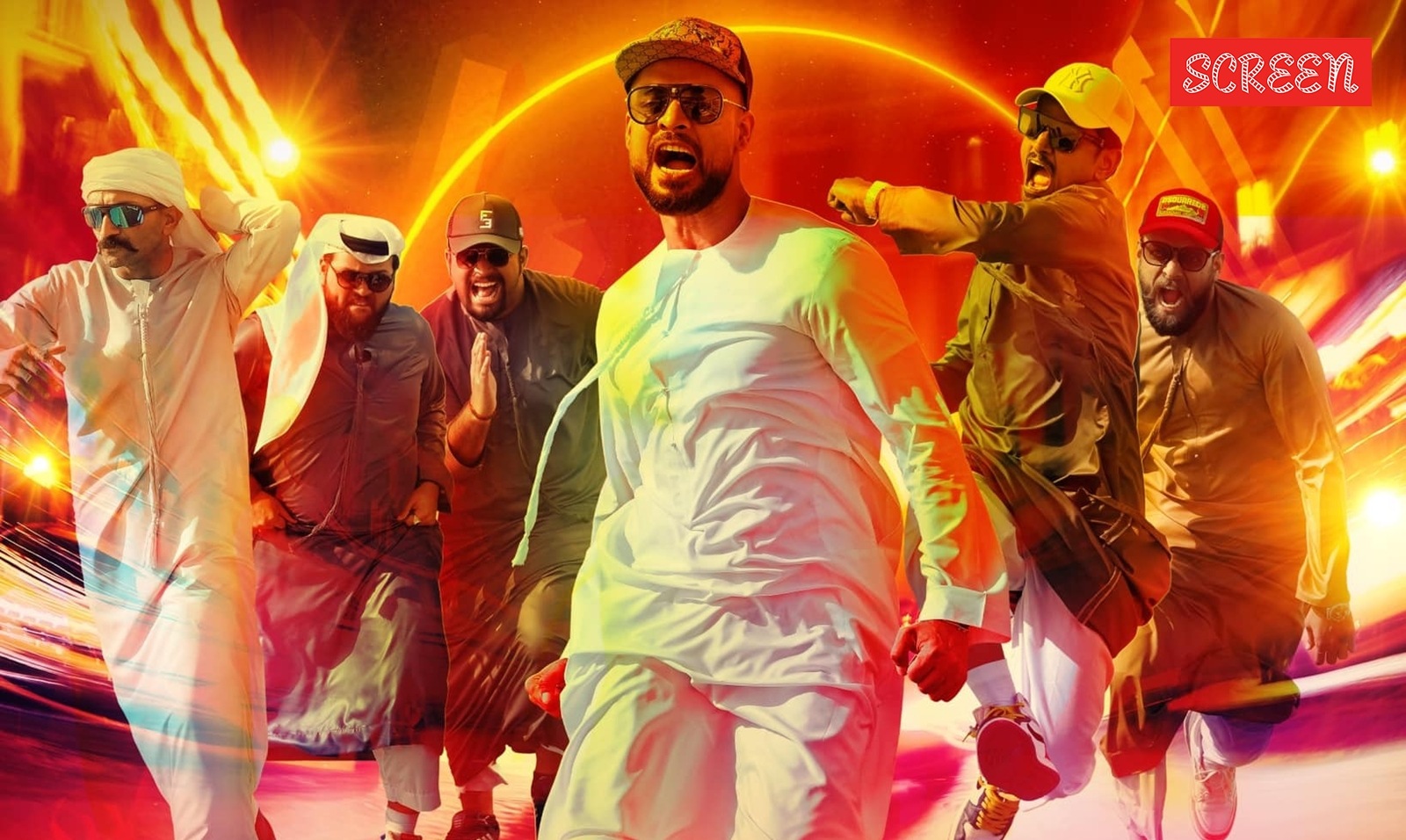 Tovino Thomas, Shine Tom Chacko, Lukman Avaran and others in Thallumaala. (Credit: Facebook/@ashiq.usman.5)
Aadu, Thallumaala, and more
While Midhun Manuel Thomas used absurdism and slapstick to elevate chaos in his Aadu movies, director Dominic Arun employed black comedy for the same effect in Tharangam. Khalid Rahman, meanwhile, stylised it in Thallumaala (2022), giving it a new avatar. Movies like Thinkalazhcha Nishchayam, Upacharapoorvam Gunda Jayan, and Vyasanasametham Bandhumithradhikal also used it while rooting their narratives in familiar ground.
Story continues below this ad
No matter the settings or how filmmakers created them, chaotic comedies always intrigued audiences, particularly due to their unpredictability and the way such scenarios brought out people’s true colours, adding a degree of rawness to the visuals. With Pennum Porattum opening to praise as a well-executed chaotic comedy, it has paved the way for filmmakers to experiment further with the style and subgenre.
Cinema cannot exist in a vacuum; it’s all about the discussions that follow. In the Cinema Anatomy column, we delve into the diverse layers and dimensions of films, aiming to uncover deeper meanings and foster continuous discourses.