
What Happens If You Eat Spicy Vegetarian Food Daily? Farah Khan–Sunny Leone Chat Has Us Wondering

3 min readNew DelhiMar 5, 2026 10:00 PM IST
Filmmaker and YouTuber Farah Khan, who often prepares home-cooked meals for her guests on her YouTube channel, recently missed out on one for Sunny Leone and Daniel Weber. Farah, 61, admitted, “Normally, I get food for my guests. But Sunny and Daniel are both vegetarians. We were scared because we make typical Indian food, and I wasn’t sure…you guys don’t eat too many spices…”
Responding to Farah, Sunny clarified: “No, no, we all eat…I eat, Daniel eats”. Then Farah expressed, “Hum logon ka mistake hogaya (We goofed up).”

Their exchange sparks an interesting question: what actually happens to your body if you eat spicy vegetarian food every day?
From a nutrition standpoint, spicy vegetarian meals—especially those rich in whole grains, lentils, vegetables, herbs, and traditional Indian spices—can be extremely beneficial when prepared thoughtfully, shared consultant dietitian Garima Goyal.
“Spices such as turmeric, cumin, coriander, ginger, and garlic possess anti-inflammatory and antioxidant properties. Capsaicin, the active compound in chilli peppers, may support metabolism, improve circulation, and even aid in appetite regulation,” said Goyal.
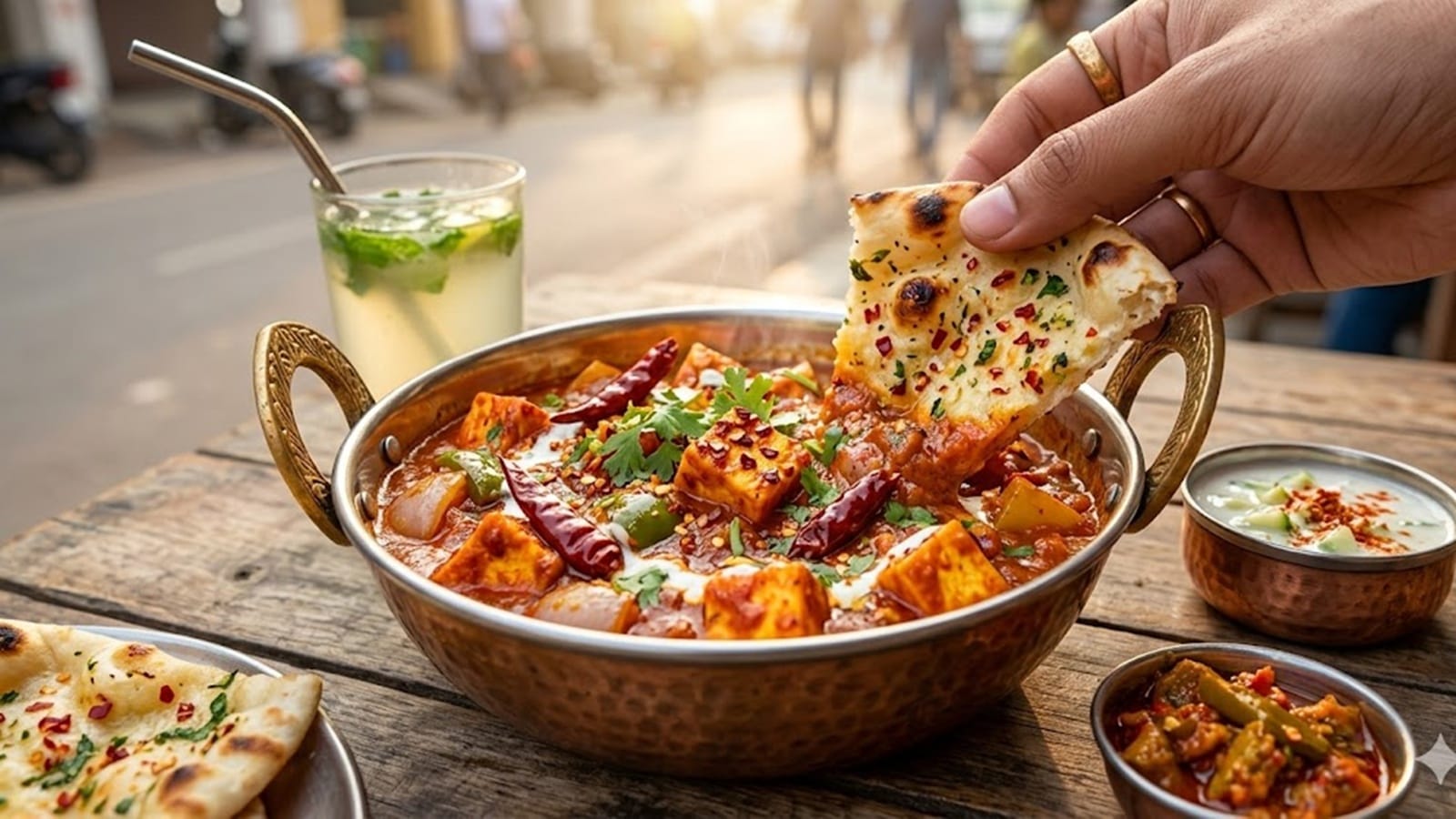 Do you love eating spicy food? (Photo: AI Generated)
A plant-based diet that includes legumes, vegetables, and fibre-rich foods also promotes gut health, supports cholesterol management, and helps maintain stable blood sugar levels, according to Goyal.
However, daily consumption of very spicy food is not universally suitable for everyone.
Story continues below this ad
“In individuals prone to acid reflux, gastritis, irritable bowel syndrome, or haemorrhoids, excessive spice can irritate the gastrointestinal lining, trigger heartburn, or worsen discomfort. The key distinction lies between spiced and overly spicy,” shared Goyal.
Traditional Indian cooking uses a blend of spices not merely for heat but for digestion and balance. “When prepared with moderate oil, adequate fibre, and appropriate spice levels, vegetarian Indian meals can be both gut-friendly and nutrient-dense,” shared Goyal.
Ultimately, the body adapts to spice over time, and many people tolerate it well if their overall gut health is strong.
Vegetarian food—spicy or not—can be incredibly wholesome and nourishing when balanced correctly. “The focus should always remain on portion control, digestive tolerance, and overall dietary quality rather than simply whether the meal contains chillies or not,” said Goyal.
Story continues below this ad
DISCLAIMER: This article is based on information from the public domain and/or the experts we spoke to. Always consult your health practitioner before starting any routine.


