
Discover the Regional Spinach Varieties of India
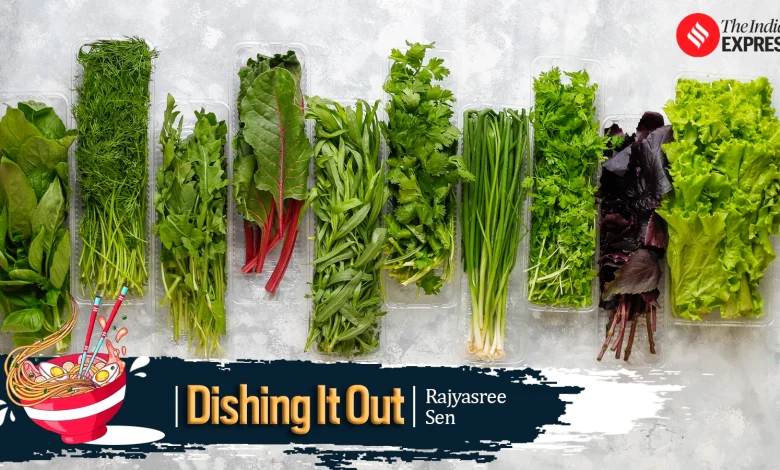
Bake it in a soufflé. Cream it. Puree it. Sauté it with just some dried red chilis and a dash of minced garlic. And you can have a different variety of it every day of the week, and still not run out of dishes. My favourite preparation is the original amaranth leaves, which we’ve been eating in Bengal for centuries – and simply calling it lal shaag. This is my ode to spinach and India’s love for its myriad varieties.
Spinach is native to South Asia and is one of those vegetables that grow on your palate as you mature. At least that’s what it was for me. Unlike in America or Europe, India doesn’t have just one variety of spinach. While it is one of my favourite side dishes while having an American or European meal, be it a beautifully risen, light spinach soufflé or some creamed spinach flavoured with nutmeg. In India, you can make a multi-course meal featuring various types of spinach without exhausting all options.

Kashmir to Punjab
One of my favourite spinach preparations is the Kashmiri Sotschal Wangan, made with mallow leaves. The first time I had this was in Srinagar, and I always ask for it whenever I visit Kashmir. Mallow leaf spinach is chopped and cleaned. Dried red chilis, red chilli powder, a pinch of asafoetida, and ginger powder are sautéed in hot mustard oil, to which the leaves are then added and seasoned, and served with hot rice. It’s a simple preparation celebrating the flavour of the leaves.
In Punjab, mustard spinach, or sarson ka saag, is a delicacy. I used to turn up my nose at it till very recently, when I decided to try it with an open mind. And what a burst of flavours. Mustard leaves are cooked with radish and onions, and the holy trinity of Punjabi cuisine – tomato, ginger, and garlic – is seasoned with asafoetida, red chilli powder, and salt, then pressure-cooked until they disintegrate into a mash. This is pureed and served with makki ki roti. While the nutrients have been blitzed out of the spinach, the taste is pungent and spicy and worthy of being Punjab’s state dish.
From pui to bathua
On the other side of the spectrum are the various types of spinach we eat in Eastern India, including in Bihar and Odisha.
Pui shaag or Malabar Spinach is a spinach that grows on a thick vine, which itself is edible, and flourishes in summer. It has a far milder taste than sarson ka saag or even mallow leaves. In Bengal, it is cooked with fish head or with five types of vegetables to prepare labra, a mixed-vegetable delicacy served at feasts and by indulgent mothers.
In Odisha, pui saaga rai is prepared by cooking the spinach with mustard paste, garlic and ridge gourd. In Karnataka, Andhra Pradesh, and Telangana, it is made into a delicious dal. While in Maharashtra and Gujarat, it is cooked with other vegetables and flavoured with garlic and coconut.
Story continues below this ad
Methi or fenugreek is a winter speciality and one of my favourites. The small fenugreek leaves have a slightly bitter flavour, but not unbearably so, like karela or neem leaves. While many people cook it with potatoes, I relish a Sindhi fish curry flavoured with methi leaves.
Red Amaranth, which is all the rage now, with every dietician and nutritionist recommending it, is one of the most common spinach leaves in Bengal. Called lal shaag, we simply sauté the spinach in mustard oil tempered with dried red chilis. Served with rice, this is simple, comfort food.
Kolmi shaag, or water spinach, is another variety I strongly recommend. The preparation is the same as that of lal shaag, and the slightly thinner leaves have a subtle flavour of their own. You can also sauté some shrimp and diced potatoes and add them to the saag.
Another North Indian favourite, which has become a winter favourite of mine, is the bathua saag, also known as pigweed or lamb’s quarters. It does have a weed-like appearance, to be fair, but a delicious taste profile. The preparation of bathua saag is simple – sauté the leaves with red chilli powder, turmeric powder, whole cumin seeds, and coriander powder, then cook with onions and tomatoes.
Story continues below this ad
Choddo shaag
You can appreciate the variety of spinach we have in India by looking at the spinach preparations we cook the day before Kali Pujo, on the eve of Bhoot Chaturdashi. You can also appreciate how much we love spinach in Bengal: while the rest of India celebrates Diwali with sweets, Bengal prepares Choddo shaag, or 14 different leafy greens. Choddo shaag, of course, has a strong symbolic significance.
Bhoot Chaturdashi is considered the night when our ancestors’ spirits visit our homes. Eating 14 types of greens is considered a way to honour your lineage and celebrate diversity. The 14 types of spinach are palong shaag, this is the garden variety spinach which has a mild taste, pui, methi, lal, kochu shaag or taro leaves, which are soft and slightly starchy, lai shaag, our name for mustard greens, and thankuni shaag or Centella, which has herbal properties.
We also add Brahmi shaag or Bacopa, which has a mild flavour but medicinal qualities, kolmi shaag, neem shaag or neem leaves for their bitter taste and detoxifying qualities, hingche shaag or Leucas, which has a very unique and earthy flavour, the bhat shaag or Clerodendrum, which is slightly astringent, the tangy sushni shaag or Marsilea, and chalkumro shaag or Ash gourd leaves.
All these are sautéed in mustard oil with green chillies or dried red chillis, a little turmeric, and salt.
Story continues below this ad
The secret to a great spinach dish in India is to keep the preparation simple so the spinach’s nutrients and flavour remain intact. I would recommend trying a different spinach a day – and then penning a note of thanks to me for increasing your haemoglobin count and your taste profile.
Next week, I will write about tandoori food, given that tandoors are the root cause of all evils when it comes to pollution and are also the most easily recognised Indian preparation on foreign shores, outside of butter chicken.


