
Why Indian badminton should refrain from anointing any youngster as the Saina-Sindhu successor – the heir isn’t apparent
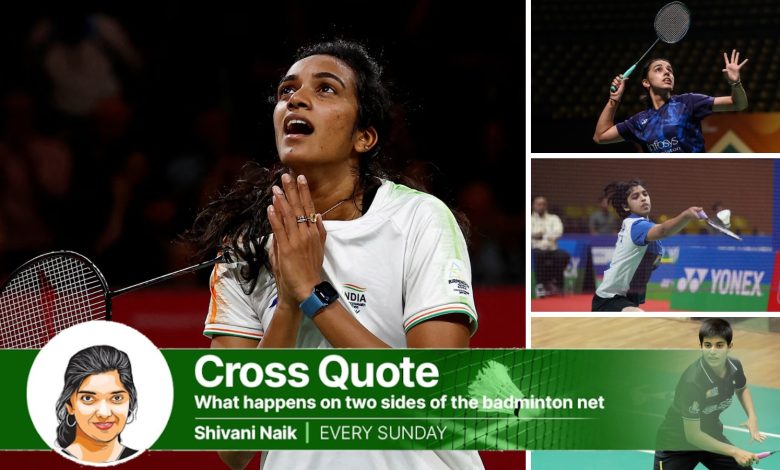
Marketeers and broadcasters need a face to sell. Their aims are dynastic in nature—energies devoted to assembling an heir for the throne, constantly searching for princelings to succeed the kings. Indian women’s singles badminton lucked out once when PV Sindhu emerged perfectly as the princess who took over from the queen, Saina Nehwal.
It is the exact scenario India should refrain from attempting to recreate.
The reasons are simple: there isn’t an heir apparent in our sights right now. You need an An Se-young-level talent for that, and India doesn’t have one currently. Rushing to declare someone the next big thing—for the lure of promise and to satiate market demand—will be a huge disservice to the talent herself.
The temperaments of current contenders are far off Saina-levels, and their physicality, the very basis for this sport, is nowhere close to making bold assumptions about their futures.
Marketers will of course go sniffing for their next project to present to the world. But there are huge dangers in ruining that same potential by force-creating auras where none exist, pumping athletes up into thinking they’ve arrived internationally, and then having no means to pick up the pieces when their game falters, results dry up, and India finds itself with nobody in the Top 10—a reality we’re living currently.
The promising quartet
Devika Sihag, tall and with physicality that could someday reach Sindhu’s levels, scalped her first Top 20 opponent in Thailand this week en route to the finals. The potential is immense, her game quite interesting, but she remains largely untested on fitness and temperament to convert potential into titles or consistency on the circuit. Big match mentality in crunch Super 750 finals? That’s at least two seasons away.
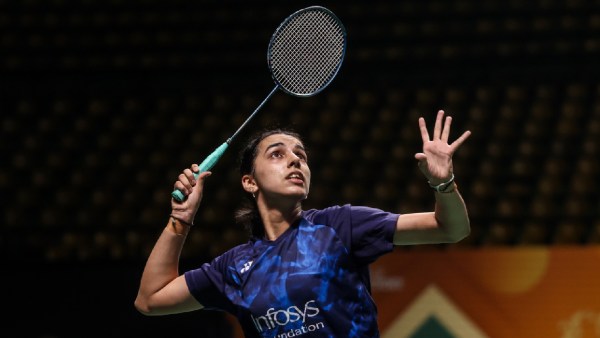 Devika Sihag in action at the Thailand Masters 2026 (Picture Credit – Badminton Photo)
Ditto for Tanvi Sharma. The World Juniors final, where she imploded against a clever Thai, was a massive lesson in how far off international levels of day-in-day-out rigour she still is. The physical conditioning demands—to merely last week after week, to win Rounds 1 and 2 and make quarterfinals, steering clear of injuries while maintaining intensity—are enormous.
Story continues below this ad
Anmol Kharb and Unnati Hooda are two other fantastic talents with solid temperaments and innate confidence. Both can be trusted to put in hard yards in the gym to build power. They read games as well as, or better than Tanvi, but 2025 proved why it’s difficult to sustain a good run and back up one upset win with a title march.
The hype machine’s dangers
India’s inflated sporting ecosystem, always hungry for heroes, has glaring issues. Player management agencies swoop in early, hyping up athletes. Big money gets raked in while the bubble grows, resources get monopolised, expectations grow unrealistic, and athletes buy into the hype, thinking they’re one step from being world beaters before crashing to ground.
The power of the pack
India’s crop of promising juniors is a boon. Like China, there is now critical mass for a whole pack of challengers to surge. The monsoon season of 2017 in men’s singles is under-appreciated: at tournaments in Singapore, Malaysia and Indonesia, if Sai Praneeth didn’t win the title, Kidambi Srikanth would. If Sameer Verma or Ajay Jayaram didn’t snap up a Chinese scalp, Prannoy would. The whole bunch attacked titles, clearing paths for each other like an army. One or the other was always on the podium. Even as the Saina vs Sindhu narrative picked up, the men showed how big titles could be nailed, even in fiercely individualistic badminton.
The biggest reason to not hastily build up a “next Sindhu” is this: if the anointed player loses form, suffers an injury, or gets stuck in an unfavourable matchup where she simply can’t crack an opponent’s style, then Indian badminton gets stuck.
Story continues below this ad
The trick is in different players peaking at different times—not going all-out across 12 months, which is near impossible in this bruising sport. It’s how the French are surging: Alex Lanier gets deep runs, Christo Popov wins year-end titles. All badminton hinges on fitness.
It will take 10 shuttlers with Top 20 potential to whittle it down to three or four who actually fulfill promise, and perhaps one who reaches Sindhu-levels.
Let them prove It first
A Tanvi or Unnati or Anmol or Devika or Rakshitha might well hit their strides someday, forge ahead of the rest of the pack, and announce their arrival with authority. But until any of them win a Super 500, if not Super 750, or an Asian Games medal—that is, go the whole hog—the Indian system would do well to hold the horses and allow this young bunch to develop at their own pace and prove they deserve the hype.
Marketers need projects. Indian badminton, as the last five years have shown, needs performance.


