
MG, Mercedes, Mahindra, Kia, and BYD: Will Landmark Cars’ big brand expansion pay off? | Smart Stocks News
One day, while driving through the city, my daughter pointed at a Mercedes showroom and asked, “Papa, what is Landmark? And why isn’t it written on our car?”
I told her Landmark doesn’t make cars, but it sells them. They help us buy, service, and look after brands like Mercedes, Mahindra, MG, Kia, and now even BYD.
But her question stuck with me.
We don’t often think about companies like Landmark. Yet, behind the scenes, they manage a network that generates over Rs 4,000 crore in revenue by selling premium vehicles across India.
Currently, Landmark is undergoing one of the biggest changes in its history. The company is operating over 70 new showrooms, betting big on new brands, and trying to catch up after a year of slow growth.
The question is simple: after a few bumps in the road, can Landmark Cars finally shift gears and pick up speed again?
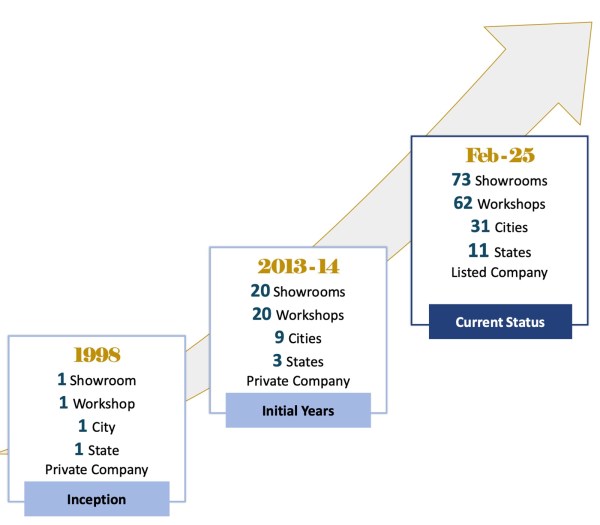 Figure 1: Landmark Cars Growth Trajectory. (Source: Quarterly Report Dec 24)
A quiet giant behind the wheel
When most people think about car companies, they think of the manufacturers — Mercedes-Benz, Mahindra, MG Motors, and Kia. But Landmark Cars is in a very different place in the ecosystem.
Landmark is India’s largest multi-brand premium car dealership network. It partners with global and Indian auto giants to operate their showrooms, service centres, and spare part networks.
Story continues below this ad
As of 9MFY25, it ran more than 130 outlets across 30 cities, linking buyers and brands in markets that are fast growing beyond just the top metros.
Two revenue engines: Sales and Service
Landmark’s business rests on two major pillars: selling new vehicles and servicing them after the sale.
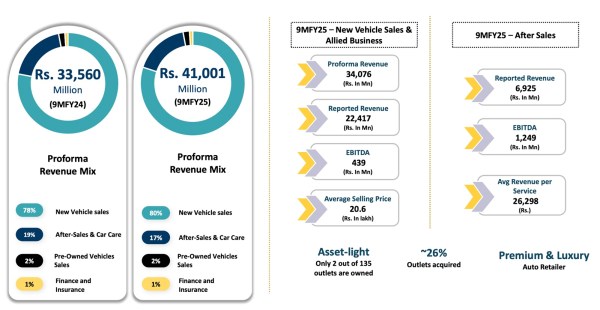 Figure 2: Landmark Cars Business Snapshot. (Source: Quarterly Report Dec 24)
The first pillar — new car sales — drives about 80% of the company’s revenue.
In FY24, Landmark sold approximately 19,000 vehicles across its various brands. In the first nine months of FY25, it sold nearly 20,000 vehicles, indicating close to 20% growth.
Story continues below this ad
At the same time, the average selling price per vehicle rose sharply by almost 9%, reaching around Rs 20 lakh per car. This shift wasn’t accidental; it reflects a broader trend in India’s auto market, where buyers are moving up the value chain, seeking better, feature-rich, and safer vehicles.
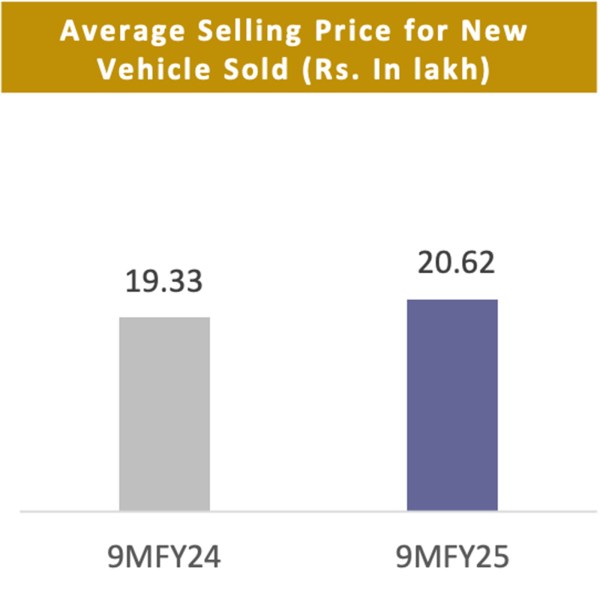 Figure 3.1: Average Selling Price Comparison. (Source: Quarterly Report Dec 24)
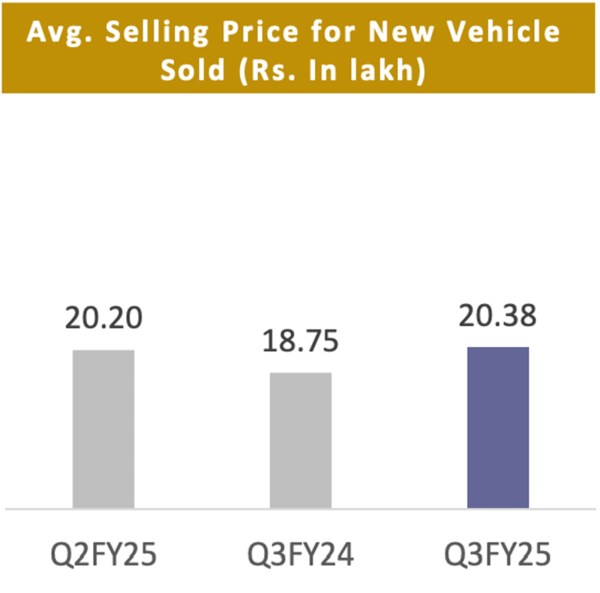 Figure 3.2: Average Selling Price Comparison. (Source: Quarterly Report Dec 24)
Despite the scale of its sales operations, selling new cars is a low-margin business for Landmark. Gross margins on car sales typically hover around 2%, meaning the company must rely heavily on scale, selling more cars, rather than high profits per vehicle.
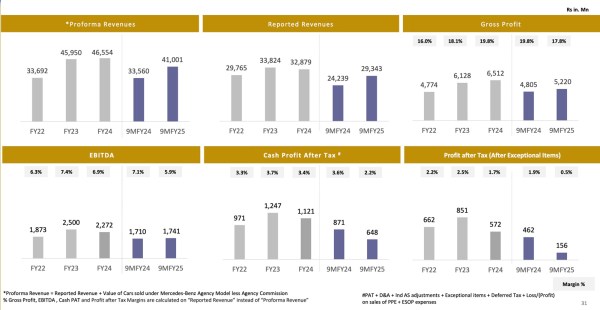 Figure 4: Revenue and Margin Snapshot. (Source: Quarterly Report Dec 24)
That’s where the second pillar becomes crucial: after-sales service.
Once a car is sold, Landmark’s network of workshops, body shops, and spare part centres steps in. Here, the economics are far more attractive.
Story continues below this ad
Servicing vehicles and selling spare parts contributed about 18% of Landmark’s total revenue in 9MFY25, roughly Rs 690 crore, but accounted for a massive 71% of its operating profit.
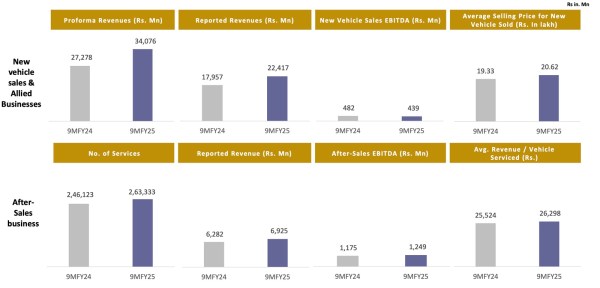 Figure 5: Business Vertical Snapshot. (Source: Quarterly Report Dec 24)
Unlike vehicle sales, after-sales services command EBITDA margins of around 19%, making them the real cash generator for the business.
In simple terms, every new vehicle Landmark sells creates an annuity stream of servicing income over several years.
It’s a quietly compounding model: build a larger vehicle base today, earn stable and growing profits tomorrow.
Story continues below this ad
Multi-brand, multi-city, premium-focused strategy
Landmark’s expansion strategy has been built carefully around three principles: diversify the brand portfolio, expand across growing cities, and align with India’s premiumisation wave.
First, instead of being tied to one or two brands, Landmark today operates across 10 different OEMs, from high-end luxury players like Mercedes-Benz to fast-growing mainstream names like Mahindra, Kia, and MG Motors.
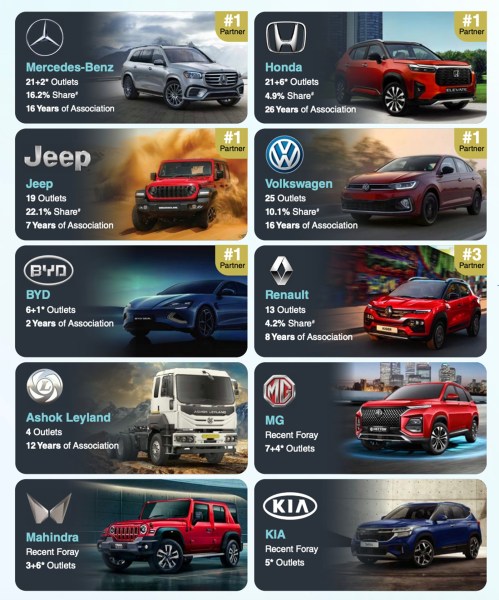 Figure 6: Brand Snapshot. (Source: Quarterly Report Dec 24)
This diversification shields it from being overly dependent on the fortunes of a single brand. If one OEM underperforms, others can compensate.
Second, Landmark is no longer focused only on top metros like Mumbai or Delhi. It has expanded into cities like Ahmedabad, Indore, Jaipur, and Surat – cities where rising affluence and a hunger for premium brands are driving faster-than-expected car sales. This footprint across emerging markets gives Landmark a competitive edge as India’s automotive map evolves beyond the traditional urban strongholds.
Story continues below this ad
Third, and perhaps most importantly, Landmark has been consciously shifting its brand partnerships toward the premium end of the market.
Ten years ago, the Rs 5-8 lakh hatchback was the dominant choice for Indian consumers. Today, aspirational buyers are aiming for SUVs and premium sedans priced at Rs 15 lakh and above. Landmark’s recent emphasis on fast-growing brands like Mahindra (SUVs), MG Motors (tech-driven crossovers), and EV makers like BYD taps into this trend.
At the same time, Landmark’s anchor relationship with Mercedes-Benz ensures that it remains deeply embedded in the luxury segment, which is poised for steady growth. Mercedes alone expects India’s luxury car market to touch 100,000 units annually by 2030, a number that could create massive downstream opportunities for dealerships like Landmark.
The larger logic: Selling a car is only the beginning
At its core, Landmark is not trying to win by simply selling more cars today.
Story continues below this ad
Its model is to create a pipeline for long-term recurring profits through servicing, spare parts, insurance renewals, and upgrades.
Every vehicle it sells adds not only to the top line once but also to a growing installed base of serviceable cars, a base that can drive steady, higher-margin income for five to ten years after the initial sale. This is why after-sales currently makes up the bulk of Landmark’s operating profits, despite being a smaller slice of revenue.
Moreover, by focusing on higher-value vehicles and brands, Landmark improves both its revenue per customer and its service opportunity per customer. Servicing a Rs 50 lakh Mercedes or a Rs 20 lakh MG brings in significantly more income than servicing a Rs 7 lakh hatchback.
Thus, Landmark’s approach is not just about chasing higher unit sales. It is about deepening relationships with customers across the ownership lifecycle, and doing so across a diversified portfolio of high-growth brands and cities.
Story continues below this ad
The idea is elegant in theory. But as Landmark’s recent performance shows, the real challenge lies in execution, especially when external headwinds hit.
Challenges on the road ahead
Landmark’s current strategy — expanding aggressively by adding 24 new outlets in a single year — brings both excitement and near-term challenges.
Opening new showrooms and service centres at once is capital-intensive. It demands upfront investment in real estate, interiors, staffing, and inventory, long before those outlets start generating meaningful revenue.
This upfront cost is already visible in the company’s numbers.
In 9MFY24, Landmark’s EBITDA margin slipped to around 5.9% from 7.1% a year ago.
Analysts expect margins to remain under pressure in the near term, as the new showrooms take time, often 12-18 months, to reach steady sales and service volumes.
In addition, until these outlets ramp up, Landmark’s overall profitability metrics could look weaker than they are. Investors and observers will need to track whether service revenues from these new centers pick up quickly enough to offset the higher operating costs. A delay here could mean another few quarters of suppressed profitability, even if the long-term thesis remains intact.
Brand risk and competition
While Landmark has wisely diversified its portfolio by adding Mahindra, Kia, and MG Motors, there is still an inherent brand dependency.
Performance from Mercedes-Benz, in particular, remains crucial. If luxury car demand softens — either due to economic slowdown, regulatory shifts, or simply changing buyer preferences — Landmark’s growth story could wobble.
At the same time, Landmark faces rising competition from other dealership networks. Large regional players and OEMs’ direct sales strategies (especially in EVs) could start eating into dealership profits.
As the market matures, margins could compress further, making scale and operational efficiency even more critical.
Another key point is that while Landmark has added BYD to its stable to tap the electric vehicle trend, the broader EV market in India is still evolving. Consumer acceptance, charging infrastructure, and government policies will all play a role.
If EV adoption moves slower than anticipated, Landmark’s early investments could take longer to pay off.
Execution risk: Can the new outlets deliver?
Perhaps the biggest challenge ahead is execution. Adding showrooms is one thing. Making them profitable in a highly competitive, premium-focused market is another.
Every new outlet needs trained sales and service staff, local market intelligence, OEM collaboration on supply chain and marketing, and a growing customer base in that geography.
If Landmark misjudges demand in any of its new locations, or if costs overrun, the expected revenue boost could be delayed or diluted.
Execution will determine whether this bold expansion builds a stronger company or stretches its resources thin without matching returns.
In short, Landmark has the right strategy on paper.
But whether it can turn that into steady, profitable growth will depend entirely on how carefully and quickly it can stabilise its new network.
Valuation check: What the numbers say today
Landmark Cars today finds itself at an interesting inflection point.
Despite muted numbers last year, the opportunity ahead remains significant if the company executes its expansion plans well.
Landmark’s business is closely tied to three trends that are reshaping India’s auto market.
First, India’s premium and luxury car segment, currently a small fraction of total car sales, is expected to double over the next five to seven years.
Second, the shift toward SUVs and higher-ticket vehicles is firmly underway, pushing average selling prices up across the market.
And third, the emergence of electric vehicles and hybrid technologies is creating entirely new categories for dealerships to capture.
If Landmark can scale its new showrooms, deepen its after-sales footprint, and successfully ride these three waves, its revenue could grow by 15-18% annually over the next few years.
Operating profits could grow even faster, especially as higher-margin service income begins to dominate a larger share of the business mix.
Based on the planned expansion and service ramp-up, Landmark’s operating scale could almost double from FY24 levels over the next three to four years.
This would not just strengthen its standing in the premium dealership space but also position it as one of the most profitable multi-brand retail networks in the country’s auto industry.
Of course, such growth will not be linear. There will be quarters where expansion costs weigh on margins. There will be periods where brand-specific issues or regional slowdowns cause temporary bumps.
But if Landmark navigates these challenges carefully, the size of the opportunity it is chasing is unquestionably larger than the business it is today.
In short, Landmark’s future growth is tied less to what it sells this quarter and more to how well it scales and services India’s next wave of premium car buyers over the coming decade.
Note: This article relies on data from annual and industry reports. We have used our assumptions for forecasting.
Parth Parikh has over a decade of experience in finance and research and currently heads the growth and content vertical at Finsire. He has a keen interest in Indian and global stocks and holds an FRM Charter along with an MBA in Finance from Narsee Monjee Institute of Management Studies. Previously, he held research positions at various companies.
Disclosure: The writer and his dependents do not hold the stocks discussed in this article.
The website managers, its employee(s), and contributors/writers/authors of articles have or may have an outstanding buy or sell position or holding in the securities, options on securities or other related investments of issuers and/or companies discussed therein. The content of the articles and the interpretation of data are solely the personal views of the contributors/ writers/authors. Investors must make their own investment decisions based on their specific objectives, resources and only after consulting such independent advisors as may be necessary.


