
From the Northeast to the West: The many breakfasts of India | Food-wine News
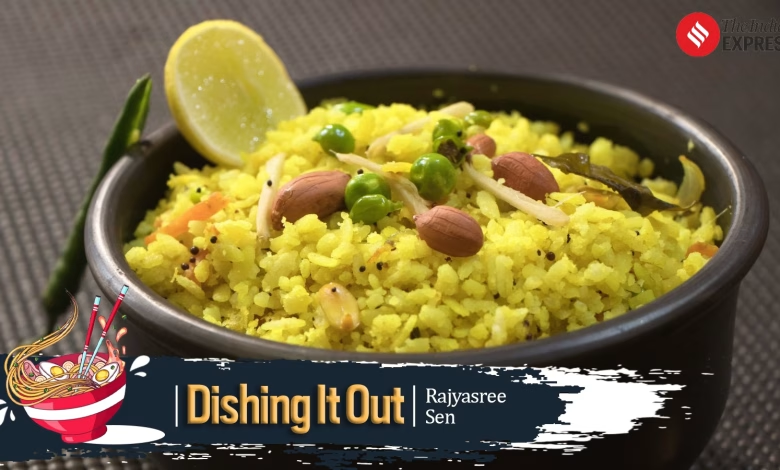
Last week, I was in Indore for a couple of days and was introduced to the craze that is Indori poha, which drove home India’s love for a hearty, solid breakfast. At 9 am, markets in the Madhya Pradesh city were dotted with people eating various hot, fried breakfast dishes.
The Indori Poha is the quintessential breakfast to kickstart the day – slightly sweet, but full of textures, flattened rice is topped with onion and sev and a squeeze of lime, a touch of sugar, and served with a hot jalebi. There was another stall which was frying khopra patties – potato patties with a coconut filling.

But it’s not just Indore that loves its breakfast or naashta preparations. And this, to me, is an untapped restaurant idea – the breakfasts of India. Never has a country offered up a more diverse and interesting range of breakfasts for its people. Not necessarily healthy, but definitely tasty.
From Kashmir to Kanyakumari and Goa to Nagaland, you will be spoilt for choice if you just make a meal of the breakfasts available in each region.
The Northeast’s fare
Many of the breakfast delicacies you find in the Northeast are made from simple ingredients that also provide an energy boost.
While I’m not a fan of Khasi food, I do remember the local breakfast served to me in Shillong, which is eaten in various forms by the Khasis, Jaintias, and Garos, the three main tribes in this region. Putharo resembles a pancake and is made with rice flour, coconut and jaggery, and baked in an earthen pot. It was served to us with a spicy pork curry.
They also make pukhlein, a sweet bread made with jaggery and rice flour.
Story continues below this ad
Assam has a no-cooking breakfast, much like cereal with fruit and milk, but much healthier. Jolpaan is usually a mixture of soaked, flattened, and puffed rice, which is served with curd and jaggery. Paani pitha is made from a mixture of wheat and onion with either salt or sugar.
The Mizorami staple breakfast is quite the winner — rice is served with a mixed vegetable stew called bai, which is cooked with cabbage, brinjal, mustard leaf, potatoes, green chillies, and fermented pork, along with a dash of baking soda. No salt or spices are added to the dish.
The Manipuri breakfast is, in a way, similar to the Bengali breakfast, which is now usually made on weekends. A roti or puri called tan is usually served along with black tea or changang. Tan is a flatbread which is deep-fried and served with potato curry called aloo kangmet.
Nagaland has 16 tribes, each with its own version of breakfast. Fermentation is an essential cooking process in the Northeast to ensure food does not spoil easily. The Sema tribe usually eat dried pork cooked with either akhuni (a fermented soybean chutney) or yam leaves, along with steamed vegetables. The Aao tribe prefer to eat pork with anishi (fermented yam leaves) for breakfast.
Story continues below this ad
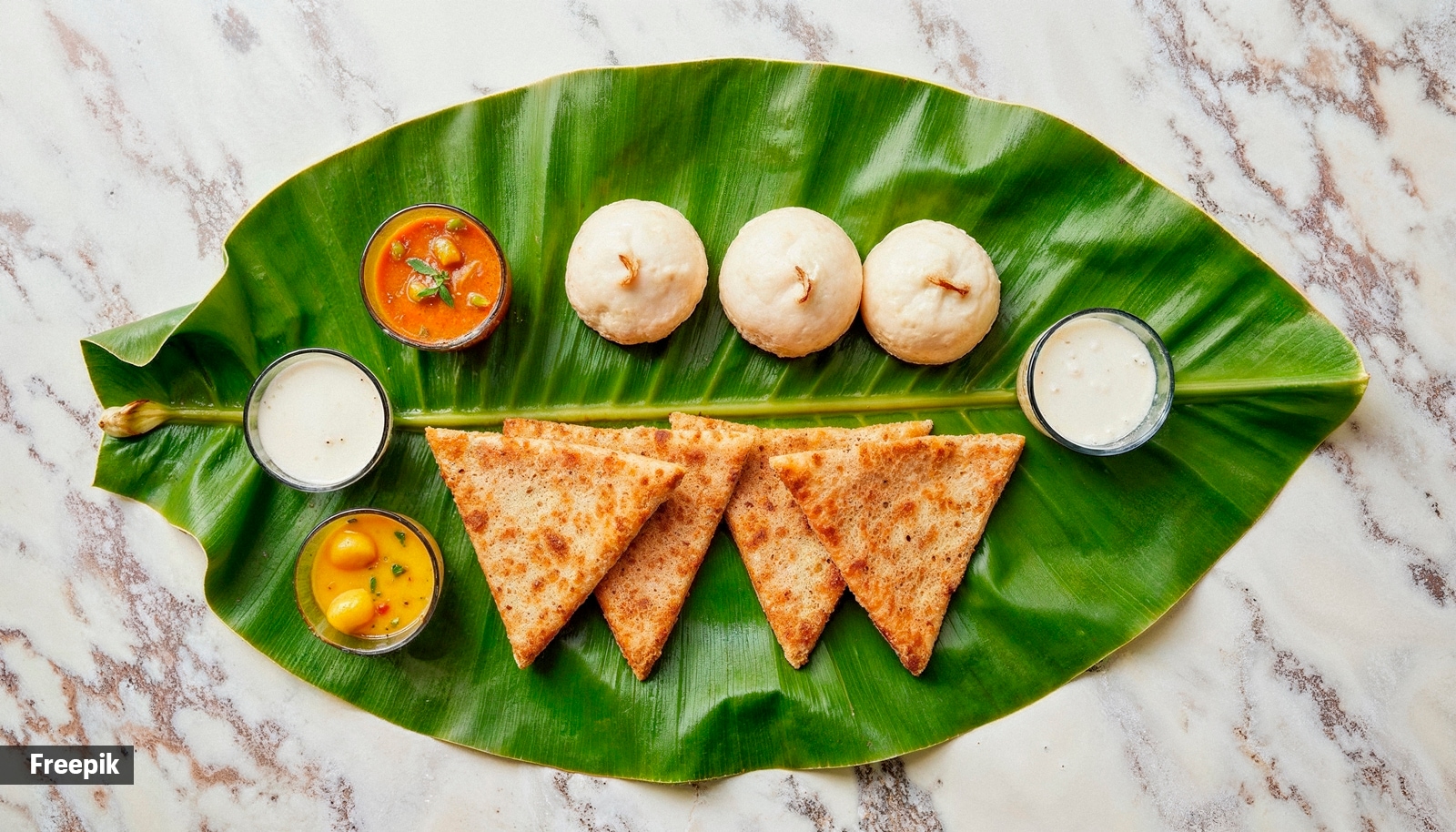 Parathas and puris and dosas and idlis have been given undue importance, especially in hotel breakfast buffets. (Photo: Freepik)
My favourite breakfast
In West Bengal, while families like mine preferred toast and Marmite, or toast and an egg and fruit for breakfast, the traditional breakfast is luchi (deep-fried puffed bread made from flour) and chenchki. Chenchki is made with diced or sliced potatoes, sometimes with cauliflower, pumpkin, potol, or pointed gourd, and is simply sautéed with green or red chilis and nigella seeds, or with panch phoron, Bengali’s five-spice powder.
This is by far my favourite breakfast, but because I love my heart, I rarely eat this unless on holiday.
In our ancestral village in Bengal, we get kochuri and alu, which are made in the sweetshops and run out by 9 am. The kochuris are flattened puris served with a slightly runny, sweet-and-spicy curry of potatoes, sometimes with a few chickpeas.
Bengal also loves having shingara or samosa for breakfast — the filling is a turmeric-laced potato mixture with a few peanuts, and is a mix of sweet and spicy. Heaven! Of course, in simpler homes across rural Bengal, chire bhaja or roasted flattened rice with chopped chilis and peanuts is a staple — both filling and tasty.
Story continues below this ad
Tripura has its own version of sweet poha, made by cooking flattened rice into a porridge with yoghurt, nuts and mango. Called phale, it is often served with a special type of cheese.
Of Rajasthan’s spicy, fried varieties
There’s a marked change in breakfast when you hop across to Rajasthan, and one of the joys of travelling through the desert state on holiday is that you can tuck into their very spiced-up and deep-fried breakfasts — while reminding yourself that you’re allowed to do so on holiday.
I’ve often started the day with these large green chilis, resembling jalapeños, that are stuffed with spicy mashed potato, then dipped in besan (gram flour) and deep-fried. Called mirchi bada, it is the perfect spicy kickstart to the day.
Bedmi puris, pyaaz kachori, moong dal pakodis – there’s a reason why many Rajasthani breakfasts are deep-fried and carbohydrate-heavy. They were not made for tourists like me. They were made to either provide heat in Rajasthan’s biting cold winters or fuel to battle the day in the desert climate.
Story continues below this ad
There is, of course, besan ka chilla, which is a savoury crepe made from gram flour. All these are served with a selection of spicy chutneys – ranging from garlic to freshly ground coriander-chilli and mint.
Bajra khichdi is very common as well, and is essentially a porridge made from pearl millet and moong dal, usually prepared in winter.
The Kashmiri bakeries
I’m purposely steering clear of mentioning parathas and puris and dosas and idlis, because they have been given undue importance, especially in hotel breakfast buffets. While I’m a big believer in the fact that idlis are the healthiest and wisest Indian breakfast to have while on the road, let me tell you about one more state’s breakfast, which I love.
Take a walk in Srinagar, especially around the two lakes, and you will be spoilt for choice. The Kashmiri bakeries, kandurwans, and their plethora of breads, which are ready by 7 every morning.
Story continues below this ad
Noon chai, which I’m not a fan of, is an acquired taste but a great delicacy. It’s called noon chai because it’s flavoured with noon or salt, and is pink in colour. Green tea leaves are brewed with milk, salt and baking soda in a traditional metal kettle called a samovar. The baking soda is what brings out the pink colour.
My favourite is the kahwa, though. It’s a beautiful pale golden liquor tea made with green tea leaves, and boiled with saffron, cinnamon, cardamom, and rose petals. Slivered almonds are also added to the cup before serving – if you’re lucky.
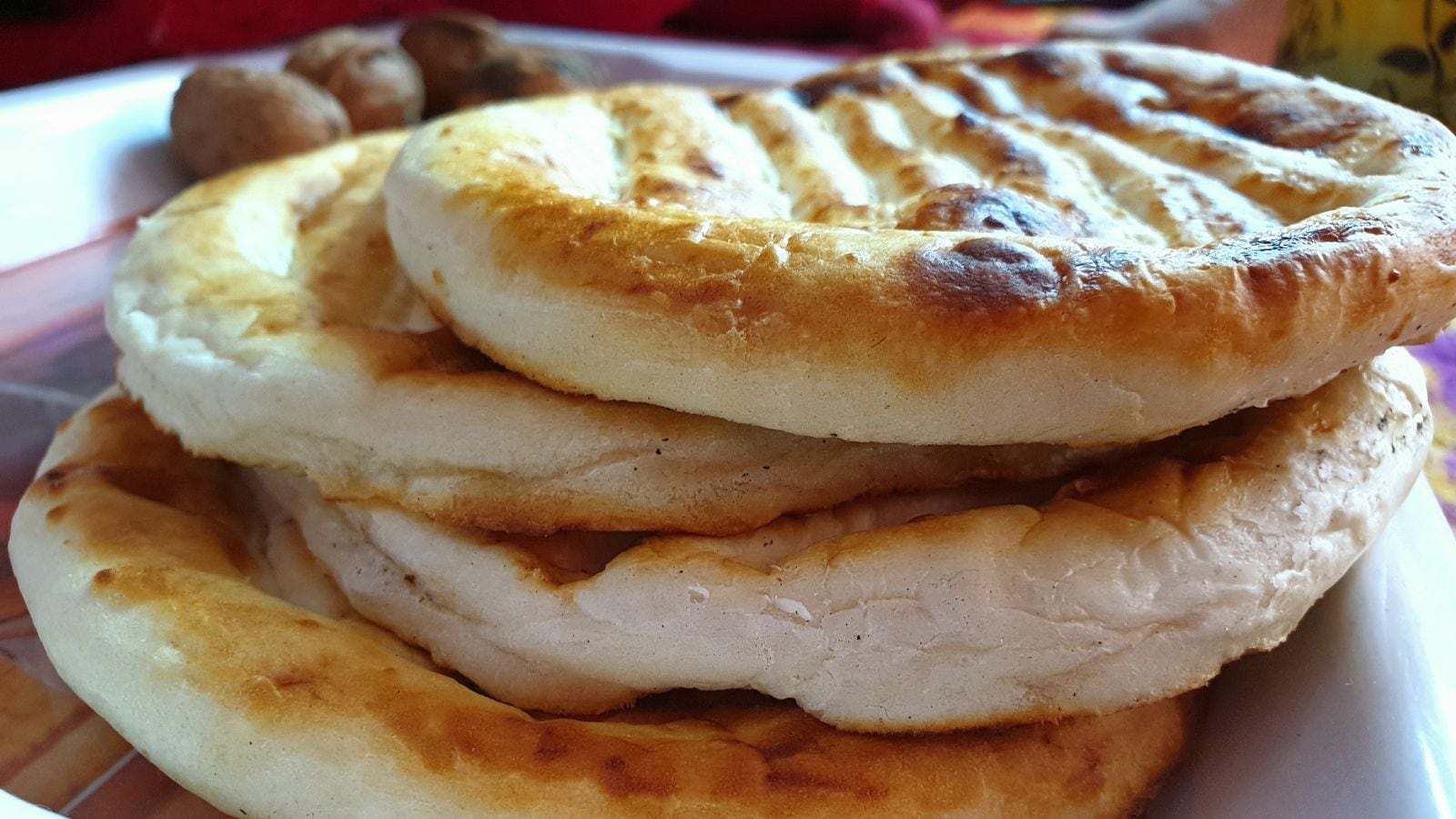 The Kashmiri bakeries, kandurwans, and their plethora of breads, which are ready by 7 every morning. (Photo: Canva Pro)
What you will find at the kandurwans, and even in homes and hotels, which usually buy the bread from the bakeries early in the morning, is the range. Try the chhir chot, which is a traditional Kashmiri pancake made from rice flour and carrom seeds. There’s girda, a tandoor-baked bread made with dough fermented overnight, resulting in a crisp exterior and a soft, fluffy interior. You’re encouraged to slather some butter on the hot bread and eat it.
Winter becomes more bearable when you try the rich meat curry, harisa, which is usually served with a savoury fried pancake called tzir chot. It’s made with rice flour, cumin and green chillies. Roth is another sweet bread flavoured with dry fruits, cardamom, poppy seeds and sugar and ghee.
Story continues below this ad
The sheermal you get in Kashmir is very different from what we are used to in Delhi or elsewhere. It’s a dry, crumbly, sweet bread made to last for even a week without refrigeration. The original sheermal is made from all-purpose flour, yeast, sweetened milk, saffron, and cardamom.
I can carry on and on. There’s still Goa with its freshly baked breads often served with chorizo, Orissa with its dahi bada alu dum, and the sattu paratha of Bihar or the ande ka khagina in Hyderabad – but I’d be writing a tome on breakfast as a result.
My recommendation when travelling is to try the local foods and breakfasts — you might not might not like them. But it will give you insight into the region’s local culture.
Next week, I will write about the vegan capital of India — Bengal.


