
The bidding war, the 100% rally, and the hidden upside: Is Religare still a buy? | Smart Stocks News
The world of Indian finance is as intriguing as the rise of Religare Enterprises.
Over the past three years, the stock has delivered a solid 100% return to shareholders, outperforming the Nifty by a wide margin. But the real action lies in the ongoing bidding war for its crown jewel, Care Health Insurance (CHI).
The saga began in September 2023 when the Burman family, promoters of Dabur India, launched an open offer to acquire an additional 26% stake in Religare at ₹235 per share. The Burmans, already holding 21.5%, argued that their offer was a fair valuation for a company amid a turnaround. But Religare’s board rejected the bid, calling it “undervalued”.
Enter Digvijay ‘Danny’ Gaekwad, a US-based entrepreneur who countered with a ₹275/share bid — a 17% premium to the Burmans’ offer. Gaekwad’s proposal, though legally contested for missing SEBI’s 15-day window, has added fuel to the fire, with both sides now locked in a battle for control.
But why all the fuss?
The answer lies in CHI, Religare’s most valuable asset. India’s second-largest standalone health insurer, CHI has been growing at a blistering pace, with premiums up 25% year-over-year to ₹7,022 crore in FY24 and a best-in-class claims ratio of 58% (vs. the industry average of 70%). Its impending IPO, targeting a valuation of up to ₹15,000 crore, could be a game-changer for Religare’s shareholders.
Yet, the question remains: Can Religare sustain its 100% return streak, or is the stock running out of steam? Let’s dive into the numbers, the context, and the risks.
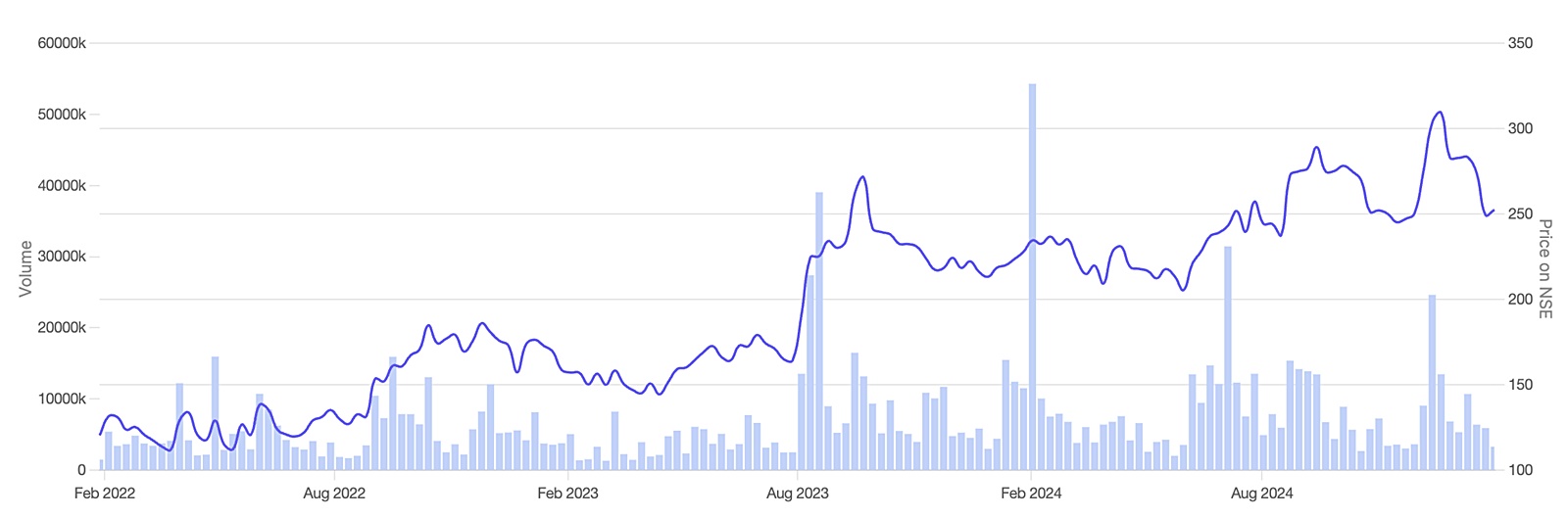 Stock price movement of Religare Enterprises Ltd. (Source: Screener.in)
The 100% return: What drove it?
Story continues below this ad
Religare Enterprises’ 100% return over the past three years is a tale of strategic reinvention, a booming insurance business, and a revival of its financial services arm. But beyond the headline numbers lies a nuanced story of execution, market positioning, and untapped potential. Let’s analyse the key drivers of this turnaround and what they mean for the future.
1. Care Health Insurance (CHI): The engine of growth
Care Health Insurance is the backbone of Religare’s valuation. Here’s why:
Market positioning and growth: CHI has carved out a niche in India’s health insurance market, which is growing at 14% annually due to rising healthcare costs and increasing awareness. With a 7% market share, CHI is second only to Star Health, but its growth trajectory is arguably more impressive.
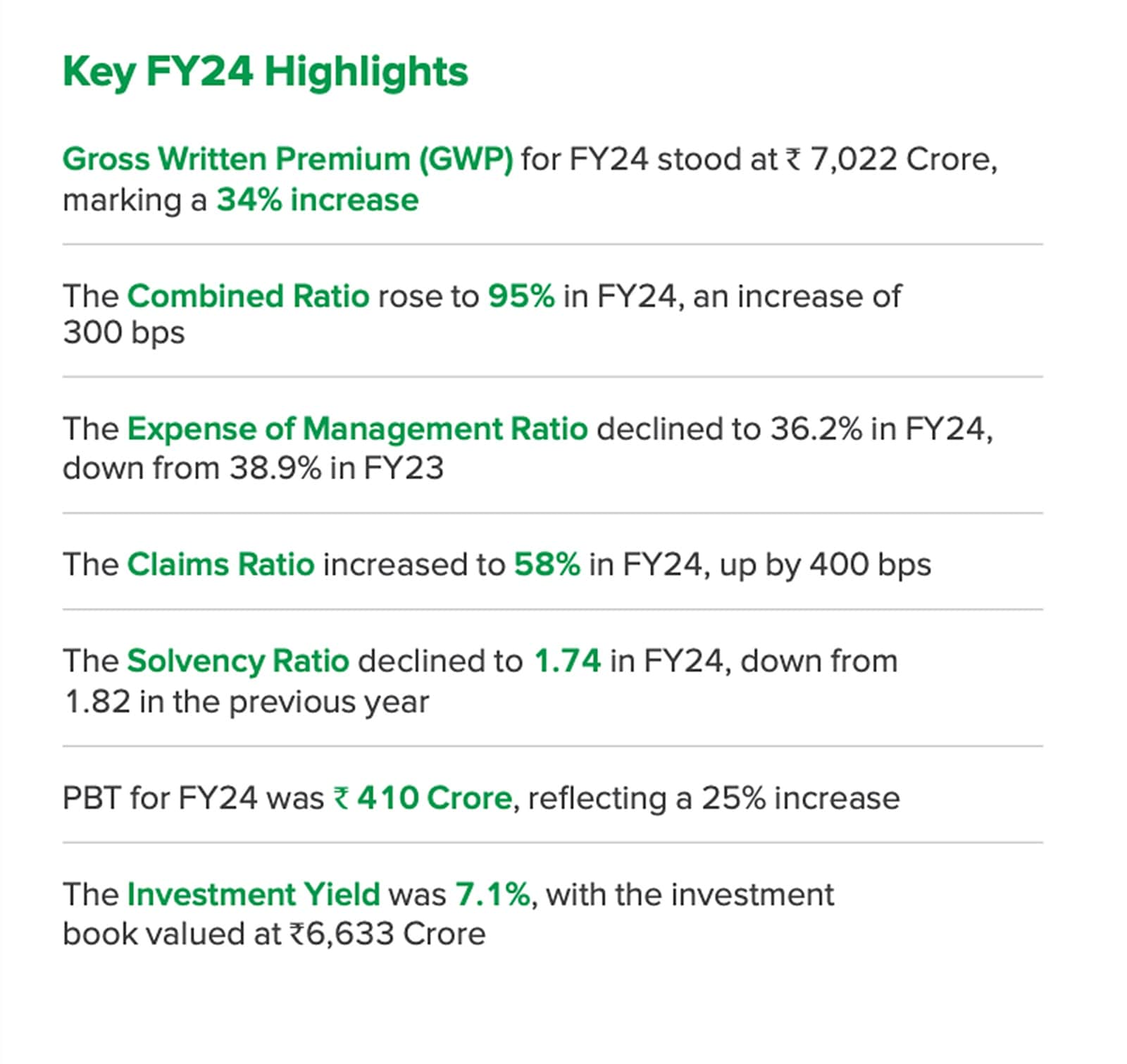 CHI FY24 Highlights. (Source: Religare Annual Report FY24)
Premiums grew 34% year-over-year to ₹7,022 crore in FY24, outpacing the industry average of 14%.
What sets CHI apart is its operational efficiency.
Story continues below this ad
Its claims ratio of 58% (versus the industry average of 88%) reflects superior underwriting and cost management. This has translated into robust profitability, with pre-tax profits rising to ₹410 crore in FY24, up from ₹320 crore in FY23.
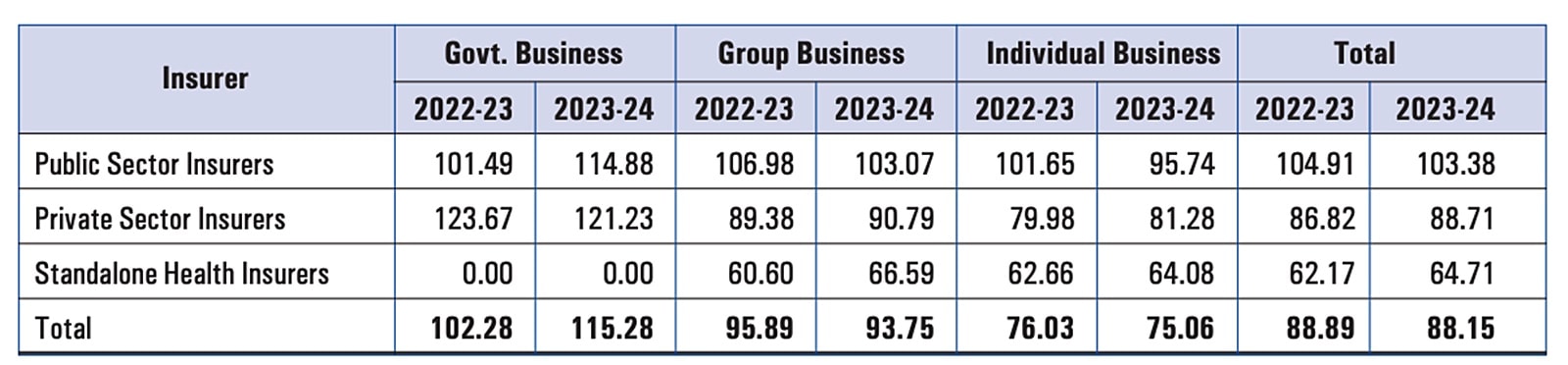 Claims Ratio under Health Insurance Business of General and Health Insurers (in%)
IPO and valuation upside: Religare Enterprises is gearing up to list CHI, aiming for a valuation of approximately ₹15,000 crore, which translates to a price-to-book value (P/BV) ratio of around 6x.
At this valuation, Religare’s 63% stake in CHI would be valued at ₹9,500 crore, surpassing its current market capitalization of ₹8,100 crore. This upcoming IPO is not merely a liquidity event but also serves as a testament to CHI’s growth potential and could act as a significant catalyst for Religare’s stock.
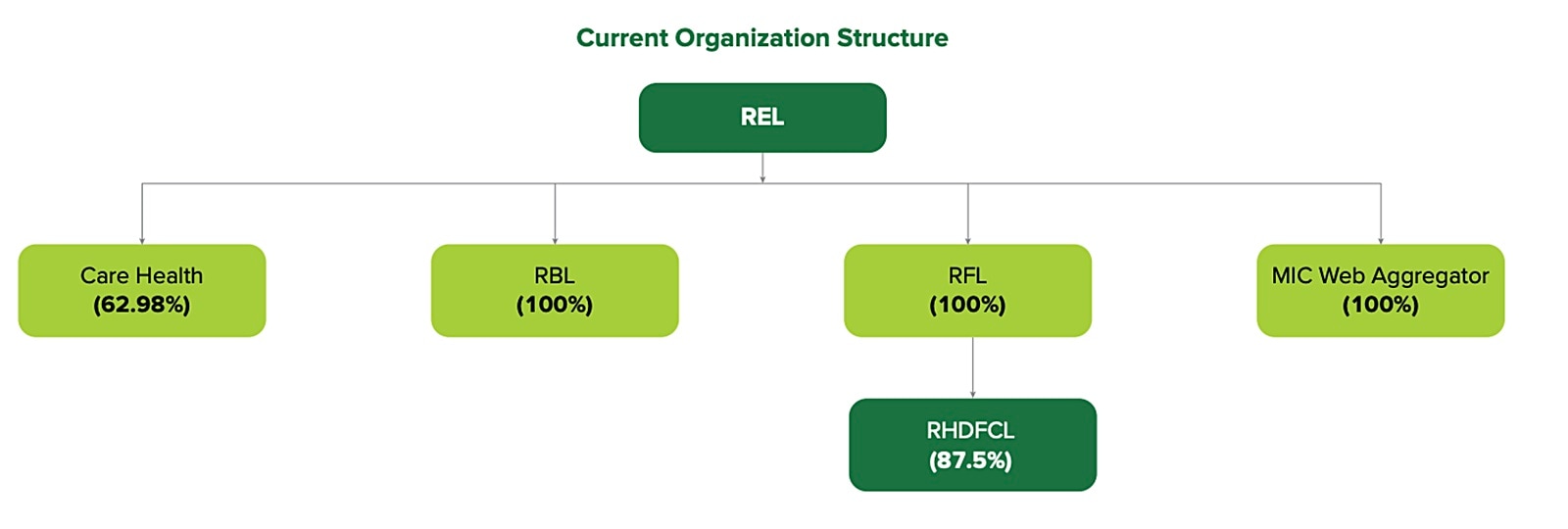 Religare’s Organization Structure. (Source: Religare Annual Report FY24)
In the Indian health insurance sector, P/BV ratios vary among key players.
Story continues below this ad
For instance, Star Health and Allied Insurance Company had a P/BV ratio of approximately 4x, with a market capitalization of ₹26,000 crore and a book value of ₹6,600 crore.
On the other hand, Niva Bupa Health Insurance Company had a P/BV ratio of 5.1x, with a market capitalization of ₹14,000 crore.
These figures indicate that CHI’s targeted P/BV ratio of 6x positions it competitively within the industry, suggesting a balanced valuation that reflects its market standing and growth prospects.
CHI’s anticipated success is closely linked to India’s underpenetrated health insurance market. With only about 4% of Indians currently covered by health insurance, the potential for growth is substantial. However, the market is becoming increasingly competitive, with companies like Star Health and Niva Bupa actively expanding their footprints. CHI’s ability to sustain its low claims ratio and continue its premium growth will be crucial in maintaining its competitive edge.
2. Religare Broking: Riding India’s retail investment wave
Story continues below this ad
While CHI steals the spotlight, Religare’s broking arm has quietly become a key contributor to its turnaround.
The retail trading boom: India’s equity markets have seen a seismic shift, with retail investors now dominating daily trading volumes. Religare Broking has capitalized on this trend, growing revenue by 28% YoY to ₹368 crore in FY24. Net profits more than doubled to ₹33 crore, up by 247% YoY.
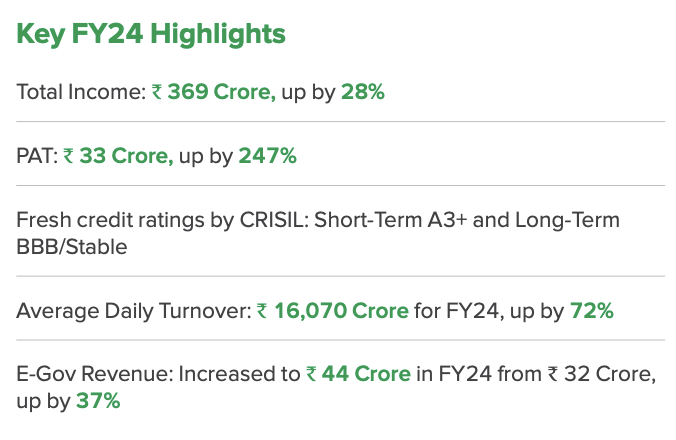 Religare Broking FY24 Highlights. (Source: Religare Annual Report FY24)
What’s driving this growth? Religare’s focus on Tier-2 and Tier-3 cities, where financial literacy and disposable incomes are rising, has been a game-changer. Its tech-driven platform and personalised services have helped it stand out in a crowded market.
The broking business faces stiff competition from discount brokers, which have captured significant market share with their low-cost models. Religare’s ability to differentiate itself through value-added services (e.g., research, advisory) will be key to sustaining growth.
Story continues below this ad
Currently, Religare Broking is likely to be valued at approximately ₹1,800 crore, equating to a revenue multiple of 5x. This valuation appears conservative when compared to industry standards. For instance, the average revenue multiple for brokers is around 10x.
If Religare can continue to scale its broking operations and leverage its strengths in emerging markets, the business could evolve into a standalone asset of significant value, further enhancing the overall valuation of Religare Enterprises.
3. Debt reduction and housing finance turnaround
The company has achieved a remarkable decrease in gross debt, reducing it from ₹2,900 crore in FY20 to ₹678 crore in FY24. This substantial reduction has not only enhanced Religare’s financial flexibility but also restored investor confidence.
Notably, Religare Finvest Ltd. (RFL), a wholly-owned subsidiary, has become external debt-free after completing a One-Time Settlement (OTS) with its lenders, clearing over ₹9,000 crore in debt.
Story continues below this ad
Housing finance and SME lending: Religare’s housing finance division returned to profitability in FY24, marking a significant turnaround after years of losses. Although currently a smaller contributor to the company’s overall performance, this division holds potential, especially in the context of India’s recovering real estate market.
Religare Finvest, the company’s SME lending arm, has also achieved a debt-free status in FY24 and is awaiting regulatory approval from the Reserve Bank of India (RBI) to resume operations.
Given India’s substantial MSME credit gap, estimated at $530 billion, successfully revitalizing this business segment could position it as a significant growth driver for Religare.
Investment portfolio: As of FY24, Religare’s investment portfolio is valued at ₹6,633 crore, encompassing stakes in entities such as SMC Insurance and other financial assets.
Story continues below this ad
This diversified portfolio provides the company with liquidity options for future growth initiatives or further debt reduction, adding an additional layer of value to its financial structure.
Religare’s balance sheet cleanup has been a critical factor in its stock rally.
Can further upside be possible?
Let’s break it down.
The upcoming IPO of CHI is a significant event. With an anticipated valuation of ₹15,000 crore, Religare’s 63% stake would be worth about ₹9,450 crore.
Even if the IPO doesn’t materialise, CHI’s valuation remains robust, potentially exceeding that of its parent company. It’s worth noting that parent companies often trade at a discount, sometimes around 25%, due to factors like conglomerate discount. Even with such a discount, the value of Religare’s stake in CHI could still surpass its current market cap of approximately ₹8,100 crore.
Then there’s Religare Broking.
With a reported revenue of ₹368 crore in FY24 and applying a conservative 5x revenue multiple, we’re looking at a valuation of approximately ₹1,840 crore.
Don’t forget the investment portfolio, valued at ₹6,633 crore as of FY24, which includes stakes in entities like SMC Insurance.
Adding these up, we get a total valuation of around ₹18,000 crore. That’s more than double the current market capitalization. This suggests that the market might be undervaluing Religare’s assets, indicating potential upside for investors.
Of course, it’s essential to keep in mind the associated risks, such as regulatory approvals, market competition, and execution challenges. But given the numbers, there seems to be a compelling case for further growth.
So, is there more upside? The figures suggest there could be. As always, it’s crucial to do thorough research and consider all factors before making investment decisions.
Note: We have relied on data from the annual reports throughout this article. For forecasting, we have used our assumptions.
Parth Parikh has over a decade of experience in finance and research, and he currently heads the growth and content vertical at Finsire. He has a keen interest in Indian and global stocks and holds an FRM Charter along with an MBA in Finance from Narsee Monjee Institute of Management Studies. Previously, he has held research positions at various companies.
Disclosure: The writer and his dependents do not hold the stocks discussed in this article.
The website managers, its employee(s), and contributors/writers/authors of articles have or may have an outstanding buy or sell position or holding in the securities, options on securities or other related investments of issuers and/or companies discussed therein. The content of the articles and the interpretation of data are solely the personal views of the contributors/ writers/authors. Investors must make their own investment decisions based on their specific objectives, resources and only after consulting such independent advisors as may be necessary.


