‘AI is there to support teachers as an assistant, not to replace them’: Google VP of Education on how Gemini is opening doors for personalised learning | Technology News
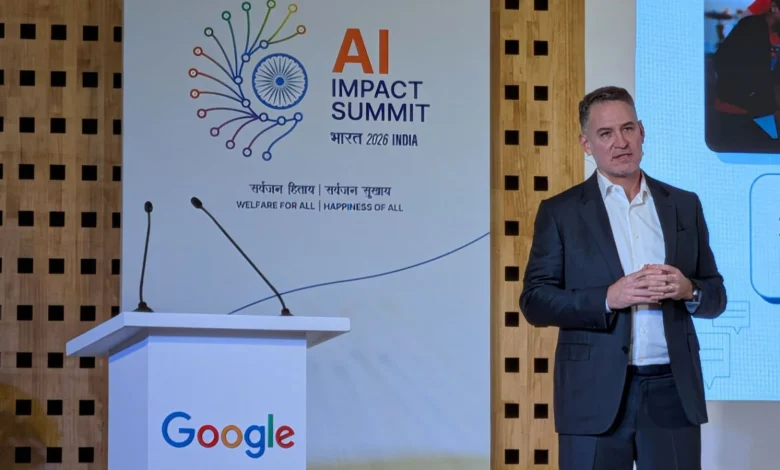
AI is not a replacement for teachers, but it is meant to support them as a teaching assistant, according to Chris Phillips, Vice President and General Manager of Education at Google.
“We believe very strongly that teachers are critical, and that the ongoing connection between teachers and students is essential. We also know teachers need assistance and support to scale their efforts so they can spend more time with students. This is about helping teachers be successful and giving them more time for human connection,” said Phillips, debunking the notion that AI-based learning or AI tools such as Gemini are intended to replace teachers.

Phillips, who was in India to participate in the AI Learning Forum in Delhi, said that using AI in education could help students develop a deeper understanding of concepts, build critical thinking skills, and foster creativity. He once again emphasised that AI tools such as Gemini are most effective when they supplement, rather than replace, teachers’ efforts.
“The idea that you can keep up with a subject you may be slipping behind in, or do extra test preparation independently using technology, with the help of your parents or teachers, is a really important enabler. We believe these create a huge new opportunity to improve learning outcomes and help people learn,” he told indianexpress.com in an interview on the sidelines of the event.
“Our role is to support educators by providing the tools and technology to help teachers, who are often very busy managing crowded classrooms around the world. We believe that AI can help teachers plan their syllabus, coursework, and assignments. All of this frees up time so they can continue to build deep relationships with their students,” he said.
While generative AI is still new, more students are using AI tools and interacting with them, for example, to help with homework. That is why Google and other tech companies see a significant opportunity to support students who lack access to expensive tuition or course materials.
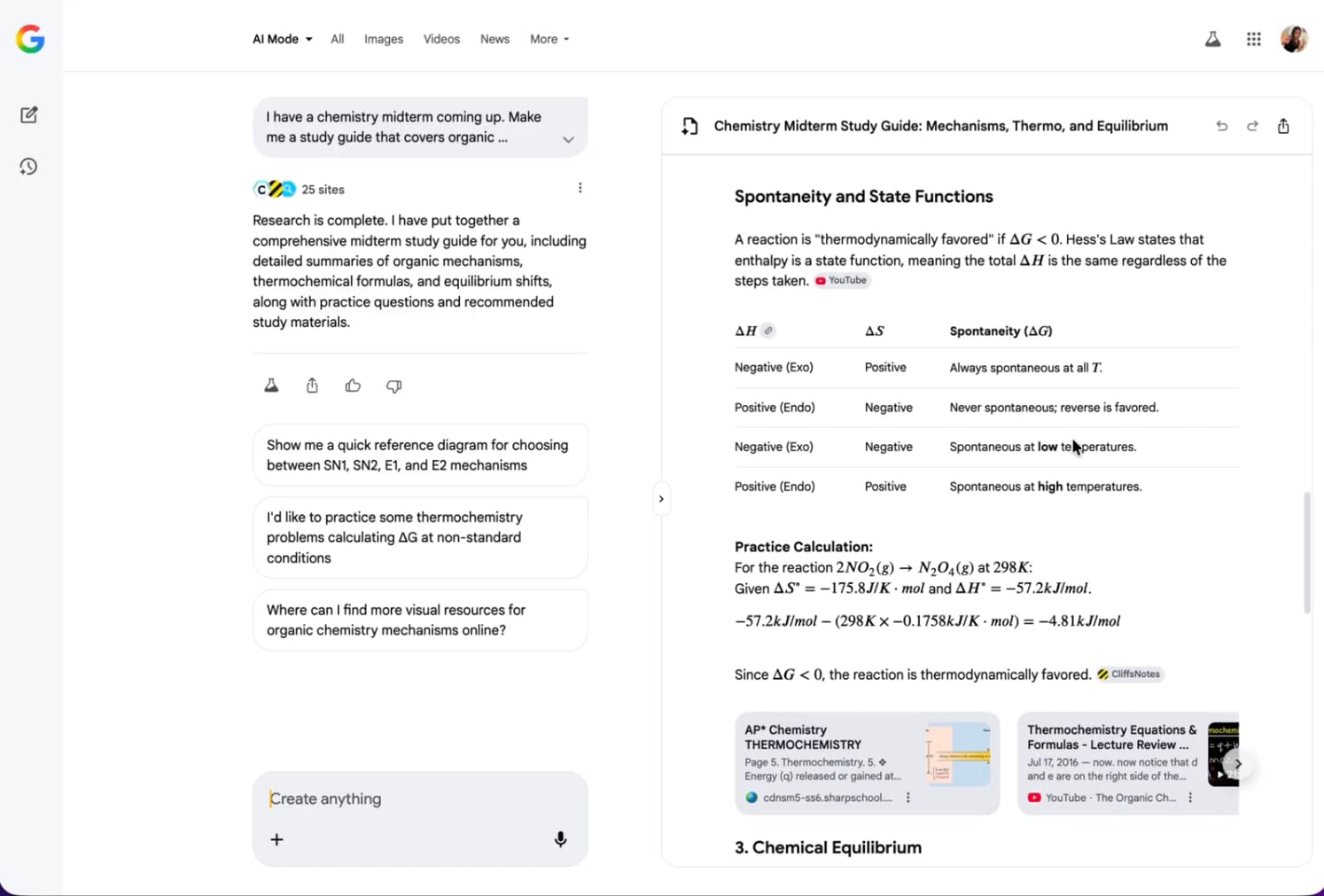 Google is adding a new AI Mode feature in Search that helps students create study guides and interactive quizzes. (Screenshot: Google)
Phillips cites the example of multimodal learning, in which students understand and learn a topic through multiple formats, such as visuals, videos, and audio overviews. He says, in India, while a teacher-led approach is a primary way of learning, learning through AI adds a new dimension.
Story continues below this ad
“A teacher can use NotebookLM with a specific curriculum they have defined, and the tool can generate an audio overview along with a presentation. This makes learning more accessible and easier to understand. Some students are visual learners, while others benefit from repetition or audio explanations to reinforce a topic.”
A few years ago, when AI first entered the lives of millions of people, expectations were low. It was widely assumed that AI would mainly help students with editing and rewriting ideas, as well as with punctuation, capitalisation, and grammar.
Today, AI has moved well beyond that stage. Large language models are becoming more capable and sophisticated, and while chatbots can still hallucinate at times, few would have imagined they could evolve into experimental learning tools. These tools actively engage students by allowing them to ask questions, brainstorm ideas, and revisit concepts after school hours, even in the absence of teachers.
Phillips highlights the success of guided learning, a Socratic method of teaching that allows students to explore the subject more deeply, learn at their own pace and follow up with additional questions. He shares an example of how guided learning is being tested in schools like City Montessori School in Lucknow, India.
Story continues below this ad
“It’s an example of personalised learning in a teacher-led environment, as it reinforces that learning isn’t about reaching a quick answer. Students aim to master a topic and understand it thoroughly—some move faster, while others take more time. This flexibility in both subjects and learning formats has the potential to help more students succeed.”
At the AI Learning Forum event, Google announced new initiatives to place AI at the centre of education in India, with a particular focus on helping students learn science topics more deeply. For the first time, full-length Joint Entrance Examination (JEE) practice tests will be available in Gemini.
The company said it has partnered with education firms such as PhysicsWallah and Careers360 to ensure the content is rigorously vetted and closely mirrors the questions students will encounter in the actual JEE exam, one of India’s most competitive entrance tests, which determines admission to engineering colleges.
Meanwhile, Google is adding a new AI Mode feature in Search that helps students create study guides and interactive quizzes. The company is also introducing new tools for educators, including Gemini integration in Google Classroom, AI-powered audio and video feedback, usage insights, Workspace Studio for automating workflows with AI agents, and tools to help verify whether content was created or edited using Google AI.
Story continues below this ad
India is one of Google’s largest global hubs for AI-powered learning, leading worldwide in daily Gemini usage for education. The country is also among the biggest student communities for NotebookLM, with Indian users generating over 3 million learning outputs in the past month alone.
Although critics argue that AI tools can negatively affect children’s cognitive development, particularly how they learn new skills and perceive and solve problems, Phillips disagrees.
“We’ve built learning science into our tools and have a very strong conviction around pedagogical standards. Our focus is on active learning—helping students understand a topic, practise it, unpack the details, and ask questions to ensure they are deeply understanding the subject rather than just arriving at a quick answer.
“We want to help students develop a deep understanding, because critical thinking is an essential skill for the future, and we aim to reinforce it. We also want to support teachers in how they assess work. Through our Classroom software, when teachers create an assignment, they can define how they want to assess whether students have engaged with the material in the right sequence and understood the topic at the appropriate level of detail.”
Story continues below this ad
As artificial intelligence in education becomes mainstream and schools continue to embrace AI, it is important to establish cross-functional structures as well as clear policies that bring together academic affairs, students, institutional research, governments, and technology companies. These policies should define acceptable uses of AI, outline vetting processes for new tools, and provide consistent workflows for how key technologies like AI evolve.
“We are rolling out AI in a responsible way, ensuring age-appropriate experiences, strong data protection for students, and clear controls for administrators over who has access and when,” he said.