
‘I’m more than a Muslim Rapper’: Saniya Mistri Qaiyummuddin on breaking stereotypes and the hijab debate | Music News
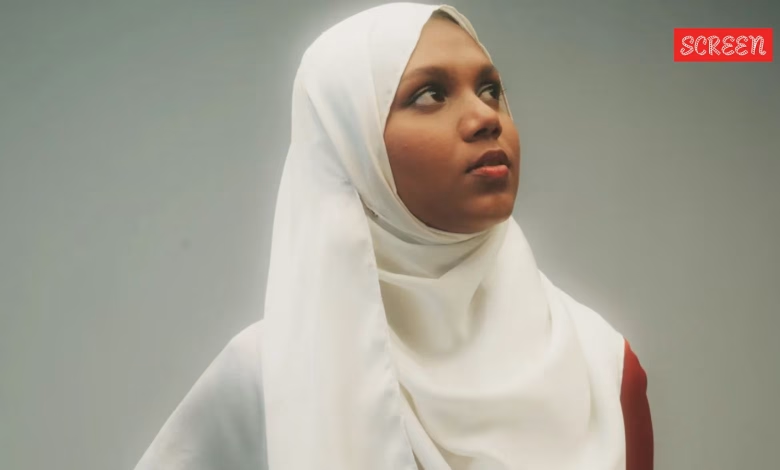
In 2022, amid fierce protests and national debate over the hijab, Saniya Mistri Qaiyummuddin walked onto the Hunarbaaz stage and let her talent do the talking. Dressed in a pink salwar kameez and hijab, her powerhouse rap performance didn’t just win over the crowd — it brought Karan Johar, Parineeti Chopra, and Mithun Chakraborty to their feet for a standing ovation.
In a digital age fuelled by unsolicited opinions, the lines of basic respect are blurring. Case in point: Bihar CM Nitish Kumar casually pulling at a woman’s hijab at a public event—and then meeting the ensuing firestorm with a deafening silence instead of an apology.

In this atmosphere, when representation matters, and events or incidents are mercilessly scrutinised on the Internet, Saniya Mistri Qaiyummuddin has emerged as a compelling voice in Indian hip-hop, challenging stereotypes and creating a niche for herself on her own terms—covering important issues through her raps, with her hijab in place.
In an interview with SCREEN, the 19-year-old rapper and poet reflected on her recent track Ladki Jeet Gayi highlights the struggles rising artists face in the industry. Dissecting the line from the song, “Jinka Laalchi Tareeka, Business Bana Dete Artist Ka”, Saniya said, “There are a lot of people ready to take advantage of rising artists. An artist earns Rs 100, and sometimes 4–5 people take Rs 10, Rs 20, Rs 30 each. Their greed turns the artist’s passion into a business.”
Much of the media coverage surrounding Saniya centres on her choice to rap while wearing a hijab. But she emphasises that her art is about more than her identity. “I want people to see me as an artist, an activist, a social worker, whatever resonates with them. I never started my art thinking I would become a Muslim rapper. I started because I want everyone to see what I do and what I stand for.”
On challenging narrow narratives about Muslim women, she said, “People often judge Muslim women based on hearsay or stereotypes. Some women choose to follow their religion, some don’t. But it’s not fair to generalise that Muslim women are oppressed. Everyone has their own story.”
While she has faced stares and occasional scepticism from audiences unfamiliar with hijab-wearing performers, she stressed that fellow hip-hop artists have always accepted her. “The hip-hop community has never judged me differently. Sometimes comments from audiences are negative, sometimes positive, but among artists, I’ve felt supported.”
However, the hijab debate has intersected Saniya’s personal and educational life. She recalled how her college in Chembur banned the hijab, forcing her to leave after her first year. “It was strange. They didn’t want girls to wear hijabs, yet everyone was bowing to other rules of dress,” she shared.
Story continues below this ad
Professionally, however, she feels the controversy has not hindered her art. “An artist can come from any community or background. Art is for everyone. It shouldn’t be labelled by religion, caste, or place.” Despite the social and political undertones of her work, she does not see her music as overtly political.
“I represent myself in my art the way I live. I want people to normalise seeing a hijab on a rapper without making it a big issue.”
Born in Govandi, Mumbai, Saniya reflected on the disciplined life she had growing up. “From home to school, and school to home,” she said, adding, “I never bunked school. Most of the time, I didn’t have friends; I used to write in diaries. When my family found out I was starting to write rap, they supported me a lot. They told me, ‘Yes, it will work. Do whatever you want if you think it’s right for you.’”
Crediting her consistency for her growth as an artist, Saniya said, “To be seen in the hip-hop industry, you have to keep creating without worrying about failing. Whenever I feel I should do something, I do it.”


