
Bhelpuri or Sevpuri: Which one can you have on your cheat day during weight loss journey? | Food-wine News
4 min readNew DelhiFeb 15, 2026 08:00 PM IST
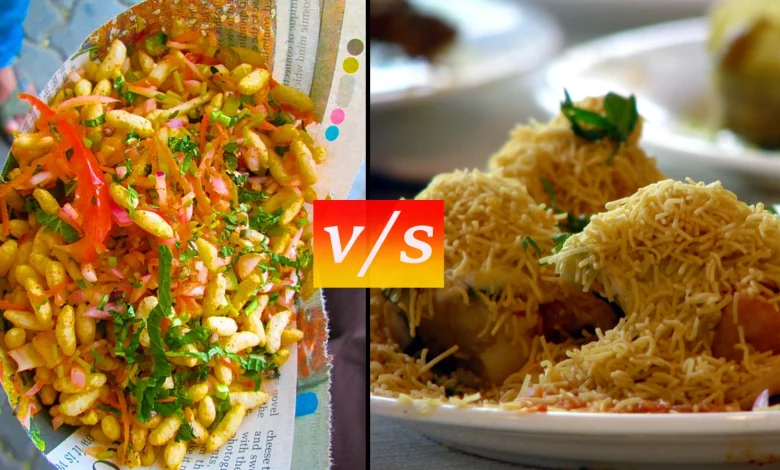
When it comes to chaat, the names of bhelpuri and sevpuri are bound to come up! Each bite comes with a tempting mix of tangy, sweet, and soury flavours. Low in calories, they are often the first ones to cross the mind of a fitness enthusiast on a weight loss journey. But which of the two is a better option, as far as the weighing scale is concerned?
Nutritionist Dr Rohini Patil, founder and CEO of Nutracy Lifestyle, breaks down exactly what happens on your plate.

At first glance, both chaats look like harmless street-side indulgences, Dr Patil agrees. However, their base ingredients make them fundamentally different in terms of fat and calorie density. “Bhelpuri is generally lighter because its base is puffed rice, which is airy and lower in fat,” she tells indianexpress.com.
A standard 100–120 g serving—with controlled chutney and farsan—usually lands between 150–220 calories. That makes it one of the more calorie-efficient chaats for people trying to keep things under control.
 Dr Patil suggests keep the portion size of bhelpuri to one street-style plate or roughly 1 to 1.5 cups on a diet cheat day (photo: pexels)
Sevpuri, however, has a very different nutritional personality. Each puri is built on deep-fried papdi, then topped generously with nylon sev, the silent calorie bomb. “Even a small handful of sev can add 70–100 calories,” Dr Patil explains.
So a street-style plate typically adds 250–350 calories per serving, with the fat-heavy neon sev being the major reason behind it. Since it is made from chickpea flour and deep-fried, nylon sev is high in fat and energy-dense. As per Dr Patil, “this is the single biggest factor that pushes sevpuri higher on both calories and saturated fat”.
Like the sev in sevpuri, bhelpuri also has a calorie-dense ingredient: farsan. However, unlike the former, bhelpuri has a much smaller farsan content. Nevertheless, the calorie win is relevant only if the other add-ons are controlled. While puffed rice itself is extremely low-calorie — around 20–25 calories per tablespoon — sweet chutney, extra peanuts, namkeen, or mixing everything in a slick of oil can add to the fat souce.
Story continues below this ad
“If chutneys are used moderately and oil is minimised, bhelpuri stays sub-200 calories,” Dr Patil notes.
How much can you eat without derailing your diet?
So, how much can you actually enjoy on a cheat day? Dr Patil keeps it simple: stick to one street-style plate of bhelpuri which is roughly 1 to 1.5 cups. She further recommends going for less farsan, more veggies, and lighter chutney. For sevpuri, it is advised to limit to 4–6 puris instead of the full 8–10 and ask for minimal sev.
Nutritionally, there’s no ambiguity. “Bhelpuri offers more fibre and volume from puffed rice and raw vegetables. It’s more nutritious and satiety-friendly,” Dr Patil says. Sevpuri may deliver a flavour punch, but it brings more fat, sodium and refined carbs due to the papdi + sev combination.
“It has a lower glycemic load when balanced with lemon and chutneys in moderation.Sevpuri delivers more fat, sodium, and refined carbs due to deep-fried papdi + sev. It is flavorful but nutritionally heavier,” Dr Patil further adds.
Story continues below this ad
Thus, if someone is craving the flavourful punch of chaat during their weight-loss journey, bhelpuri is a better choice. Besides being lighter and less calorie-dense, the sinful indulgence is also more filling.
DISCLAIMER: This article is based on information from the public domain and/or the experts we spoke to. Always consult your health practitioner before starting any routine.


