Meta patents AI that can ‘simulate’ you on social media after death
3 min readNew DelhiFeb 18, 2026 02:12 PM IST
Meta, the tech giant that owns Facebook, Instagram and WhatsApp, has been rolling out several new AI features for its platforms.
But now, the Mark Zuckerberg-led tech giant has patented an AI that can “simulate” a deceased person’s social media activity by replying to others’ posts.

According to Business Insider, Meta secured the patent to a large language model that “may be used for simulating the user when the user is absent from the social networking system, for example, when the user takes a long break or if the user is deceased.”
As it turns out, the primary author of the AI model – Andrew Bosworth, who is currently the company’s CTO, had filed the patent back in 2023. Meta’s new patent also gives an idea of why people might need this.
“The impact on the users is much more severe and permanent if that user is deceased and can never return to the social networking platform”, it reads.
To fill the gap, Meta wanted to create a digital clone of a person’s social media presence by training an AI model on data like comments, likes and content, to understand how a user behaved.
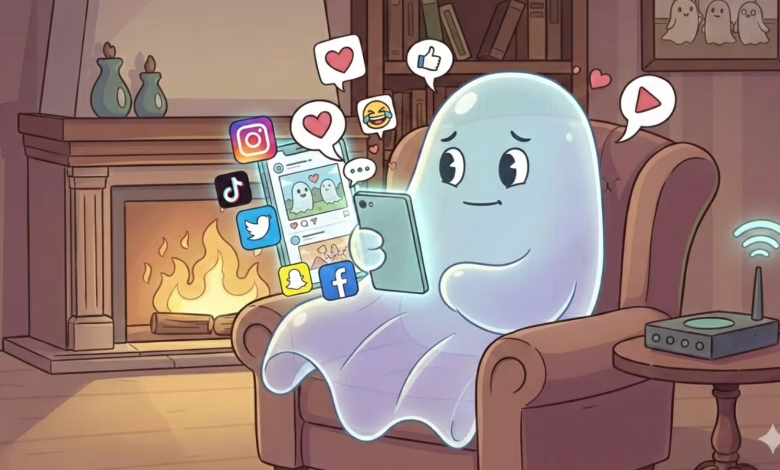
The AI-created digital clone would also be able to like other people’s content, comment on it and even reply to DMs. While this can help creators and influencers who need a break from the platform, it raises several ethical and legal questions.
Story continues below this ad
The patent also includes references to technology that would allow the AI model to simulate video and audio calls of the deceased person with others.
Commenting on the matter, a Meta spokesperson told the publication that the company files patents to disclose an idea, but it does not always translate to reality.
“We have no plans to move forward with this example,” the spokesperson added.
This is not the first time Meta has thought about what happens to a person’s account if they die. About 10 years ago, the company rolled out a Facebook feature that allowed users to choose a “legacy contact”, which would be able to manage a deceased person’s account.
Story continues below this ad
Also, in 2023, Meta CEO Mark Zuckerberg talked in Lex Friedman’s podcast about realistic virtual avatars of deceased people, which would be created by scanning the face of a person and building their 3D model.
Numerous startups have previously popped up around a similar concept. This category of tech, which aims to help people cope with and face the loss of a loved one by creating virtual versions of them, has various names, like ghost bots, grief tech, death bots and more.
Back in 2021, Microsoft patented an AI chatbot designed to collect a person’s data, including images, voice samples, text messages and behavioural information from social media platforms.
This data would then be used to bring a loved one back to life in a virtual avatar that could even take on a physical appearance.