Hina Khan’s Balanced Iftar for Energy, Portion Control

4 min readNew DelhiFeb 25, 2026 09:00 PM IST
Actor Hina Khan recently shared a glimpse of her Iftar meal, noting that while it’s easy to overeat, it’s essential to break one’s Ramadan fast by prioritising fibre and protein in one’s diet. “It’s a very common practice to overeat during Iftar. I know after hours of fasting, the body often craves quick energy, leading to high consumption of, particularly heavy, fried and sugary khaana, which eventually leads to weight gain, digestive issues, fatigue,” said Khan, whose Iftar included freshly cut fruits and vegetables, ajwa khajoor or ajwa date, sun dried fig, protein shake, chana chaat, soaked walnuts and almonds, chia pudding, and supplements salmon fish oil, vitamin D, and multivitamins.
In another Instagram Stories, she added, “Let’s not indulge in these cultural habits and eat wisely. Break the fast gradually, chew slowly, and take breaks and hydrate smartly. Prioritise fibre and protein in your diet. Occasionally, it’s okay, but don’t make it a habit. Keep it healthy and balanced. Don’t shock your body,” said Khan.

Taking a cue from her note, let’s understand how prioritising fibre and protein helps the body.
Prioritising fibre and protein at Iftar helps the body transition gently from fasting to feeding, said consultant dietitian and diabetes educator Kanikka Malhotra. “Fibre slows gastric emptying, stabilises glucose release, and supports gut function, while protein promotes satiety, preserves muscle mass, and prevents excessive calorie intake,” said Malhotra.
Malhotra noted that together, they act as a metabolic buffer, reducing insulin surges, preventing energy fluctuations, and allowing the digestive system to reactivate gradually rather than being overwhelmed.
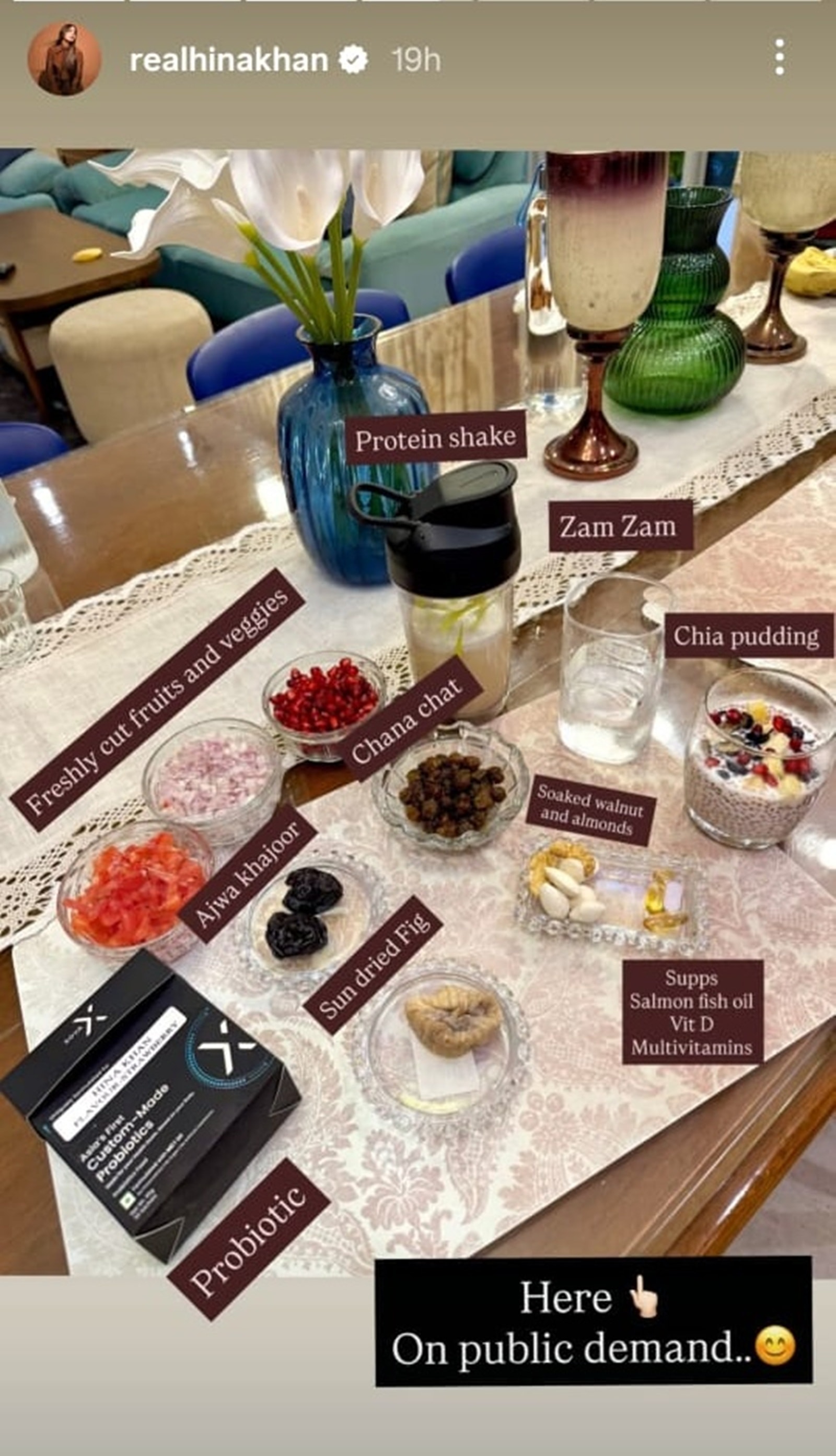 Here’s what Hina Khan includes in her diet (Photo: Hina Khan/Instagram Stories)
Consultant dietitian Garima Goyal said that Hina Khan’s iftar plate reflects a thoughtfully curated mix of hydration, protein, fibre and micronutrients. “She includes freshly cut fruits and vegetables, which provide natural sugars for quick yet gentle energy restoration along with fibre, antioxidants and hydration. Fruits help replenish glycogen stores without overwhelming the digestive system, while vegetables support gut motility and bloating,” said Goyal.
Chana chaat is a rich source of plant-based protein, fibre, and iron. “Chickpeas help stabilise blood sugar levels, prevent sudden insulin spikes and promote satiety, reducing the likelihood of overeating later in the evening,” said Goyal.
Story continues below this ad
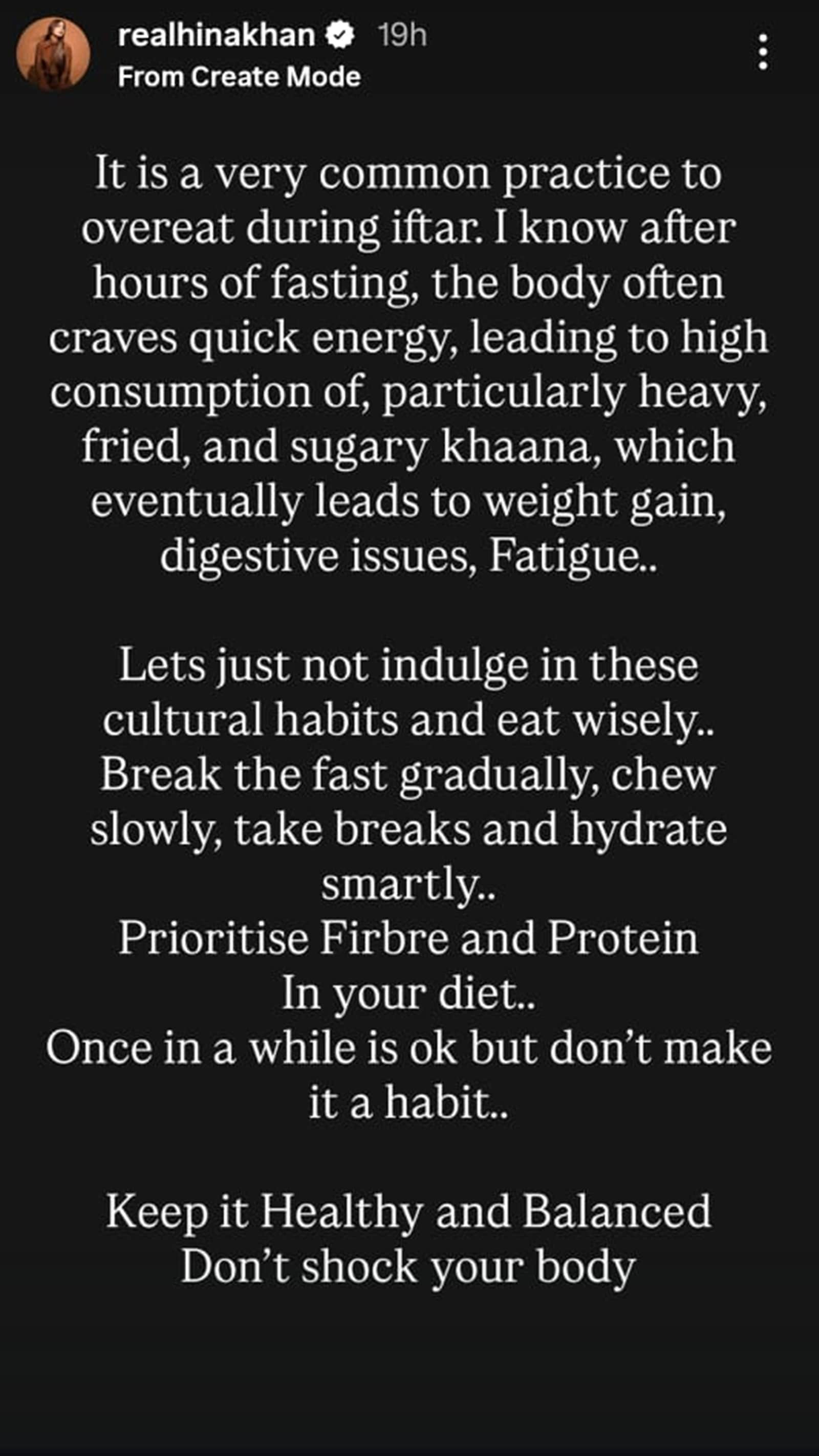 Hina Khan penned a note (Photo: Hina Khan/Instagram Stories)
According to Goyal, chia pudding offers omega-3 fatty acids, fibre and plant protein. “Chia seeds absorb water and expand, aiding digestion and keeping you fuller for longer. They also support heart health and reduce inflammation.”
A protein shake further strengthens the protein intake, which is crucial during fasting periods to preserve muscle mass and maintain metabolic rate.
Goyal said that omega-3 fatty acids from fish oil support anti-inflammatory processes and heart health. “Vitamin D is essential for bone strength and immune function, particularly if sun exposure is limited. Probiotics promote gut health, which is especially important when meal timing shifts significantly during fasting periods,” said Goyal.
Overall, her iftar reflects a balanced macronutrient distribution with fibre, protein and healthy fats at the forefront. “This approach prevents the common pitfalls of heavy fried foods and excessive sugar intake that often lead to fatigue, digestive discomfort and weight gain during fasting months. Breaking the fast gradually with nutrient-dense foods allows the body to transition smoothly while maintaining metabolic stability,” said Goyal.
Story continues below this ad
DISCLAIMER: This article is based on information from the public domain and/or the experts we spoke to. Always consult your health practitioner before starting any routine.