
‘You are taking a loan against your arteries at 400 per cent interest’: Cardiologist does the math, warns how having Rs 20 samosa daily can cost you a medical bill of Rs 3 lakh | Food-wine News
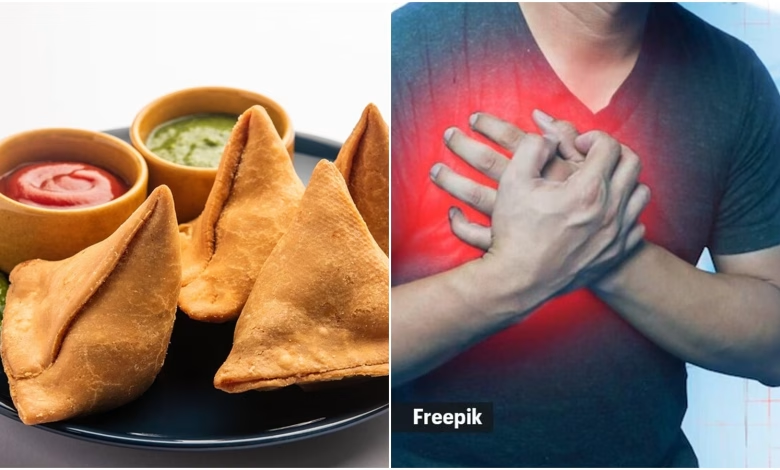
Samosa, often priced at Rs 10 or 20, is one of the most-loved evening snacks, especially with a hot cup of masala chai. But what if it ends up costing you Rs 3 lakh in the long run? Recently, a Delhi-based cardiologist, Dr Shailesh Singh, posted on X, and his post went viral when he gave a breakdown of the costs.
Office canteen samosa: Rs 20 | Angioplasty: Rs 3 lakh
Samosa per year: 300
Years of eating: 15
Total samosa cost: Rs 90,000
“You are not saving money on unhealthy food. You are taking a loan against your arteries at 400 per cent interest,” he said.
The doctor’s analysis divided the internet, with some supporting his claims and others questioning them.
One wrote, “Limited choices in the office canteen, unlimited tension among people. So, a samosa with tea, followed by a cigarette, becomes the essential formula for relief.” However, another commented, “Who eats samosa each day? Your advice is good, but it’s not samosa, it’s the oil. Being a Dr, you should mention what causes the actual issue. Samosa can even be made oil-free, and the same goes for many. The actual culprit is bad oil.”
 Are you taking care of your health? (Photo: Getty Images/Thinkstock)
Another user wrote, “I respect your statement against regular eating of junk, however, it is not limited to samosa only.. highly unhealthy foods are soft drinks, Pizza ?? burger ??, mayonnaise etc. and best part sweat out. Otherwise, normal food is also dangerous to health. Hopefully, you agree.”
Yet another called out the “fear mongering”. “Stop fear mongering. Angioplasty doesn’t cost 3 lakhs. There is no correlation between Samosa eating and eating any other Indian snack and CAD. If you are a doctor worth his name in salt, you would know.”
Office canteen samosa: ₹20
Angioplasty: ₹3 lakhsSamosas per year: 300
Years of eating: 15
Total samosa cost: ₹90,000You’re not saving money on unhealthy food.
You’re taking a loan against your arteries at 400% interest.— Dr Shailesh Singh (@drShaileshSingh) October 23, 2025
Considering the divided house, we reached out to an expert to gain a clearer understanding.
Story continues below this ad
Dr Parin Sangoi, consultant interventional cardiologist at Wockhardt Hospitals, Mumbai Central, asserted that the issue isn’t just one samosa; it’s the trend it signifies. “When fried and processed foods become a staple in your diet, they quietly begin to have a cumulative effect on your arteries. Every serving contributes to cholesterol deposition, inflammation, and oxidative stress in the vascular system. Over a period of time, this leads to the development of plaque, narrowing of arteries, and a decrease in blood supply to the heart. What seems like a harmless snack today can pave the way for heart disease a few years down the line,” said Dr Sangoi.
How, precisely, does food affect health?
Our diet directly affects how our arteries function. “Trans fat-loaded, high-carb, salt-rich foods harden the walls of vessels, increase blood pressure, and disturb the ratio of bad cholesterol to good cholesterol,” said Dr Sangoi.
Conversely, high-fibre, antioxidant-rich foods such as fruits, vegetables, and nuts help maintain a healthy, elastic endothelium (the arterial inner lining). Each meal is a message to your heart, either to heal or hurt.
Contemporary working life often leaves individuals missing proper meals or subsisting on quick, fried bites. “Convenience should not be at the expense of your health. Small replacements, such as opting for roasted snacks instead of fried, or including fruit in your lunch, make a big difference. Hydration, gentle movement, and conscious eating are underappreciated prevention tools,” said Dr Sangoi.
Story continues below this ad
What to note?
Heart disease doesn’t wait until your 50s anymore. “Heart disease is spiking in individuals in their 30s. Stress, insufficient sleep, and a poor diet combine to create the perfect storm. Taking care of your heart is not a restriction; it’s respect. Your choices today determine how healthy your heart remains tomorrow,” said Dr Sangoi.
DISCLAIMER: This article is based on information from the public domain and/or the experts we spoke to. Always consult your health practitioner before starting any routine.


