
After Bandhani skirts and jhumkas, Ralph Lauren’s Zardozi-inspired design sparks fresh backlash

4 min readNew DelhiSep 14, 2026 04:58 PM IST
First Bandhani skirts, then South Asian jhumkas, and now Zardosi. Ralph Lauren has once again irked the fashion Gods of the internet by incorporating Indian design elements into its latest Spring-Summer 2027 Ready-to-Wear collection—without giving credit where it is due. A particular post on the brand’s Instagram page, featuring a close-up shot of Zardosi embroidery, has been captioned as “hand-applied embellishments” on a shimmering silk-viscose evening gown — and netizens did not take it lightly.
The comment section was filled with praise for Indian craftsmanship, with people saying: “Bro, ever heard of something called credits or something?” and “That’s literally Indian embroidery, come on”.

DISCLAIMER: This article is based on information from the public domain and/or the experts we spoke to.
Yash Sahu, Academic Lead & Design Faculty at IMS Design and Innovation Academy, Noida, says that, based on the visual construction, what we are seeing is much closer to the vocabulary of Indian Zardozi than generic embroidery. “The metallic surface, raised embellishment and ornamental treatment are all strongly associated with Indian Zardozi traditions. But, there may also be elements of Aari or other hand-embroidery techniques used alongside it,” he tells indianexpress.com.
According to him, this is where we need to be technically careful. “A photograph can suggest a technique; it cannot establish the exact stitch construction. To definitively call it Zardozi, Aari or a combination, the garment itself would need to be examined,” he says, adding that what is difficult to ignore, however, is how recognisable the visual language is.
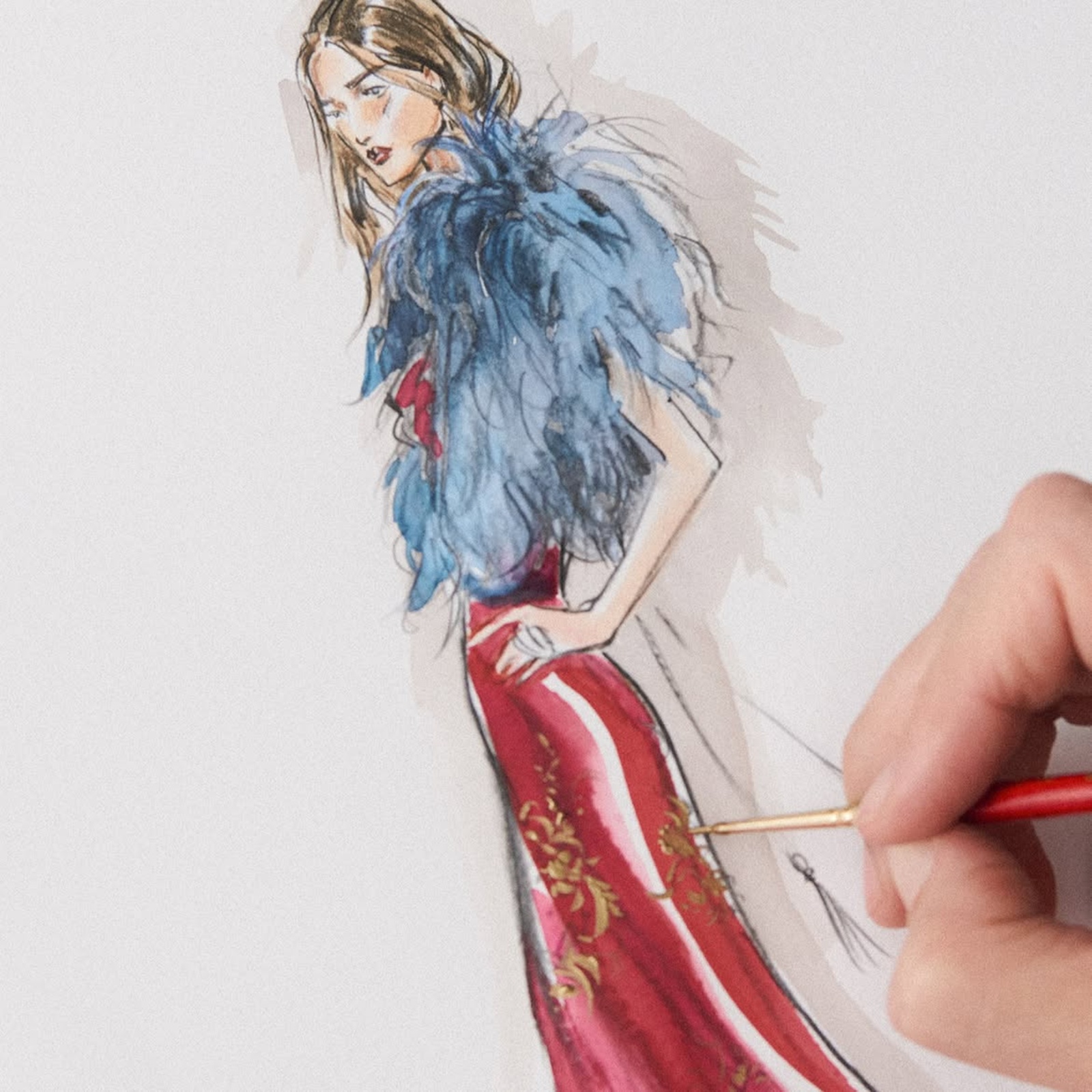 The sketch of the evening gown at the centre of the controversy. (Source: Instagram/@ralphlauren)
Why is this problematic?
This raises a more uncomfortable question: when does inspiration become so specific that the source itself deserves to be named?
Sahu says that Zardozi is not simply a decorative aesthetic. It has a documented history in the Indian subcontinent and has been associated with royal and courtly textiles for centuries. “Zardozi is a labour-intensive craft involving metallic threads and embellishments, traditionally including gold and silver elements, sequins, beads and metallic wires,” he explains, sharing how Aari is technically different as it uses a “hooked needle to create a chain-stitch construction”.
Story continues below this ad
Ultimately, Sahu believes that the real controversy is not whether Ralph Lauren can use Indian craft. He asks a bigger question: why is the global fashion system so comfortable celebrating the finished aesthetic while often making the craft’s origin invisible? “If a designer uses a recognisable Indian embroidery tradition, why shouldn’t the craft be named, and is its history not important enough to be given credit?”
According to him, these are fair questions, particularly when Indian embroidery is not a newly discovered design language. It has existed through established artisan communities and regional craft practices for generations.
“There is a difference between borrowing a visual language and acknowledging where that language comes from. That is where the conversation around credit, attribution and cultural ownership becomes important,” concludes Sahu.
Ralph Lauren has been trending on Google for the past 24 hours.
Story continues below this ad
DISCLAIMER: This article is based on information from the public domain and/or the experts we spoke to.


