
Rediscovering the flavours of an Indian summer

A walk through the weekly bazaar last week made me wonder about the summer jewels we relish, yet often fail to cherish amid constant rants about the relentless heat, humidity, and scanty rainfall. While mangoes steal the limelight every year, this year even more so with the much-talked-about Miyazaki mangoes, the purplish-red luxury fruit from Japan, Instagram and social media reels are also making timeless favourites such as jamuns and karondas popular again.
Jamun is one of the most indigenous fruits of Jambudvipa, as India has long been referred to. Celebrity chef Vikas Khanna was recently seen packing these anthocyanin-rich fruits, perhaps India’s own answer to blueberries, all the way to New York. From the green avenues of Ashoka Road and the forests of the central Indian plains to urban forestry initiatives that embrace the planting of jamun and amla trees, the conversation around Indian berries is back, reminding us how far removed they are from our obsession with imported blueberries, blackberries, and raspberries.

Meanwhile, litchis, another summer favourite, especially the GI-tagged Shahi litchis of Muzaffarpur, were reported to be unusually expensive this year owing to a poor harvest, prompting the Central Government to constitute an expert panel to examine the litchi crisis in the state.
El Niño and the war
Amid all this clamour about El Niño, fruit and vegetable supplies, cooking oil becoming expensive because of the war, and the implications for the livelihoods of small and marginal farmers, I found myself observing the conversations around me in the weekly sabzi bazaar. As intermittent showers threatened the rhythm of the market for both vendors and customers, I could not help but notice the colourful diversity of local fruits and vegetables typical of the Indian summer.
What a delight it was to see laal bhaji, or red amaranth, marking its seasonal cameo on vegetable carts. Summer also brings the arrival of kachri, also known as the wild melon or desert melon, grown across Rajasthan, Gujarat, and Haryana. This delectable, tangy fruit is enjoyed raw or made into chutneys. Many women-led self-help groups slice and sun-dry it to make crisp chips and wafers. Fried kachri is served as an accompaniment with dal chawal or simply enjoyed as a snack with tea.
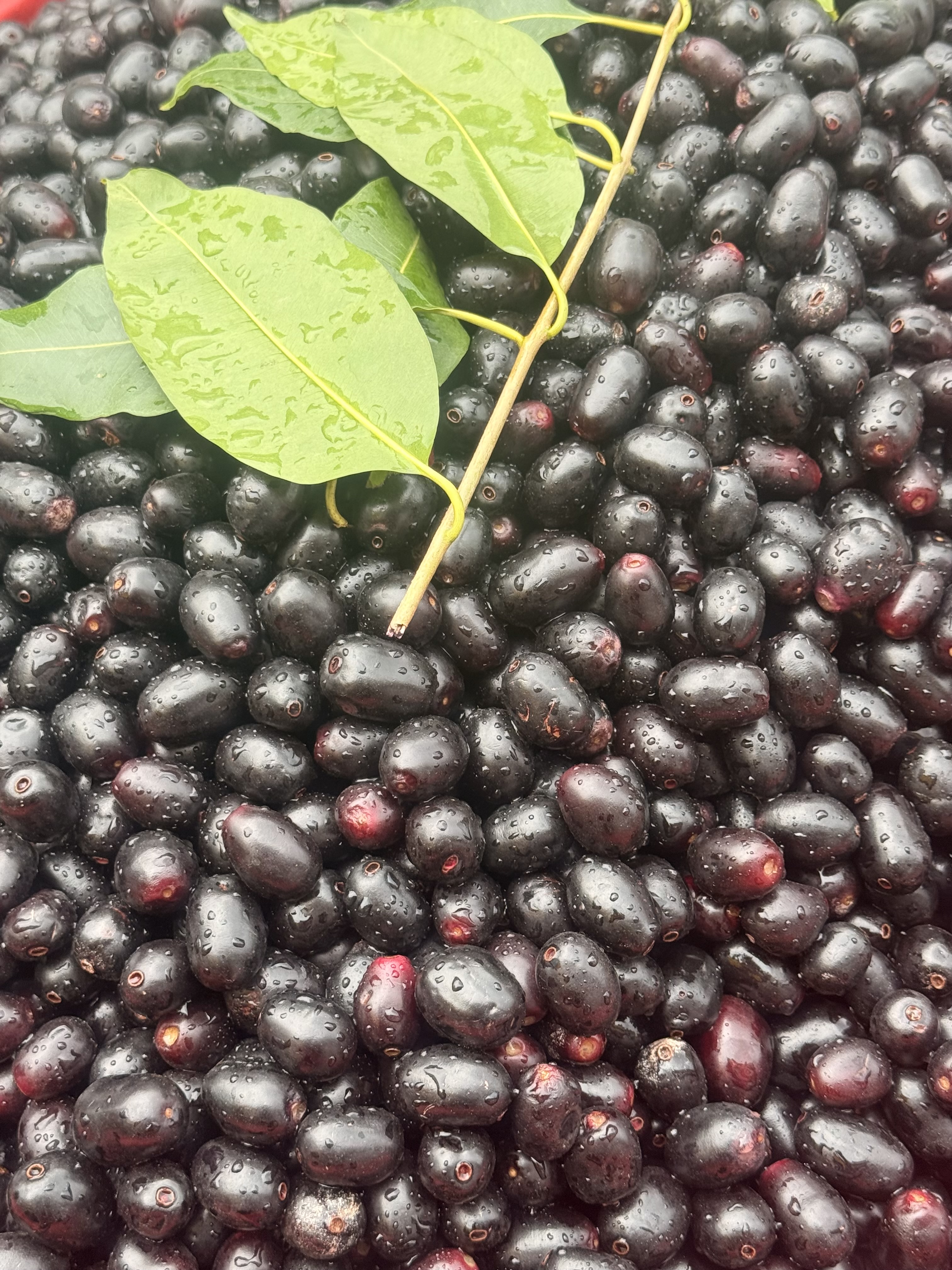 Jamun is one of the most indigenous fruits of Jambudvipa, as India has long been referred to. (Photo: Swasti Pachauri)
Phalsa, or the Indian sherbet berry, as usual, has been making waves on social media. Small-scale fruit and vegetable vendors briefly sell them during their harvest season in May and June. Phalsa sherbet continues to enjoy its reputation as a refreshing summer cooler, again rich in anthocyanins that give the fruit its deep purple colour. Kokum, or Malabar tamarind, native to the Western Ghats, is another refreshing summer cooler harvested during May and June. It is celebrated as a local beverage in Maharashtra, while processed kokum sherbet syrups are now commonly available in northern India, with many restaurants serving the drink during the summer months. Speaking of berries, a rare blueberry was recently rediscovered in the forests of Vijoynagar in Arunachal Pradesh’s Changlang district, nearly 188 years after it was first recorded in 1836.
Tadgola, or ice apple, is another unique seasonal fruit from southern India that reportedly witnessed a surge in demand during this year’s relentless heatwave. Across parts of Tamil Nadu, Andhra Pradesh, Karnataka and Kerala, people consume it as a natural way to beat the heat. India also happens to be one of the world’s largest producers of ice apples giving the fruit tremendous potential in horticulture, food processing, and global fruit baskets.
Story continues below this ad
Then there are the white and red gulaab jamun fruits, better known as jamrul or rose apples, whose crisp, fragrant flesh offers welcome relief from the summer heat, giving stiff competition to both litchis and mangosteens, the latter now increasingly cultivated in parts of Kerala, Karnataka and Tamil Nadu. Rambutan is another delight that makes its guest appearance in markets. Anyone travelling through southern India during the summer is likely to find it in abundance on roadside vendor carts and highway stalls.
In states where jackfruit grows in abundance, one can enjoy it both as a vegetable and as a fruit, depending on its stage of ripeness. The raw fruit is transformed into delicious curries and stir-fries, with kathal biryani becoming quite the feature on restaurant menus.
Crop diversification efforts
These days, dragon fruit, though originally native to the Americas, is also found commonly in weekly bazaars. Farmers in several drought-prone regions, including those affected by agrarian distress, have increasingly adopted its cultivation as part of crop diversification efforts. Last year, I met a farmer growing dragon fruit in the Vidarbha region. Increasingly, as part of crop diversification, farmers in Odisha and Jharkhand are also cultivating yellow watermelons. Some fruit sellers stock fresh figs and green almonds, produce that often finds itself relegated to the “special” or “exotic” sections of online marketplaces despite being growin in parts of India.
Alongside these fruits, the markets are replete with green verdancy, chlorophyll soothing to the eyes in the form of so many seasonal vegetables. Small batches of junglee karela, also known as kantola, kakora, or spiny gourd, make their appearance. Although covered with tiny spines, it is sweeter than the common bitter gourd, or karela, and remains a seasonal favourite until the onset of the monsoon. Purple banana flowers, too, are harvested during this time, pointing to the immense potential of India’s edible flower economy. Mahua flowers from the central Indian plains and buransh blossoms from Uttarakhand further showcase how native flowers can contribute to local food systems, value addition and rural livelihoods.
Story continues below this ad
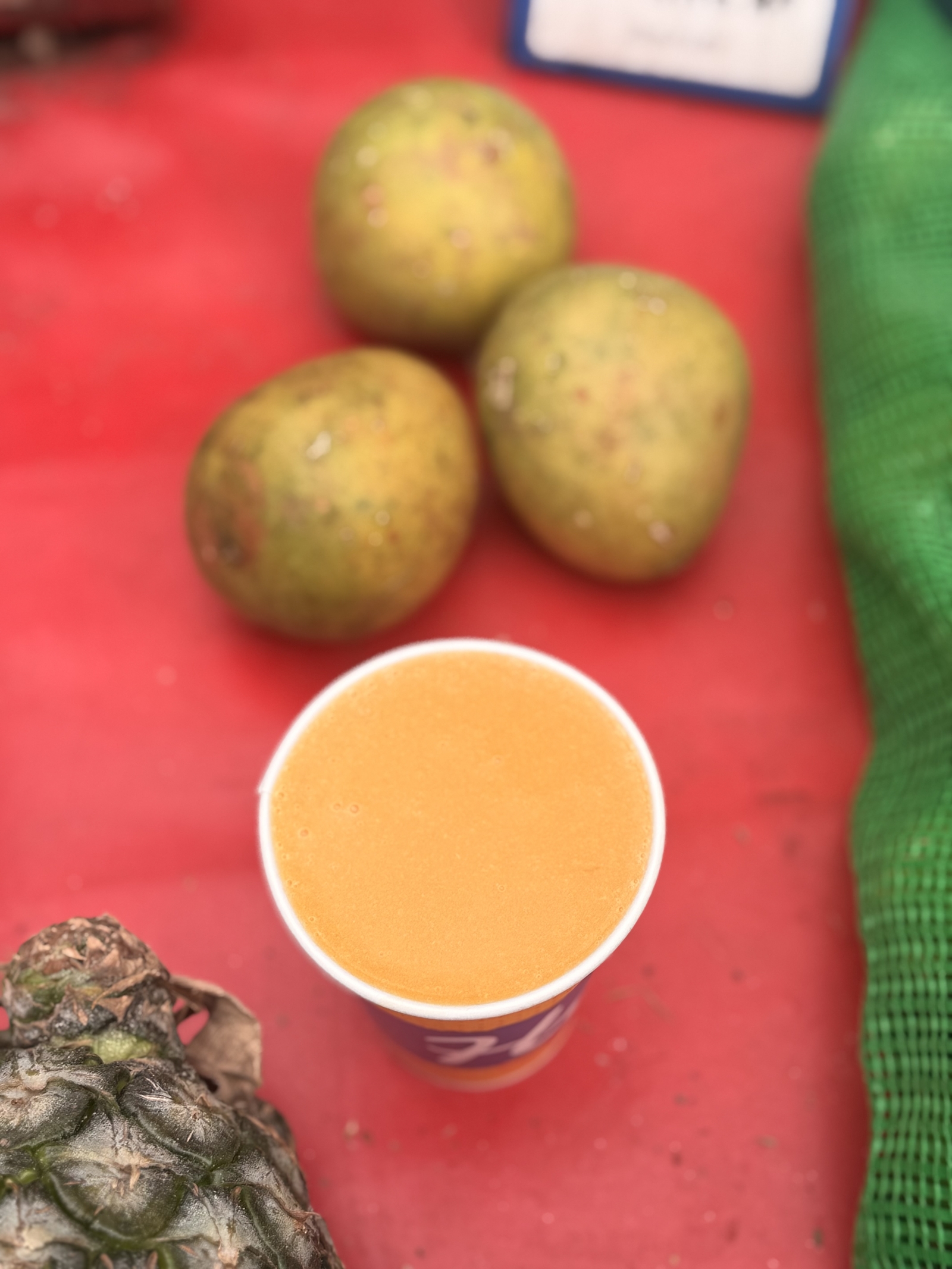 There are countless other seasonal treasures: plums, peaches, pears, bel (wood apple), whose cooling sherbet has refreshed generations during blistering summers (Photo: Swasti Pachauri).
Ker (desert berry) and sangri (desert bean), the seasonal royalty of Rajasthan’s arid landscape, continue to be celebrated as the state’s culinary specialities.There is gilki (sponge gourd), too, the local, sweeter and softer cousin of torai (ridge gourd) in the central Indian plains.
And then there are countless other seasonal treasures: plums, peaches, pears, bel (wood apple), whose cooling sherbet has refreshed generations during blistering summers, even though the fruit is harvested twice a year; the tangy karonda, perfect for pickles and chutneys; the fleeting lasora (glue berry), which briefly appears in local markets before disappearing for another year; banana stem, bamboo shoots, pumpkin flowers, and even bilimbi (tree sorrel) in the southern states. Recently, the fourth Meghalaya Pineapple Festival at Dilli Haat brought farmers from the state to the national capital, where they sold nearly 30 tonnes of pineapples, boosting farm incomes while promoting seasonal regional produce and tourism to the Northeast.
Seasonal food traditions
All of this speaks to the extraordinary richness of India’s bioeconomy and the seasonal food traditions that sustain its biodiversity. Nutritionists continue to remind us that eating seasonal produce is healthier, more sustainable, and often more nutritious. While the globalisation of food has ensured year-round access to a wide variety of fruits and vegetables from across the world, eating in harmony with the seasons continues to benefit our health, ecology, and the local economy.
So, while enjoying the last strolls beneath the gulmohar, jarul, and the season’s fading amaltas, and fragrant mogra, we must rush to savour the seasonal specialities in our weekly bazaars while they last.


