
Coriander Powder, Carrageenan Under FSSAI Scanner: What Triggered the Recalls?

4 min readNew DelhiSep 14, 2026 09:00 PM IST
The Food Safety and Standards Authority of India (FSSAI) has issued recall orders to two Food Business Operators (FBOs) following lab testing and evaluations that found adulterated coriander powder, and carrageenan — which was “found not satisfactory with respect to Cadmium.”
In a social media post, FSSAI wrote: “The Food Safety and Standards Authority of India (FSSAI) has issued recall orders to two Food Business Operators (FBOs) under the FSS Act, 2006, following lab testing and evaluations. Both FBOs are required to execute immediate market recalls in accordance with the FSS (Food Recall Procedure) Regulations, 2017.”

It noted that a regulatory sample of Shalimar’s Chef – coriander powder was analysed and “found not satisfactory with respect to pesticide residues and did not conform to the prescribed standards under the FSS (Food Product Standards and Food Additives) Regulations, 2011 read with the FSS (Contaminants, Toxins and Residues) Regulations, 2022.”
It added that the food analyst opined that the submitted sample was “unsafe”.
DISCLAIMER: This article is based on information from the public domain and/or the experts we spoke to. Always consult your health practitioner before starting any routine.
Coriander contamination
Kanikka Malhotra, Consultant Dietician & Diabetes Educator, says that pesticide residue doesn’t change how coriander powder looks, smells or tastes, so you genuinely can’t tell just by using your senses.
According to her, coriander is a crop, so it can pick up pesticide residue during farming, especially if extra or non-approved pesticides are used, or if the crop is harvested too soon after spraying. “Contamination can also happen if that residue doesn’t break down enough before the coriander is dried and ground into powder, she tells indianexpress.com.
Story continues below this ad
What is carrageenan?
Malhotra says that carrageenan is nature’s thickening agent, derived from red seaweed, and used by food companies to make things like ice cream, flavoured milk, and paneer substitutes.
“It can also be used to make chocolate drinks feel smooth and creamy instead of watery or grainy. You’ll spot it on labels as E407. It doesn’t add any nutrition of its own, and is just there for texture,” she shares.
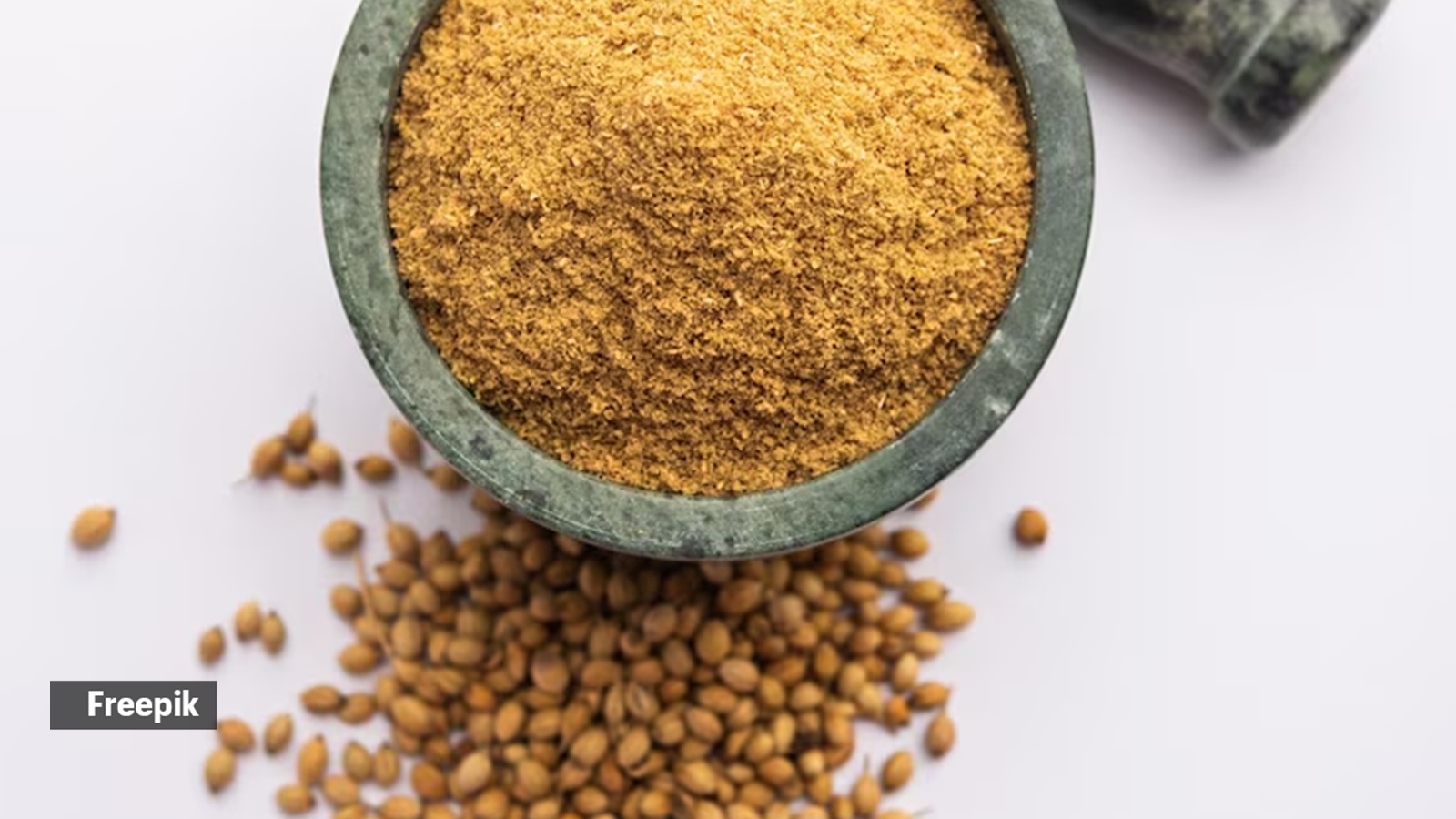 Buy whole coriander seeds and grind them fresh at home. (Magnific)
Why were they flagged as unsafe?
Now, about this week’s news: FSSAI didn’t say carrageenan or coriander powder itself is dangerous. One specific batch made by a company tested positive for cadmium, a heavy metal, in amounts higher than allowed, along with pesticides.
Now Malhotra says pesticide limits exist because, at low, regulated levels, the body can process and clear them without issue.
Story continues below this ad
“But the problem starts when residue goes beyond what’s permitted, since consistent exposure to excess pesticide over time can affect the liver, hormones and nervous system. It’s rarely about one meal causing harm but repeated exposure from consuming contaminated batches regularly that adds up, which is why regulators step in quickly once a product crosses the safe threshold,” she explains in detail.
What should people consider?
Malhotra says, “No need to swear off every product with carrageenan on the label”.
This recall was about one specific batch, but if you’re unsure whether something at home is affected, FSSAI’s website lists the recalled products and details.
Beyond that, a simple habit helps: “Glance at ingredient labels for E407 or carrageenan, and know it’s approved within set limits, so the occasional ice cream or flavoured milk isn’t cause for worry,” she shares.
Story continues below this ad
As for coriander powder, she suggests choosing pre-packaged powder from trusted sources over loose, unbranded stock. “If you buy whole coriander seeds and grind them fresh at home, sourcing from reliable sellers and washing them well before use adds another layer of safety,” the expert reiterates.
Finally, Malhotra says that if you’re already mindful about processed foods for other reasons, like kidney health, that’s a reasonable approach regardless. “And when in doubt, sticking with established, FSSAI-licensed brands is your best safeguard against these kinds of one-off contamination slips,” she concludes.
DISCLAIMER: This article is based on information from the public domain and/or the experts we spoke to. Always consult your health practitioner before starting any routine.


